Category: The Edge of Innovation

Building Control Systems: Continuous Commissioning

On Episode 78 of The Edge of Innovation, we’re talking with Dan Frasier, co-founder of Cornerstone Commissioning Inc., about building control systems and continuous commissioning.

Show Notes

Cornerstone Commissioning Inc.’s Website
About Dan Frasier
About Cornerstone Commissioning
Find Cornerstone Commissioning on Twitter
Find Cornerstone Commissioning on LinkedIn
Find Dan Frasier on LinkedIn
Cornerstone Commissioning’s Blog
“The Importance of Communication During the Commissioning Process”
“Commissioning Best Practices During the Construction Phase”
Link to SaviorLabs Assessment

Sections

Why Collaboration is So Important
Building Control Systems
How Cornerstone Commissioning Does Testing
Continuous Commissioning
What is a Net Zero Building?
How Many Companies are in the Commissioning World?
So Why Is It Called Commissioning?
Commissioning is a Growing Industry
How Dan’s Career Began
How Cornerstone Commissioning Began
There’s No Place Like New England
More Episodes

Building Control Systems: Continuous Commissioning

Why Collaboration is So Important

Paul: Hello, and welcome to the Edge of Innovation. Today we’re talking with Dan Frasier from Cornerstone Commissioning, Incorporated.

So, you sort of alluded to the fact that you collaborate with all the parties at the table. Why wouldn’t somebody do that? I mean, especially in the commissioning space where you’re going to be pointing out flaws? I mean, if I said, “Hey, how come you’re wearing those shoes? They look terrible,” that’s immediately going to put you in a defensive posture as opposed to if I said, “Gee, you know, maybe you should think about polishing your shoes once in a while.” Not your shoes. I’m not even looking at your shoes. So why wouldn’t everybody be saying, “Hey, we’ve got to work together to get this done”? Do you find that out there? I get the sense that that’s sort of a differentiator between you, is sort of collaborating. And that seems alarming to me that it would a differentiator.

Dan: Yeah, well, it is a differentiator. And I think partly because of the kind of buildings that we work on that we are going to find a lot of issues. And so it’s so hard—

Paul: And right, rightfully so, though. You want to have found those issues.

Dan: Yeah.

Paul: Especially in a biomedical building. It’d be terrible to have somebody die or get infected because you didn’t work through those issues. So, you know, you’re not just nitpicking.

Dan: Right. And so, yeah. They’re real issues, and they really have to be addressed in a conclusive way, and it’s a tremendous amount of effort, a lot of times, to get these buildings — especially the building control system. 75% of our effort is on the building control systems.

Building Control Systems

Paul: Okay. So what does that do, for our listeners? A building control system. What does that mean?

Dan: It’s the computerized system that will be tied into monitoring and controlling all the aspects of the environment within the building, sometimes outside the building, different ways. But we talk about the ventilation system which includes heating and ventilating, bringing fresh air into buildings. If it’s a laboratory building, it’s one-pass air. In other words, we bring in 100% outside air, heat it or cool it to get to the condition, and then we do a really energy-inefficient thing by just exhausting all that air right out of the building. So these are energy pigs.

But back to the point on, on the building control system. It does the heating, ventilating, air conditioning, lighting controls; it might do fire alarm system, other things related to security, all those things that function within a building control system, we’re involved with making sure that all these things work properly as an integrated system so that, for example… When a fire alarm goes off, a smoke alarm system, and they take that signal, and they shut down the supply air handling system, because we don’t want air blowing into a fire. There have been buildings where we’ve been hired because they’ll say, “I don’t understand why, but every time the fire alarm goes off, they lock the doors on the building.”

Well, they actually didn’t lock the doors. The supply air handling system kept running or stopped running, but the exhaust fans kept running. The building was so negative that even a big, 250-pound football player couldn’t get the door open. So all those systems have to be verified to do what they’re supposed to do. So we get pretty involved with the actual building control sequences to make sure that in a scenario like that, that the exhaust fans still run but at a very low speed so we don’t have any risk problem in the building.

How Cornerstone Commissioning Does Testing

Paul: How do you test that? Do you actually put it into a failure mode?

Dan: Oh yeah. We actually run the building. So let me just tell you what… If we look at our whole process chronologically… So during the design phase — I already talked about that. We verify the design is going to work in the building. During the construction phase, we’re on site. Not all the time. We’re not on site like the contractors. We go on site when we need to see how well things are being installed. And, to make sure that there’s not going to be a problem with access, with maintenance, with how things perform, and the way things get installed, have a huge impact on how well they perform for airflows for the flow of fuel oil to the generator and things like that. And leak detection — there’s all kinds of parts and pieces. But then it gets down to the control sequences. We want to start seeing that dampers and valves act the way they’re supposed to, when they’re supposed to.

So ultimately, we end up having the controls contractor telling us when the systems are ready to be tested. One differentiator between us and other commissioning agents is that we actually will do the testing. We’ll actually take our laptops, logon to the building control system when the contractor says it’s ready, and then we’ll test it so that we’re getting ready for turnover. So we know it does what it’s supposed to do under normal and under failure scenarios. And so we work very closely, especially with the controls contractor. Get the building ready for turnover.

And then the building’s been turned over, owner’s moved in, and we will look at the building early in the occupancy because sometimes they’ll move in and they’ll say, “Well, that room that we were planning on using for doing a few months of testing, now that’s going to be an animal holding room.”

So, what are the implications of that? So we’ll look at helping them through some of those modifications and alarms and so that during the early occupancy, we’ll do some tweaks with the building controls contractor on how the building needs to meet those, perhaps, adjusted uses.

Paul: Right. Well, it sounds like they would need to do that contiguously, especially if they change things in the building. Like okay, we’re going to use this for this room today but six months from now, well, let’s do this. And it just incrementally changes. Do you get called back in for that?

Continuous Commissioning

Dan: Yeah, so we’ll be called back in on existing buildings to do what’s called existing building commissioning or continuous commissioning, which is a whole new aspect of the field right now that is starting to expand at a pretty exponential rate that… Continuous commissioning is doing analytics, building analytics. So, for energy reasons, for performance reasons, looking for anomalies in the building that maybe somebody who was running the control system and the building just really got tired of somebody complaining about how cold their room was in the wintertime. And so they do what’s called an overwrite. They’ll overwrite. Some heating valve opens when it’s just open all the time, not realizing the really detrimental impact that can have. And so some of these analytics are going to see those overwrites and raise a flag, send an alarm so that somebody says, “Why is this in place?”

Paul: So are you taking data feeds from these systems?

Dan: Mm-hmm.

Paul: And going through them? Sort of really analyzing them? Or you’re trusting their alarms? So, I imagine both but…

Dan: For continuous commissioning, the way I’m talking about it, where the industry’s going, it’s a smart analytic system. It’s being set up in such a way that it doesn’t require somebody to go in and look at the data and say, “Hmm, this looks like this could be a problem.” No. These analytics are actually looking for certain things to happen within systems to identify either an energy-wasting system relative to outside air conditions — how come this cooling system is operating and it’s three below zero? You know, it’ll look at things like that and raise a flag. How come the outside air dampers are open on the mechanical room, and the unit heaters in there are blowing? They’re 100% open and producing heat when it’s 10 degrees outside. Those outside air dampers shouldn’t be giving you fresh outside air unless you need it for combustion air, of course.

Paul: So you mentioned a house in New Hampshire. I know you said it was off the grid?

Dan: So it’s not connected to the power utility.

Paul: At all.

Dan: At all.

What is a Net Zero Building?

Paul: So you mentioned previously a net zero building. What does net zero mean?

Dan: A net zero building does not take power off the grid. It actually has the capability of supplying all of its own power, typically through some kind of PV panels, photovoltaic panels, solar system, or some renewable energy source that is not requiring power from the utility.

Paul: Okay. Obviously, people are interested in saving money and saving the planet and global warming and global cooling and all these different things. So you’re saying, are these buildings in New England?

Dan: We haven’t done any net-zero buildings in New England. We’ve done them in the D.C. area.

Paul: We don’t have enough sun.

Dan: Well, there are some net-zero buildings in New England. They’re smaller. The unique things, the interesting thing is about these net-zero buildings that we’re doing, one of them is a very large world headquarters building. And it’s an incredible building. It won’t save the owner long term by building a net-zero building. The payback on it is way beyond what any of us would consider. It’s really about being environmentally conscious.

Paul: Right, so it’s a marketing…

Dan: It’s marketing. It’s a really unique client who just is cutting edge in every way in their research. So we’ve done a call center for them. We’re doing another large research facility in Florida for them. And they’re just a client who is really committed to doing everything in a way that is very environmentally conscious.

Paul: Doing good.

Dan: Yeah. Yes.

Paul: So just to understand that. It is expensive to make a neutral building.

Dan: Very expensive. Yes.

Paul: And hopefully that will go down. I don’t know if you can speak to this, but that’s been my thing with photo solar cells, is every year they improve so much that it would be very painful to have put solar panels in last year and spent, let’s say $10,000 on — I don’t even know if that’s reasonable for a house. And then you’re going to get 10% more efficiency by waiting a year. So the problem is I’ll end up waiting forever. So it’s an interesting thing, but it’s neat to see that there are people sort of want to blaze a trail and say, “I’m going to do it anyway.”

Dan: And it’s helping the industry to go to a place that we just keep getting better at it because we keep using it.

Paul: And it is good for the environment. It’s just not as good for the wallet.

Dan: Exactly.

Paul: In other words, they’re generating most of those electricity, possibly even giving stuff back to the grid. That, while that doesn’t make sense financially, it does make sense environmentally.

Dan: That’s correct.

How Many Companies are in the Commissioning World?

Paul: Yeah. Okay. Cool. How many companies are in the commissioning world? Another one, five, a thousand?

Dan: So when the company was started about 17 years ago, it was probably in the low hundreds. And the number of commissioning companies that was in… We specialize in mission critical facilities. I would say that was in the dozens at the time. There are now thousands.

Paul: Really?

Dan: I’m guessing there might be a couple thousand. One of the reasons why the number went way up was around 2008, 2009 when the economy tanked. There were design-engineering firms — and some architects but mostly design-engineering firms — who, their business just dried up.

Paul: Well, we can do that.

Dan: Yeah.

Paul: Is that what they said?

Dan: Well, yeah. That’s what they did. They hung a shingle out. And the sad thing was, two things happened. The quality or the level of quality of commissioning services went down tremendously because you had people who were used to sitting in cubicles working on CAD systems and maybe wearing a tie now going out to say, “We do commissioning.” You won’t find too many guys in our companies wearing ties — not because we’re… I think we actually wearing ties, but we’re hands-on people. We have mostly engineers in our company, but we are on construction sites all the time. And we really know systems. And we’ve had young guys who start in our company — engineering degrees. We had one guy six months into the company, and he said, “I firmly believe that the people who design these systems never get out in the field to see them.” And so there’s an element of that that has come in, where from 2008 or 2009, for the next five years, we were just flooded with these people who knew how to design systems, but they’d get out in the field, and they’d say, “What is that?”

We still say that because there’s some new technologies that come. I was like, “What is that?” It was like, “Wow. That is so cool. I’m so glad we get to play with these new toys.” But when it comes to commissioning, there’s really — especially in the biocontainment industry where we do most of our work — there is a handful of those kind of commissioning companies out there that are recognized and known, that have, like us. We done over a hundred biosafety level three labs.

So Why Is It Called Commissioning?

Paul: So why is it called commissioning? Like you commission a boat, or I commission a painting. Or I sell something and I get a commission. Why is it call commissioning? I always struggle with the definition of words. Do you have any insight on that?

Dan: Well, The first thing that you stated is what was probably used for the industry that we’re in, and that was the reference to a boat being commissioned. That’s probably the most common use of the word commission, or commissioning before commissioning was introduced into the construction industry. I think now, there’s a lot more construction projects than there are boats being built that are, that are of the scale that need to be commissioned. But that’s where really it came from.

Commissioning is a Growing Industry

Paul: So 17 years ago, how many commissioning companies were there in the area?

Dan: Probably 200.

Paul: 200. And so that’s rare. I mean, that’s a rarified era kind of thing. 200 in the United States or — I don’t know — worldwide.

Dan: And it was new. Probably 25 years ago there were less than a hundred. Partly because the commissioning, or the construction industry did a big turn in the late ’80s to ’90s that buildings became more sophisticated. The owners were putting things on a faster track schedule. So you combine sophisticated building and a faster delivery with what architects and engineers and contractors used to have time to do, and they work together collaboratively. I come from a contracting background, and if you weren’t happy as an owner, we weren’t done. And so we would just work with the system, tweak it. Well, today, contractors say, “Whatever the architects and engineers designed on their drawings, that’s what we owe. That’s what we’re going to deliver. And the most efficient way we can do that is to get it done as quickly as we can.” The owners said they want to have this building done by January of 2018, so guess what happens on February 1st, 2018? They pack up their bags, and they’re gone. Their tools and their… So to the extent that they can do that, they hit that. And it has left this huge gap of performance. And so it really has been applied mostly to mission critical facilities like labs and vivarium, like we do.

How Dan’s Career Began

Paul: When you were 16 years old and thinking about “What do I want to do for the rest of my life?” Did you say, “Ah-ha. I’m going to do something that’s going to be called commissioning?” You probably didn’t. So how, what were you thinking of back then? And how did you get to saying, “Ah-ha. I’m going to start a commissioning company”? What made you think that 17 years ago?

Dan: Well, I knew that someday I was going to own my own company. I grew up in a mechanical contracting company that my great-grandfather started a hundred years ago.

Paul: Oh, okay. So you had some comfort in that world.

Dan: Yes. Very much so. And it’s just second nature to a Frasier male. And so my younger brother runs that business now, and I have an older brother who has his own plumbing and heating business as well. And I graduated with a degree in engineering.

Paul: Which kind?

Dan: Aerospace engineering.

Paul: Aerospace. Ooh. So you could commission a plane.

Dan: Yeah, perhaps. I don’t know.

Paul: Might have to get continuing education credits before doing that.

Dan: I think I would, yes. But I graduated. Got right back into the construction field. I was deflected from the aerospace industry by a professor that encouraged me to look elsewhere. And I’m glad I did. Yeah. The aerospace industry is interesting, exciting, and I like it, but this ended up being the right path for me. And then I was working for a company who manufactured critical controls for laboratories, mostly air-flow-control systems, and it was while I was working at that company that I found out about commissioning.

How Cornerstone Commissioning Began

And really, for me, I was just seeing owner after owner — mostly higher education and federal government laboratory projects that were being delivered, hundreds of millions of dollars being spent on these buildings — on each building — and the buildings didn’t work. And so I found out about this thing called commissioning. It was at the right time for me when I was trying to figure out what kind of company am I going to start. And I was teaching a class at the University of Wisconsin on ventilation controls for labs, and I saw a label on one of the doors that said they were teaching commissioning. And thought, “Hey, I think that might be something I’d be interested in.” And so I asked the faculty that was teaching it, if I could sit in in the back of the room. And he said, “Oh, yeah. We know your background. We’d like to have you in the classroom for discussion purposes when you can be here.”

I was sitting in the class for 10 minutes and started writing my business plan.

Paul: Really. Wow. Interesting.

Dan: In 2001.

There’s No Place Like New England

Paul: Okay. What brought you to New England? I mean, because you’re headquartered in New England. I know you have people all over the country, but what in the world brought you to New England. Was it a deliberate thing, or was it just a family, a life thing?

Dan: Well, I moved to New England right out of college in 1988. And I worked as a manufacturer’s rep and then worked in marketing for Phoenix Controls.

Paul: So you didn’t leave is what you’re saying.

Dan: Yeah. I didn’t. Well, I grew up in the Midwest. And moved out here right after college. And I like New England a lot. This is where I am for life, Lord willing.

Paul: Yeah, it is. I have a good friend who went over to study in Cambridge, England. And he came back, and he was just overwhelmed with how beautiful it is. And I’m like, “But you were in England. That’s so quaint and so cool and all.”

It’s really amazingly beautiful. I think that we take it for granted. Certainly I do. And then we go to different parts of the country… I mean, America is hugely beautiful all over. But it is a beautiful area, and it was a very unique area.

Paul: Well, we’ve been talking with Dan Frasier of Cornerstone Commissioning. And we’re really delighted that you took the time to come in today and look forward to talking to you in the future.

Dan: Thank you, Paul. This has been a pleasure.

More Episodes:

You’ve been listening to Part 2 of our conversation with Dan Frasier! You’ve been listening to Part 2 of our conversation with Dan Frasier! Listen to Part 3 here! We’ll be talking about how Cornerstone Commissioning Inc. is more than just a business!
If you missed Part 1, you can find it here!

The Business of Birding: How to Make Money as a Bird Photographer

On Episode 76 of The Edge of Innovation, we’re talking with world-renowned nature photographer Arthur Morris, about the business side of photography and how to make money as a bird photographer!

Show Notes

Arthur Morris’ Website: Birds As Art
Arthur Morris’ Blog
Find Arthur Morris on Facebook
Find Arthur Morris on Twitter
Information for the Birds As Art Instructional Photo Tours
About Arthur Morris & Birds As Art
The Birds As Art Online Photography Store
Buy Arthur Morris’ book, The Art of Bird Photography, online here:
Arthur Morris’ Book, Shorebirds: Beautiful Beachcombers
Cannon 1D – The first professional digital camera body
How to Read and Use Histograms
Digital Basics from Arthur Morris
Available to Buy: Books, Videos and Training Instruction by Arthur Morris, as well as books by his friends and colleagues
Fort Desoto Site Guide
Birds: Hudsonian Godwit
Heckscher State Park
The Work of Byron Katie
100-400mm Camera Lens
Link to SaviorLabs Assessment

Sections

Photography’s Decline as a Lucrative Business
Switching From Film To Digital
Selling Photography Guides: Digital Basics
Birds as Art: E-Guides
Birding Guides For Specific Areas
Are you Having Fun?
Advice From Arthur Morris For Young Photographers
Do What You Love
Don’t Just Take Pictures, Write Too!
Blogs Generate Income
Conclusion
More Episodes

The Business of Birding: How to Make Money as a Bird Photographer

Photography’s Decline as a Lucrative Business

Paul: Now let’s move a little bit more towards photography. So, you’ve sort of outlined at a high level, that it’s really a huge decline from it being a lucrative business in 2001, very lucrative, to almost non-existent in 2016. I don’t think there’s anybody out there that could live on $2000 a year, and they’re not going to be all as good a photographer as you. So, what’s your prognosis for the world of photography?

Arthur: Like I say, there are folks making a living. Here’s a good example for nature. My friend Darrell Gulin, who is nowhere near as famous as me, he’s a great photographer. And he has concentrated on stock photography. And he was the one who taught me, hey stock photography is not about how many good pictures you have, it’s learning to photograph to a concept. So, you might photograph a mother and baby bird together. And there is this tenderness concept and caring and caregiving. And photographing to different concepts like power and strength and creativity. And he was great at doing that. And boy, if you go back to 2001 when he was making six, seven figures from a bunch of stock agencies… And the last time I talked to him, he was down about 60% to 70%, and he’s on my list of people to call when I had this latest revelation of down 99% for us. You know, I’m sure he’s still making money, but the trick for me was to realize that if I didn’t come up with some new ideas, I was going to be working in Walmart or working in Burger King.

So, one of the breakthrough things, you mentioned the original, The Art of Bird Photography, that sold 15,000 copies in hardcover and then another 30,000 copies, I believe, in softcover. And one year, when I called Amphoto, and I said I want to order another 20 cases, they said, “We’re sorry. We’re letting that book go out of print.”

Paul: Wow.

Arthur: I said, “You said what?”

They said, “Yeah.”

So, then I came up with this idea of self-publishing the book. To do that, amazingly, I needed to buy the rights to my own book. That cost me a little under $2,000. And I wound up going back to the original printer in Hong Kong, and I remastered the cover and changed one or two pages to update them a bit. And we republished the book, and I printed 10,000 books. And 10,000 books may not seem like a lot of books until a yellow freight truck backs just your driveway and unloads four pallets of books, each one bigger than a Volkswagen. And you have to figure out what to do with them. And now it’s six, seven, eight years later, and we’ve sold about seven of the 10,000. So, who knows? If I live long enough, maybe we’ll have to reprint the reprint.

Paul: Wow. I just, anybody listening, it is one of the best books. Again, I’ve said that. I don’t think I could overstate it. It is a phenomenal book.

Arthur: Well, we’re pretty much the only ones who sell them through the website and the blog.

Switching From Film To Digital

Arthur: But on to more important things… 2002′ or ’04, I come up. I’ve now switched from film to digital, and I love digital so much that I wish I had never heard the word “film.”

Paul: Really? Okay. So, when did you first? You said you first switched to digital when?

Arthur: 2001.

Paul: 2001. So, what was that first camera?

Arthur: Well I was not going to switch to digital. I was going to be shooting film in 2020. Funny, Darrell Gulin said the same thing.

Paul: A lot of people have said that.

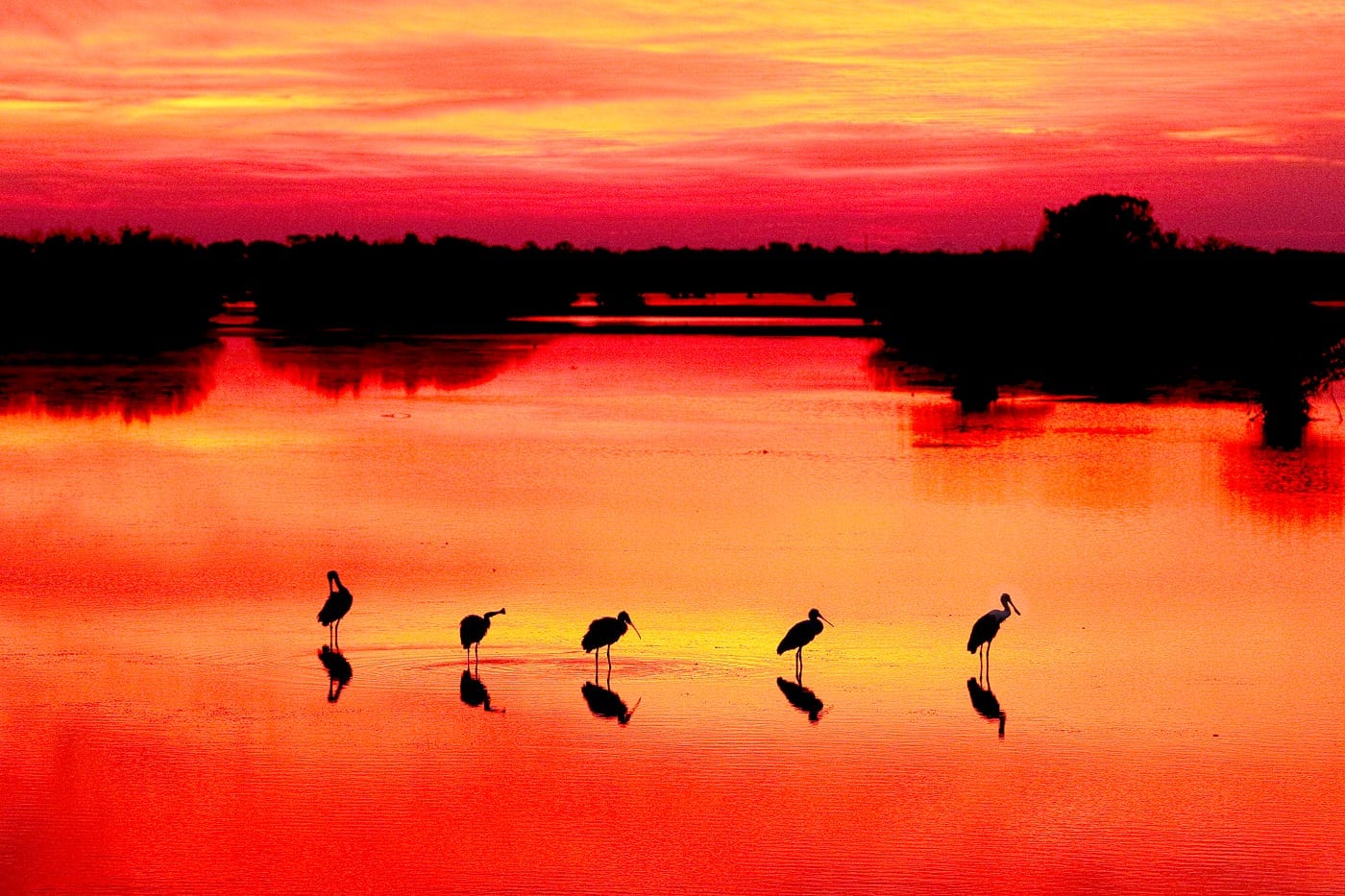
Paul: And so in 2001, I bought a Cannon 1D, the first professional digital camera body — I don’t know — something like three or four megapixels. I wasn’t going to switch to digital. I was just going to learn to teach people about histograms. That’s the only reason I got it. I don’t know, but I think it was 2001 or 2002. I went to New Mexico for my usual three or four weeks, and I had seven film camera bodies with me and my one digital body. And I was trying digital just a little bit. And then as fate would have it, near the end of the trip, we had a spectacular morning. The light in the predawn was amazing. And the birds were blasting off, and the colors were purple and red. And then it got to be more red and orange, as it got closer to sunrise. And then, the light changed every 10 minutes for an hour. Spectacular opportunities. And I had decided that morning I was going to do all digital. And when I got the pictures, number one, I didn’t have to wait a month to get them back from the lab. The pictures were right there. Every picture had the shutter speed and the aperture and the ISO. And I remember looking that morning at the pictures and saying, “I never learned so much in such a short time.” And I’d be glad to sell you one of those seven film camera bodies. They each have a partially exposed roll of film in them, and they’ve been sitting on the shelf since that morning. I never took another frame of film.

Arthur: Wow.

Selling Photography Guides: Digital Basics

Paul: Now we go ahead, and I’m seeing digital pictures online. We’re seeing lots of digital photographs being posted to different websites and critiquing sites. And I’m seeing how beautiful the digital reproduces for electronic use. And I’m seeing that a lot of people are ruining their pictures in Photoshop by over-sharpening them and over-saturating them. So, I decide I’m going to do a second Art of Bird Photography book, which went on to be called The Art of Bird Photography II. I started writing it, and I worked on the digital chapter first — just basic instructions of cameras and lenses and how to convert your raw files and why to use raw files and what to do with them in Photoshop.

So, I wrote and wrote and wrote and wrote. And then after a while, I started writing different chapters. And after four years of writing, I had a 900-page book which no one would have been able to lift. And I didn’t have the money to print it or store the books. So once I got up to 900 pages and more than 900 photographs, I realized that it was not feasible to make this a printed book, and I decided to do it on CD. And that’s what I did. And, boy, the economics were amazing. When the original, The Art of Bird Photography came out in hardcover and Amphoto sold a copy, I made about $1.75. By the time it went to softcover and they were selling it to a bookseller, I’d make like $0.95. Near the end of the run, when they were selling it to Amazon, I’d make $0.45. So, with traditional publishing, the photographer was not doing very well…or the writer.

Paul: Right. Right.

Arthur: So, I decided to publish the CD, but before I got to the publication year — it took four years to write the whole thing — I said, “Wait a second. I have good solid information here in the form of this digital information. And I’m watching all these people ruin their pictures in Photoshop.” So, I grabbed the chapter of digital photography, and I made it into a PDF, and I sold it as Digital Basics. We sold that for years as a standalone offering, Digital Basics, and I updated it — oh! — too many times. And I found that people were willing to pay good money — I think we sold it for $15.00, and then we raised it to $20.00 or maybe $25.00 — that people were willing to pay good money for solid information about photography that would help them become better photographers. So, the end result of the original Digital Basics file was that about six or seven years ago, I built myself a beautiful swimming pool, a lap pool in my backyard for $68,000. When I did the math at the time, it turned out that Digital Basics had paid for it in its entirety.

Paul: Wow.

Birds as Art: E-Guides

Arthur: And then recently we just introduced the Birds as Art current workflow e-guide, which I lovingly call Digital Basics II. So, a few years ago, I switched to Mac from PC, and I went from BreezeBrowser to Photo Mechanic, and I convert all my raw files in Cannon Digital Photo Professional 4, which is DPP4. So of course, I have guides on all of those things, and the new guide is selling fabulously well, and I just introduced another guide, really high-level, high-end stuff on doing micro adjustments, learning to adjust the focus on your expensive cameras and lenses to make most of the pictures as sharp as possible.

Birding Guides For Specific Areas

And then in the same vein, once I got this idea that… Actually, the way it happened is a funny story. A guy in England wrote me, and he said, “Hey, Art. I’m coming over to visit Fort Desoto. I know you’ve been there a lot. Would you please tell me what birds I could expect to photograph there and what’s the best places to go in the park? And what’s the best wind to go to each place, and what’s the best season for each bird? And while you’re at it, tell me a few good places to eat and where to stay in a good motel.”

Paul: Basically gave you a new business idea.

Arthur: Gave me a new business. So, I wrote the guy, and I said, “Hey, it’s going to take me a couple of days to write that up. Would you pay $50?”

He said, “Sure.”

So, I sent him just 10 pages with some pictures. He sent me $50. And then the next day, right after I sent it to him, I get another email, and it says, “Hey, I’m going to Fort Desoto.” And then, that’s how site guides were born. So now you can go to the Birds as Art online store and click on publications by Artie or on site guides. I’m not sure of all the designations. So now we have guides to Bosque in San Diego and Fort Desoto in Southwestern Florida. Came up with a new business plan from that. Hey, I’m getting tired of writing, but I’m a good editor. So, had some friends write different guides. Some of them are site guides. Some of whom are how-to photograph, and they write the guide. Unfortunately, most of them are not very good writers, so I get to edit the work, and then we sell it and split the money because I have the big online presence through the blog, and they have ideas. And basically, it’s worked out to be a great system.

So, yeah, selling information in digital form as PDFs or on CD — we’re actually getting away from CDs and the people overseas love that because they can do it just as a simple download.

So today, I make money by selling information in digital form, selling books and e-guides in digital form, a lesser amount of teaching every year after the insanity of last year where I had my gallbladder taken out on October 6, got on a plane, traveled around South America photographing and teaching for 11 weeks.

Paul: Wow. Yeah, I saw the notes on that, and it was like, wow, that’s a lot of work.

Arthur: That was insanity. So, I’m slowing down a bit, doing less teaching, just taking time to count my blessings.

Are you Having Fun?

Paul: Are you still having fun?

Arthur: Oh, every minute, every day. When this interview is over, I’m going to throw on my lined pants because I’m up on Long Island. It’s cold. And I’ve been trying to find this Hudsonian Godwit that’s been visiting Heckscher State Park, and I’ve been five times and not even gotten to see him.

Paul: Oh boy.

Arthur: Maybe today will be the magic.

Advice From Arthur Morris For Young Photographers

Paul: Well, we’ve been talking with Arthur Morris, world-class bird photographer, just a great inspiration in photography and in birdwatching and just some incredible work. As part of this podcast, we’ll have shownotes, which will have links to all of Arthur’s websites and all of his information as well as the books we’ve mentioned and some of the names and people we’ve mentioned.

So, Arthur, is there anything you’d like to, as we sort of wind up, leave the audience with, sort of as a parting anecdote?

Do What You Love

Arthur: Yes, Paul. Thank you. And thanks for all of your kind words. And the two things are, you asked me before, young photographers today, what are they going to do? So, I know a lot of professionals who will tell a young photographer, “You should be a school teacher or a seamstress or go into some other business. Photography is dying.” And I would never do that. I say to folks, to young kids, “Listen. Do what you love. Learn about your subjects as best you can. Make the best pictures that you can. Learn to think creatively about developing markets for your work or your ideas or teaching. And if you really love it, you’ll find a way to manage.” So, I would never want to discourage anybody by telling them they can’t do it.

Don’t Just Take Pictures, Write Too!

And then the, the last thing I wanted to mention, and I think it’s a great way to end because it sort of ties everything together, the writing and the photography and the teaching and how to generate income. Right now, I have a streak of blog posts. I think today is 94 days in a row with the new education blog posts. And most of them take me between one and three hours to prepare, and I do one every day now for 93 days. At one point, I was up to 480 days in a row with a new blog post, thinking I was going to do one for the rest of my life. And I went to this school for the Work — I mentioned Byron Katie. It’s a self-help, self-realization program. And when I got there, Katie said, “We ask that you turn off your computers for nine days.” So, I did. My original plan was to get up early and do a blog post, but I turned the computer off. That was the end of that streak, and then I’ve started a new one now, and I’m hoping to keep it going. Good health and good internet connections, going it.

So, it’s an educational blog. You go there every day. You’re going to learn something about photographing nature. And if you don’t photograph about birds or photographing in nature or photographing your grandchildren or doing travel photography…the principles are all the same. So, I strive to teach folks about digital photography every day. And people are going like, “Listen. Take a break once in a while. Take a day off. You don’t have to do it. Why are you so obsessed with it.” Yes, women that I date have strong feelings in that area.

Paul: But you enjoy it.

Arthur: But I love it. And a lot of that goes back to stuff with my dad. He was a demanding man. He was a World War II veteran, severely wounded in Okinawa. And I jokingly say the nicest thing my dad ever said to me was, “Take out the damn garbage.” So, I spend a lot of time wanting to get people to say the nice things he never did. I know he loved me in his way.

Blogs Generate Income

But the fact is that the blog generates income in getting people for tours, and the two huge things that are recent changes over the last four or five years, and that is I have a used gear page. You want to buy a camera, you want to buy a used lens, you go to the Birds as Art used gear page through the blog, and there is dozens of folks who have come to trust me for my pricing advice and acumen and just a wonderful community where people are buying and selling lenses, as much as 8—, $10,000, almost on a daily basis, all on trust. You send me the check, and when it clears, I’ll ship you the lens. And we’ve had, out of probably a thousand sales in the last four or five years, we’ve had maybe one and a half unhappy customers. That’s quite remarkable.

Paul: That’s a pretty good percentage.

Arthur: Yeah. And then the second thing that’s been amazing for me is I get a new lens. I get my hands on a new lens like the 100-400 II, my beloved lens, focuses so close. It’s lightweight. We didn’t even get into the fact that all of these birders now want to become photographers with the camera. So now, I advertise this lens, and if I can get you, Paul Parisi, to believe me, that this 100-400 II Canon lens is the greatest thing since baked break, you click on my link, all these active links that take hours to integrate into the blog post, you click on my link, I get 3.5% back from B&H. And I’m upfront about that. We ask people to write for advice, and then we have the Birds as Art store that sells you the tripods and the tripod heads as well as all our books and educational materials. And the two things combined — the used gear sales and the B&H affiliate sales, they combine annually now, the last couple of years, for well more than what I ever made as a teacher.

Paul: Wow.

Arthur: So, you know, I love the blog. I love being the center of attention. I love sharing my work. So even though my pictures don’t have value today as stock, they have tremendous value in education.

Paul: Oh, excellent. I think the value too is in helping, when you’re talking about equipment especially, is helping somebody choose. It’s so hard to know what’s going to work well. And that experience of you and having been on one of your photo tours, I learned so much about what you should do and shouldn’t do and what you said buy and shouldn‘t buy. And it was really helpful for me. So, I’d encourage people to look at the links in the show notes and visit Arthur’s blog as well as his stores.

Conclusion

Arthur: Me too. So, I’ll just close by saying that having lost Elaine to death was, at the time, a brutal blow, and I did find peace through the Work and that lady Byron Katie. But looking back on the last 20, 30 years, it’ll be… I think it will be 34 years this August. I can say that I’ve been just truly blessed to make a living doing what I love to do — teaching others, sharing my stuff. I mean I’ve got plenty of students who have won BBC awards and honored images in the biggest contests. And that’s very gratifying. And I’ve just made so many wonderful friends. It is my life. It is my passion, and I’m very thankful and appreciative and, as I am appreciative to you for asking me on the show.

Paul: Well thank you. And again, we’ve been talking with Arthur Morris. I encourage you to get a hold of his book, The Art of Bird Photography. Phenomenal book. But, Arthur, thank you for your time, and we’ll be talking soon.

Arthur: Cheers, Paul. You have a great one.

More Episodes:

You’ve been listening to Part 3 of our interview with Arthur Morris. If you missed Part 1, you can listen to it here and if you missed part 2, you can find it here!

© 2026 Paul Parisi

Theme by Anders NorénUp ↑