Tag: #photographer

The Business of Birding: How to Make Money as a Bird Photographer

On Episode 76 of The Edge of Innovation, we’re talking with world-renowned nature photographer Arthur Morris, about the business side of photography and how to make money as a bird photographer!
Show Notes

Arthur Morris’ Website: Birds As Art
Arthur Morris’ Blog
Find Arthur Morris on Facebook
Find Arthur Morris on Twitter
Information for the Birds As Art Instructional Photo Tours
About Arthur Morris & Birds As Art
The Birds As Art Online Photography Store
Buy Arthur Morris’ book, The Art of Bird Photography, online here:
Arthur Morris’ Book, Shorebirds: Beautiful Beachcombers
Cannon 1D – The first professional digital camera body
How to Read and Use Histograms
Digital Basics from Arthur Morris
Available to Buy: Books, Videos and Training Instruction by Arthur Morris, as well as books by his friends and colleagues
Fort Desoto Site Guide
Birds: Hudsonian Godwit
Heckscher State Park
The Work of Byron Katie
100-400mm Camera Lens
Link to SaviorLabs Assessment

Sections

Photography’s Decline as a Lucrative Business
Switching From Film To Digital
Selling Photography Guides: Digital Basics
Birds as Art: E-Guides
Birding Guides For Specific Areas
Are you Having Fun?
Advice From Arthur Morris For Young Photographers
Do What You Love
Don’t Just Take Pictures, Write Too!
Blogs Generate Income
Conclusion
More Episodes

The Business of Birding: How to Make Money as a Bird Photographer

Photography’s Decline as a Lucrative Business

Paul: Now let’s move a little bit more towards photography. So, you’ve sort of outlined at a high level, that it’s really a huge decline from it being a lucrative business in 2001, very lucrative, to almost non-existent in 2016. I don’t think there’s anybody out there that could live on $2000 a year, and they’re not going to be all as good a photographer as you. So, what’s your prognosis for the world of photography?

Arthur: Like I say, there are folks making a living. Here’s a good example for nature. My friend Darrell Gulin, who is nowhere near as famous as me, he’s a great photographer. And he has concentrated on stock photography. And he was the one who taught me, hey stock photography is not about how many good pictures you have, it’s learning to photograph to a concept. So, you might photograph a mother and baby bird together. And there is this tenderness concept and caring and caregiving. And photographing to different concepts like power and strength and creativity. And he was great at doing that. And boy, if you go back to 2001 when he was making six, seven figures from a bunch of stock agencies… And the last time I talked to him, he was down about 60% to 70%, and he’s on my list of people to call when I had this latest revelation of down 99% for us. You know, I’m sure he’s still making money, but the trick for me was to realize that if I didn’t come up with some new ideas, I was going to be working in Walmart or working in Burger King.

So, one of the breakthrough things, you mentioned the original, The Art of Bird Photography, that sold 15,000 copies in hardcover and then another 30,000 copies, I believe, in softcover. And one year, when I called Amphoto, and I said I want to order another 20 cases, they said, “We’re sorry. We’re letting that book go out of print.”

Paul: Wow.

Arthur: I said, “You said what?”

They said, “Yeah.”

So, then I came up with this idea of self-publishing the book. To do that, amazingly, I needed to buy the rights to my own book. That cost me a little under $2,000. And I wound up going back to the original printer in Hong Kong, and I remastered the cover and changed one or two pages to update them a bit. And we republished the book, and I printed 10,000 books. And 10,000 books may not seem like a lot of books until a yellow freight truck backs just your driveway and unloads four pallets of books, each one bigger than a Volkswagen. And you have to figure out what to do with them. And now it’s six, seven, eight years later, and we’ve sold about seven of the 10,000. So, who knows? If I live long enough, maybe we’ll have to reprint the reprint.

Paul: Wow. I just, anybody listening, it is one of the best books. Again, I’ve said that. I don’t think I could overstate it. It is a phenomenal book.

Arthur: Well, we’re pretty much the only ones who sell them through the website and the blog.

Switching From Film To Digital

Arthur: But on to more important things… 2002′ or ’04, I come up. I’ve now switched from film to digital, and I love digital so much that I wish I had never heard the word “film.”

Paul: Really? Okay. So, when did you first? You said you first switched to digital when?

Arthur: 2001.

Paul: 2001. So, what was that first camera?

Arthur: Well I was not going to switch to digital. I was going to be shooting film in 2020. Funny, Darrell Gulin said the same thing.

Paul: A lot of people have said that.

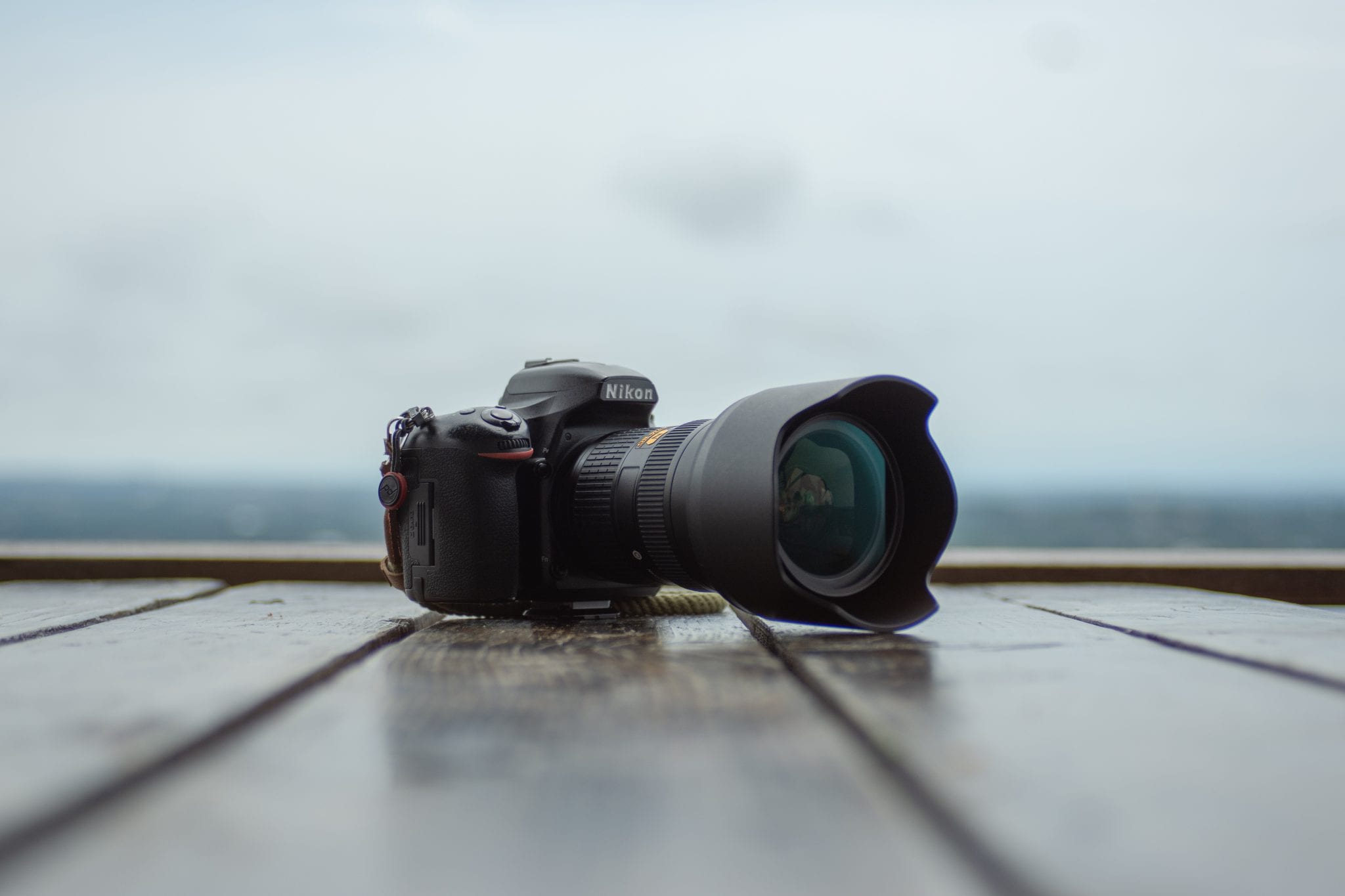
Paul: And so in 2001, I bought a Cannon 1D, the first professional digital camera body — I don’t know — something like three or four megapixels. I wasn’t going to switch to digital. I was just going to learn to teach people about histograms. That’s the only reason I got it. I don’t know, but I think it was 2001 or 2002. I went to New Mexico for my usual three or four weeks, and I had seven film camera bodies with me and my one digital body. And I was trying digital just a little bit. And then as fate would have it, near the end of the trip, we had a spectacular morning. The light in the predawn was amazing. And the birds were blasting off, and the colors were purple and red. And then it got to be more red and orange, as it got closer to sunrise. And then, the light changed every 10 minutes for an hour. Spectacular opportunities. And I had decided that morning I was going to do all digital. And when I got the pictures, number one, I didn’t have to wait a month to get them back from the lab. The pictures were right there. Every picture had the shutter speed and the aperture and the ISO. And I remember looking that morning at the pictures and saying, “I never learned so much in such a short time.” And I’d be glad to sell you one of those seven film camera bodies. They each have a partially exposed roll of film in them, and they’ve been sitting on the shelf since that morning. I never took another frame of film.

Arthur: Wow.

Selling Photography Guides: Digital Basics

Paul: Now we go ahead, and I’m seeing digital pictures online. We’re seeing lots of digital photographs being posted to different websites and critiquing sites. And I’m seeing how beautiful the digital reproduces for electronic use. And I’m seeing that a lot of people are ruining their pictures in Photoshop by over-sharpening them and over-saturating them. So, I decide I’m going to do a second Art of Bird Photography book, which went on to be called The Art of Bird Photography II. I started writing it, and I worked on the digital chapter first — just basic instructions of cameras and lenses and how to convert your raw files and why to use raw files and what to do with them in Photoshop.

So, I wrote and wrote and wrote and wrote. And then after a while, I started writing different chapters. And after four years of writing, I had a 900-page book which no one would have been able to lift. And I didn’t have the money to print it or store the books. So once I got up to 900 pages and more than 900 photographs, I realized that it was not feasible to make this a printed book, and I decided to do it on CD. And that’s what I did. And, boy, the economics were amazing. When the original, The Art of Bird Photography came out in hardcover and Amphoto sold a copy, I made about $1.75. By the time it went to softcover and they were selling it to a bookseller, I’d make like $0.95. Near the end of the run, when they were selling it to Amazon, I’d make $0.45. So, with traditional publishing, the photographer was not doing very well…or the writer.

Paul: Right. Right.

Arthur: So, I decided to publish the CD, but before I got to the publication year — it took four years to write the whole thing — I said, “Wait a second. I have good solid information here in the form of this digital information. And I’m watching all these people ruin their pictures in Photoshop.” So, I grabbed the chapter of digital photography, and I made it into a PDF, and I sold it as Digital Basics. We sold that for years as a standalone offering, Digital Basics, and I updated it — oh! — too many times. And I found that people were willing to pay good money — I think we sold it for $15.00, and then we raised it to $20.00 or maybe $25.00 — that people were willing to pay good money for solid information about photography that would help them become better photographers. So, the end result of the original Digital Basics file was that about six or seven years ago, I built myself a beautiful swimming pool, a lap pool in my backyard for $68,000. When I did the math at the time, it turned out that Digital Basics had paid for it in its entirety.

Paul: Wow.

Birds as Art: E-Guides

Arthur: And then recently we just introduced the Birds as Art current workflow e-guide, which I lovingly call Digital Basics II. So, a few years ago, I switched to Mac from PC, and I went from BreezeBrowser to Photo Mechanic, and I convert all my raw files in Cannon Digital Photo Professional 4, which is DPP4. So of course, I have guides on all of those things, and the new guide is selling fabulously well, and I just introduced another guide, really high-level, high-end stuff on doing micro adjustments, learning to adjust the focus on your expensive cameras and lenses to make most of the pictures as sharp as possible.

Birding Guides For Specific Areas

And then in the same vein, once I got this idea that… Actually, the way it happened is a funny story. A guy in England wrote me, and he said, “Hey, Art. I’m coming over to visit Fort Desoto. I know you’ve been there a lot. Would you please tell me what birds I could expect to photograph there and what’s the best places to go in the park? And what’s the best wind to go to each place, and what’s the best season for each bird? And while you’re at it, tell me a few good places to eat and where to stay in a good motel.”

Paul: Basically gave you a new business idea.

Arthur: Gave me a new business. So, I wrote the guy, and I said, “Hey, it’s going to take me a couple of days to write that up. Would you pay $50?”

He said, “Sure.”

So, I sent him just 10 pages with some pictures. He sent me $50. And then the next day, right after I sent it to him, I get another email, and it says, “Hey, I’m going to Fort Desoto.” And then, that’s how site guides were born. So now you can go to the Birds as Art online store and click on publications by Artie or on site guides. I’m not sure of all the designations. So now we have guides to Bosque in San Diego and Fort Desoto in Southwestern Florida. Came up with a new business plan from that. Hey, I’m getting tired of writing, but I’m a good editor. So, had some friends write different guides. Some of them are site guides. Some of whom are how-to photograph, and they write the guide. Unfortunately, most of them are not very good writers, so I get to edit the work, and then we sell it and split the money because I have the big online presence through the blog, and they have ideas. And basically, it’s worked out to be a great system.

So, yeah, selling information in digital form as PDFs or on CD — we’re actually getting away from CDs and the people overseas love that because they can do it just as a simple download.

So today, I make money by selling information in digital form, selling books and e-guides in digital form, a lesser amount of teaching every year after the insanity of last year where I had my gallbladder taken out on October 6, got on a plane, traveled around South America photographing and teaching for 11 weeks.

Paul: Wow. Yeah, I saw the notes on that, and it was like, wow, that’s a lot of work.

Arthur: That was insanity. So, I’m slowing down a bit, doing less teaching, just taking time to count my blessings.

Are you Having Fun?

Paul: Are you still having fun?

Arthur: Oh, every minute, every day. When this interview is over, I’m going to throw on my lined pants because I’m up on Long Island. It’s cold. And I’ve been trying to find this Hudsonian Godwit that’s been visiting Heckscher State Park, and I’ve been five times and not even gotten to see him.

Paul: Oh boy.

Arthur: Maybe today will be the magic.

Advice From Arthur Morris For Young Photographers

Paul: Well, we’ve been talking with Arthur Morris, world-class bird photographer, just a great inspiration in photography and in birdwatching and just some incredible work. As part of this podcast, we’ll have shownotes, which will have links to all of Arthur’s websites and all of his information as well as the books we’ve mentioned and some of the names and people we’ve mentioned.

So, Arthur, is there anything you’d like to, as we sort of wind up, leave the audience with, sort of as a parting anecdote?

Do What You Love

Arthur: Yes, Paul. Thank you. And thanks for all of your kind words. And the two things are, you asked me before, young photographers today, what are they going to do? So, I know a lot of professionals who will tell a young photographer, “You should be a school teacher or a seamstress or go into some other business. Photography is dying.” And I would never do that. I say to folks, to young kids, “Listen. Do what you love. Learn about your subjects as best you can. Make the best pictures that you can. Learn to think creatively about developing markets for your work or your ideas or teaching. And if you really love it, you’ll find a way to manage.” So, I would never want to discourage anybody by telling them they can’t do it.

Don’t Just Take Pictures, Write Too!

And then the, the last thing I wanted to mention, and I think it’s a great way to end because it sort of ties everything together, the writing and the photography and the teaching and how to generate income. Right now, I have a streak of blog posts. I think today is 94 days in a row with the new education blog posts. And most of them take me between one and three hours to prepare, and I do one every day now for 93 days. At one point, I was up to 480 days in a row with a new blog post, thinking I was going to do one for the rest of my life. And I went to this school for the Work — I mentioned Byron Katie. It’s a self-help, self-realization program. And when I got there, Katie said, “We ask that you turn off your computers for nine days.” So, I did. My original plan was to get up early and do a blog post, but I turned the computer off. That was the end of that streak, and then I’ve started a new one now, and I’m hoping to keep it going. Good health and good internet connections, going it.

So, it’s an educational blog. You go there every day. You’re going to learn something about photographing nature. And if you don’t photograph about birds or photographing in nature or photographing your grandchildren or doing travel photography…the principles are all the same. So, I strive to teach folks about digital photography every day. And people are going like, “Listen. Take a break once in a while. Take a day off. You don’t have to do it. Why are you so obsessed with it.” Yes, women that I date have strong feelings in that area.

Paul: But you enjoy it.

Arthur: But I love it. And a lot of that goes back to stuff with my dad. He was a demanding man. He was a World War II veteran, severely wounded in Okinawa. And I jokingly say the nicest thing my dad ever said to me was, “Take out the damn garbage.” So, I spend a lot of time wanting to get people to say the nice things he never did. I know he loved me in his way.

Blogs Generate Income

But the fact is that the blog generates income in getting people for tours, and the two huge things that are recent changes over the last four or five years, and that is I have a used gear page. You want to buy a camera, you want to buy a used lens, you go to the Birds as Art used gear page through the blog, and there is dozens of folks who have come to trust me for my pricing advice and acumen and just a wonderful community where people are buying and selling lenses, as much as 8—, $10,000, almost on a daily basis, all on trust. You send me the check, and when it clears, I’ll ship you the lens. And we’ve had, out of probably a thousand sales in the last four or five years, we’ve had maybe one and a half unhappy customers. That’s quite remarkable.

Paul: That’s a pretty good percentage.

Arthur: Yeah. And then the second thing that’s been amazing for me is I get a new lens. I get my hands on a new lens like the 100-400 II, my beloved lens, focuses so close. It’s lightweight. We didn’t even get into the fact that all of these birders now want to become photographers with the camera. So now, I advertise this lens, and if I can get you, Paul Parisi, to believe me, that this 100-400 II Canon lens is the greatest thing since baked break, you click on my link, all these active links that take hours to integrate into the blog post, you click on my link, I get 3.5% back from B&H. And I’m upfront about that. We ask people to write for advice, and then we have the Birds as Art store that sells you the tripods and the tripod heads as well as all our books and educational materials. And the two things combined — the used gear sales and the B&H affiliate sales, they combine annually now, the last couple of years, for well more than what I ever made as a teacher.

Paul: Wow.

Arthur: So, you know, I love the blog. I love being the center of attention. I love sharing my work. So even though my pictures don’t have value today as stock, they have tremendous value in education.

Paul: Oh, excellent. I think the value too is in helping, when you’re talking about equipment especially, is helping somebody choose. It’s so hard to know what’s going to work well. And that experience of you and having been on one of your photo tours, I learned so much about what you should do and shouldn’t do and what you said buy and shouldn‘t buy. And it was really helpful for me. So, I’d encourage people to look at the links in the show notes and visit Arthur’s blog as well as his stores.

Conclusion

Arthur: Me too. So, I’ll just close by saying that having lost Elaine to death was, at the time, a brutal blow, and I did find peace through the Work and that lady Byron Katie. But looking back on the last 20, 30 years, it’ll be… I think it will be 34 years this August. I can say that I’ve been just truly blessed to make a living doing what I love to do — teaching others, sharing my stuff. I mean I’ve got plenty of students who have won BBC awards and honored images in the biggest contests. And that’s very gratifying. And I’ve just made so many wonderful friends. It is my life. It is my passion, and I’m very thankful and appreciative and, as I am appreciative to you for asking me on the show.

Paul: Well thank you. And again, we’ve been talking with Arthur Morris. I encourage you to get a hold of his book, The Art of Bird Photography. Phenomenal book. But, Arthur, thank you for your time, and we’ll be talking soon.

Arthur: Cheers, Paul. You have a great one.

More Episodes:

You’ve been listening to Part 3 of our interview with Arthur Morris. If you missed Part 1, you can listen to it here and if you missed part 2, you can find it here!

Living the Dream as a Nature Photographer With Arthur Morris

On Episode 75 of The Edge of Innovation, we’re talking with Arthur Morris who’s living the dream as a world renowned nature photographer! He’s sharing with us the story of how it all began!
Show Notes

Arthur Morris’ Website: Birds As Art
Arthur Morris’ Blog
Find Arthur Morris on Facebook
Find Arthur Morris on Twitter
Information for the Birds As Art Instructional Photo Tours
About Arthur Morris & Birds As Art
The Birds As Art Online Photography Store
Buy Arthur Morris’ book, The Art of Bird Photography, online here:
Arthur Morris’ Book, Shorebirds: Beautiful Beachcombers
Jamaica Bay Wildlife Refuge in Queens, New York City
New York City Audubon Society
Bird Watcher’s Digest
Photographer Milton Heiberg
Photographer Thomas Mangelsen
iBird – A Handheld Field Guide to birds of North America
Roger Tory Peterson
Peterson Field Guides to Eastern Birds
Cape May Bird Observatory
Festival of the Cranes
Cape May Fall Festival
Available to Buy: Books, Videos and Training Instruction by Arthur Morris, as well as books by his friends and colleagues
Link to SaviorLabs Assessment

Sections

Arthur Morris’ Dream
Selling Pictures of Birds
How Arthur Morris First Began Publishing Articles
Writing and Photography Go Together
Drawing as a Child: How it Helped
Photography is Learned
Birds As Art: How the Name Came About
For the Love of Birds
The Decline of Selling Stock Photos
How Can Photographers Make Money Besides Selling Photos?
Birding: A Popular Pastime That is Growing Everyday
More Episodes

Living the Dream as a Nature Photographer

Arthur Morris’ Dream

Paul: So, what did the people around you think as you’re starting on this and in ’83 you’re picking up a camera and you’re a teacher. Was it just like no big deal or where did this come from or…?

Arthur: It was no big deal. I had played golf in college and wound up being captain of Brooklyn College Golf Team. Compared to my predecessors I wasn’t very good. I had a great friend who when he was a senior, his name was Dom Ferrone, and he wound up winning the Met intercollegiate one year in a huge upset over two scholarship golfers from Princeton and Pace University.

Paul: Wow.

Arthur: And, I still have the New York Times article. And I talk to Donnie once in a while. He knew he wasn’t good enough to make it on the tour, but he fulfilled his dream by becoming a head teaching profession at Callaway Gardens in Georgia.

Paul: Oh, cool.

Arthur: So I’m photographing away, and of course, it was all film then and had a halfway decent collection of slides. And to get my dream rolling, I decided I would try to sell a few bird pictures here and there.

Paul: Well, but before you go there, what was the dream?

Arthur: The dream was just that I could be a professional nature photographer specializing in birds.

Paul: Okay. So, you actually articulated that. You thought, okay, I’m going to go and do this for a living. I’m going to try to.

Arthur: In my, in my own head.

Paul: Right, right.

Arthur: You know, I didn’t share it with anybody then. It was sort of a secret dream. Again, with no planning. Just pretty much everything I’ve done in my life is just by hook or by crook, seat of the pants. We’ll take one step at a time and see what happens.

So, by the late ’80s, my marriage had ended, and I remarried my best friend who I’d known for 13 or 14 years, Elaine Belsky. We had three different apartments in Howard Beach section of Queens, which conveniently was by Jamaica Bay Refuge.

Paul: Was that by design?

Arthur: It was convenient because Elaine’s ex-husband, Marvin, and her son lived in Canarsie.

Paul: I see.

Selling Pictures of Birds

Arthur: And my school was in Bushwick. So, it was a neat little triangle. So that worked well. Then I guess I thought, if I’m going to be a professional, I might as well try to sell a few pictures. So, I started sending pictures into Bird Watcher’s Digest and Birder’s World. Very rarely I would sell a photograph for $50 or $75. And then it dawned on me, hey, if I’m killing myself to sell one picture to be used with someone else’s article, how about if I write the article, get paid for the article, and sell five or six pictures with the article. That seemed like a much better idea.

The funny part is lots of people tell you if you want to get started as a writer or a photographic illustrator, illustrating your stories with your pictures, the best way to do it is to write a cover letter and make it interesting and include a few pictures. And then all the editors will come running back to you telling you how much they want you to do this or that article for them.

So, I tried that, and I must have sent out a dozen cover letters with story ideas to different editors, and I didn’t even get a rejection letter. I got nothing. So, I said, this isn’t working very well. I don’t think these people are accurate.

How Arthur Morris First Began Publishing Articles

Arthur: And I forget if I read it somewhere, but it’s turned out I was much more successful in writing an article, getting it proofread by a friend or two, and sending it along with a tight submission of maybe 20 photographs for the editor to choose from.

So, my first victim, or target, was a lady named Mary Beacom Bowers at Bird Watcher’s Digest. Bird Watcher’s Digest was published six times a year, and every issue had 20 articles or so. So, I figured that would be good.

I sent a package to Mary, and she sent me back a note with a promise to publish. So a month went by, and I got my Bird Watcher’s Digest, and I opened it up, and look on the table of contents for the name Arthur Morris — nothing. Then two months later — nothing. A year later — nothing. Two years later — nothing. So, I have this promise to publish that’s not getting published. I’ve always been a very determined person. Most people by this point, I think, would have called the editor and reminded them and said give me a break in life or maybe complained a little bit. But I came up with an alternate plan. I sent her a second article. And a few months after that, I went down to Cape May for some birding festival, Cape May, New Jersey. And I had the pleasure of meeting Mary Bowers for the first time.

And by that time, she had published the second article, and then in the next issue, published the first article. And they went on in a period of six years or so where I had about 25 articles published. You know, that sort of got me in on the ground floor at a time when you could sell photographs.

When I met Mary, she was this just this gentle, southern woman with a beautiful southern accent. And she said, “Artie, I do declare, you sent me that first article, and I held it for two years, and I never published it.” She said, “It just impressed me, your determination. And instead of calling me and complaining, you sent me a second article, and boy I really admire determination in a person.”

Her health is very failing, and I don’t know if she’s alive to this minute. The publisher who is now the editor of Bird Watcher Digest promised to get in touch when Mary passed. But I do, when I have a thorny grammatical problem, to this day I will email Mary because she knew language better than anyone that I’ve ever come across. And she was a very sweet and loving woman, Mary Beacom Bowers. And she was like the golf teacher that inspires you by just praising you — not real concrete suggestions, just, “Oh, Arnie, that was so beautifully written, I didn’t even have to raise my pen.”

Paul: Wow.

Arthur: Then, the second thing that happened was that there was a little nicer — and by “nicer” I meant finer paper and nicer photographic reproductions — and that was Birder’s World. And I worked with two editors there. One was named Julie Riddle and Mary Catherine Parks. And one of them, I sent an article about photographing birds from blinds called “No reason to hide.” Because in Europe, a hide is like a little blind. But I never used a blind. I just crawled in the mud and got close to the birds. And I sent her the article, and my memory precludes me from knowing if it was Mary Catherine Parks or Julie Riddle. In any case, one of them said, “Artie, you know that part that you wrote about your crawling through the mud and the no-see-ums are biting the back of your hand, and 10 feet away, a least sandpiper slept peacefully,” she said, “That’s a little first-person anecdote. If you would add some more of those to the article, we’ll publish it.”

So I did, and that became sort of the hallmark of my storytelling, interspersing what I was feeling and doing and thinking and seeing with some solid information.

Paul: Interesting.

Arthur: So between Mary Catherine Parks and Julie Riddle and Mary Bowers, they inspired me to write more. And, you know, that’s become instrumental in my success in the failing photography market, as far as being able to sell images, is my ability to write and write good how-to, and that connects with my blog, which is the life blood of my business today.

Writing and Photography Go Together

Paul: Well, let’s get into that in a minute. But so now you’re talking about… You sort of, just to reiterate, you went off to become a professional photographer, and you ended up being a writer as well.

Arthur: Oh absolutely. If the writing hadn’t kicked in, I’d be a greeter in Walmart or serving hamburgers at Burger King.

Paul: Wow. So, you’re a photographer is what you are. You’re not a writer. Or are you both?

Arthur: Oh, I’m surely both.

Paul: Sure. But I mean, when you think of yourself, do you say, “I’m a writer. You know, I’m like Stephen King. I write.” That’s all Stephen King does is write. And I don’t mean to say “all,” but, I mean, that’s what he… That’s the definition.

Arthur: Today I think of myself as a photojournalist.

Paul: Okay. Interesting.

Arthur: You know, there’s no way I could survive as a photographer, not for one day, one hour, one minute. And we’ll get into that in a little bit as far as the declining market for photographs.

Drawing as a Child: How it Helped

Paul: Right. So, I mean, were you very artistic when you were younger? Did you learn everything about composition and all of the fine arts side of photography, the artistic side of photography?

Arthur: Well I liked to draw when I was a kid, and in elementary school, for the first five years, six years, kindergarten through fifth grade, I was a star student. They used to have S-Os. So I would get “outstanding” in every single thing. You know, I was perfectly well behaved. I was a good kid.

And then in sixth grade, I had a teacher named Mrs. McMenamin. I don’t know if she’s… I doubt that she’s still alive. And the first week of school, my mother was called up to the principal’s office by Mrs. McMenamin about four times. I was the same kid. I didn’t do anything different than I had ever done. One day we had a new girl in class after about the first month. The girl’s name was Sarah Lee Miller. Don’t ask me how I remember that after 65 years. But Sarah Lee Miller came into class in sixth grade, and we used to put our chairs up on the desk before we went home. And Sarah lee knocked one chair over, and about 25 chairs fell on the ground like a domino effect. And I remember Mrs. McMenamin shouting out, “Okay, Morris, 25 demerits.” I hadn’t done anything that nobody, anyone in the class hadn’t done.

We learned later that she was an anti-Semite, and to punish me — because I had the grades to be put ahead a grade. There was a program in junior high where you did 7th grade and then 9th grade. They called it SP, special progress. I more than had the grades for that. But the punishment, she could put me in special art, which I didn’t do very much with that. I wasn’t really artistic. I liked to draw, but I wasn’t very good at it. So, it actually turned out to be nice. I had one more year in junior high than the smart kids, went on to Brooklyn Tech, and didn’t do anything particularly artistic.

Photography is Learned

We’ll skip ahead to that first nature photography class. I was so proud. I had one picture of a Greater Yellowlegs that I took at Sandy Hook. And by, just pure luck I managed to get the right exposure. And we did a critiquing session. Milton Heiberg projected the slide, and everyone said “Oooh.” And Milton said, “Well, it’s very nice, but why did you put the bird in the middle?”

And I said, “Well, where are you supposed to put the bird?” I didn’t know any better, that we want to move the bird back in the frame and give it room to see.

So, I guess you could say that everything compositionally and artistically was learned. I think that there must have been some innate stuff lurking in my brain with an artistic side but that definitely was mostly learned and had to be nurtured and developed.

Paul: Would this be fair? You saw birds. You loved birds. And then you said, “Well, let me take pictures of birds.” And you enjoyed that. And then you wanted to have your bird artwork publicized, and you couldn’t get it publicized, so you started writing articles. And along with that, you started to get published, both your pictures and your articles.

Arthur: That is all correct then. I just had a thought. Keep talking about the art stuff and the transitioning from being a school teacher to thinking there was a chance I might be able to make some money as a photographer or, as it turned out, to be a photojournalist.

Birds As Art: How the Name Came About

So probably sometime about 1989, 1990, I was living with Elaine, and we were recently married, and I was telling her that I might want to be a professional photographer one day, but I needed a name for my business. At the time, there was a famous photographer named Tom Mangelsen. He’s still well known. And I think his business name was Reflections of Nature. And everybody who was getting into photography took a play on his name — Images of Nature, Nature’s Reflections, Reflections of Nature.

I said, “Elaine, what could we do? I need a good business name, and I don’t want it to be ‘reflections’ of anything.”

So, we sort of brainstormed for a minute, and she said, “Well, you like birds, and your work is artistic, and your name is Arthur, and short for that is Artie or Art,” and then she blurted out “Birds as Art.”

And I remember at the moment, I said, “Oh, babe, that’s amazing. That’s the greatest thing I ever heard — Birds as Art.”

So, I would go on to lose her to breast cancer in 1994, and it’s just very comforting to know that even today in the age of digital, every time I press the shutter button, Birds as Art is embedded in the metadata. So Elaine lives on.

Paul: Wow. That’s great.

Arthur: She was always my best friend and my biggest supporter. And you know, I was sad for a long time after she died. Then I got into this stuff called the Work, the Work of Byron Katie and found the good measure of peace, and now I can look back on Elaine Belsky just with nothing but smiles and how lucky I was to be with her for nine years.

For the Love of Birds

Paul: So now, if you had not sold that article or not found the path to being able to get your pictures published, I’ll bet you’d still be looking at birds. You’d be doing something else for income, but you’d be probably still looking at birds because you loved birds.

Arthur: Oh, I always have said that if I never sold one photograph, if I never sold one article, if I never led one photographic tour teaching other people, that I’d be spending just as much time photographing birds. It’s not a question. The fact that I was able to make a living in what turned out to be an amazingly lucrative living doing what I love to do more than anything in the world, that’s the miracle of my life. Everyone should be so blessed.

The Decline of Selling Stock Photos

Paul: So, well let’s talk a little bit about sort of the business of it, as it’s evolved throughout the years. So you had this first foray into the business of it by creating an article. So pretty smart, from a bystander saying, “Okay, you’re not going to publish my, my pictures; I’ll send you an article with pictures.” And so you got that in there. Then what was the next thing that happened? Did you just continue to write articles?

Arthur: I wrote a lot, and I had sent some pictures to VIREO, and the guy who was director then, name was J. Pete Meyers, and I said, “I’m a fledging bird photographer.”

And he wrote back, and he said, “You’re far more than a fledging bird photographer.” But in fact, that’s what I was.

So VIREO started selling a few pictures, and at the time, in the late ’90s and the very early part of the aughts, there was some money to be made selling nature photography as stock by doing it the hard way, not through a stock agent. Although VIREO was a quasi-stock agency — Visual Resources for Ornithology, part of the Academy of Natural Science at Philadelphia. And at the height of it, maybe they were selling four or five thousand dollars twice a year. So, I get some decent checks. And we were sending stuff over the transom.

I remember in the early years just going to the bookstores, looking at the books and magazine, finding the name of the publisher, writing a cover letter, sending samples, and selling a few pictures. And that grew. Elaine was gone in ’94. But 2001, I hired my daughter Jennifer to help me run the business in 1998. And probably the height of the sales of images to be used in books and on calendars was probably about 2001 because Jennifer’s my quasi accountant. And I said, “Hey, Jen, see how much money we made selling photographs in 2001.”

So, she went back through the spreadsheets, and she came up with a figure of about $220,000.

Paul: That’s pretty good in that year.

Arthur: Pretty damn good for selling the rights to photographs to be used in books and magazines and — I don’t remember — maybe even on a website or two back then.

So, in 2011, 10 years, I said to Jen, “Hey, Jen, you remember when you used to do that thing with where we made to money from?” I said, “Just go back and check the sales of pictures. Just pictures that we sold to publishers for books and magazines and websites usage.” And pretty stunningly — I mean, I knew things were bad, but I didn’t realize how bad — we had sold, from 2001 when we sold $220,000 worth of images, to 2011, that number had dropped to just under $20,000 for the year.

Paul: Wow. So a tenth.

Arthur: Then a month ago, I said to Jen, “Hey, Jen, go back and see how much we made from selling pictures in 2016.” $2004.

Paul: Wow.

Arthur: Down another 90%. So really, in essence, down about 99%.

How Can Photographers Make Money Besides Selling Photos?

Paul: Wow. So would you say — I mean, a lot of photographers are probably going to listen to this — that you need to find alternate ways to make money than selling photos?

Arthur: I’m sure there’s some photographers around, commercial, who are still surviving by selling photographs. In nature photography, the market has gotten a thousand times tighter. Sometime after 9-11, traditional publishing of hardcopy books and calendars has just gone totally downhill. And then other factors for involved in that. It’s so much easier to become a good digital photographer than it was to become a good photographer with film so that there are hundreds of excellent photographers. And the way it’s worked out is many of them are more than happy to give away their photographs for a credit line. So, the market is virtually destroyed.

Paul: Hmm. Interesting.

Arthur: A perfect example of that is a little publishing project called iBird. There used to be a guy named Peter Thayer. And he used to make bird recording CDs, and he bought all the pictures through VIREO. And not only did he pay a fair price, $60 or $70 for each photograph, but when he would sell 10,000 CDs as per the contract, you would get paid a second time. So those were some nice checks.

Then along came this guy with iBird, and he emailed every bird photographer he could find on the planet, and he came up with the following pitch. You let me use your pictures for free on this new CD I’m doing for bird recordings called iBird, and I will use your picture, and I will give you a credit line, and people will be soon lining up to buy your pictures from you because you’ll have 2— or 300 pictures on my iBird CD.

So many of the best photographers bought that deal. I did not. I said, that’s ridiculous. Then the credit line for each photographer you need a 20-power magnifier to read it. And no one has ever sold a picture. But the end result was Peter Thayer pretty much went out of business, and the iBird guy went on, I would think, to be a multi-millionaire because he expanded to just dozens and dozens of different CDs. You know, Peter Thayer was selling a CD for $90 and paying people fairly. This guy didn’t have to pay anybody fairly. He got the rights to the recordings rather cheaply, and he sells his thing for $12. And then with this explosion of birdwatching and birding, he’s done quite well for himself.

Birding: A Popular Pastime That is Growing Everyday

Paul: So, let’s just take a detour here. Is birding still a popular pastime for people?

Arthur: Oh, birding is growing every day. For me, for Birds as Art, to leave teaching when I did just as this huge groundswell of people being aware of nature, wanting to get out there with a pair of binoculars… I mean the grandfather of the whole thing was Roger Tory Peterson with his series, the Eastern Field Guide to Birds. And then that’s grown into this huge collection of field guides and done in the Peterson style. And birding continues to grow as the baby boomers are getting to retirement with disposable income. There are just more and more birdwatchers, more and more birding events.

Heck, when I, when I first started, that was the fall roundup at Cape May by Cape May Bird Observatory. There was one birding festival. Now if you get online and do a search for birding festivals, you can probably find two or three or four a week for 52 weeks a year. You know, the next big one was the Festival of the Cranes at Bosque del Apache in New Mexico. After that, things grew like wildfire, in part, due to my friend Paul Kerlinger at Cape May Bird Observatory. I mentioned they had the fall roundup. Well Paul decided one year to do a study on how much money the birders spent when they came to Cape May to come to the festival and then expanded that to a year and extrapolate it. And it found out that when people travel to visit a birding festival or to go birding in general, that there is this huge multiplier effect. They buy their plane tickets. They got their binoculars. They have their hotel reservations. They have their rental car. They eat at the local restaurants. They stay a week, and I forget the fantastic figure that he came up with. But once folks saw this and this became common knowledge, people at bird-rich areas all around the country said, “Hey, let’s have a festival.” And there are plenty of them today, and they’re generating, surely, tens of millions of dollars of income for individual communities each year around the country and around the world, even.

More Episodes:

You’ve been listening to Part 2 of our conversation with Arthur Morris! Stay tuned for Part 3!
If you missed Part 1, you can find it here!


Also published on Medium.

© 2026 Paul Parisi

Theme by Anders NorénUp ↑