On Episode 74 of The Edge of Innovation, we’re talking with Arthur Morris, world-renowned nature photographer, writer, & educator! He specializes in birds and is author of the book, The Art of Bird Photography.

Hacking the Future of Business!
On Episode 74 of The Edge of Innovation, we’re talking with Arthur Morris, world-renowned nature photographer, writer, & educator! He specializes in birds and is author of the book, The Art of Bird Photography.

On Episode 73 of The Edge of Innovation, we’re talking with entrepreneur Simon Wainwright, president of Freebird Semiconductor, about solving power management problems with emerging technologies.

On Episode 72 of The Edge of Innovation, we’re talking with entrepreneur Simon Wainwright, president of Freebird Semiconductor, about Gallium Nitride technology and the future of the space industry.
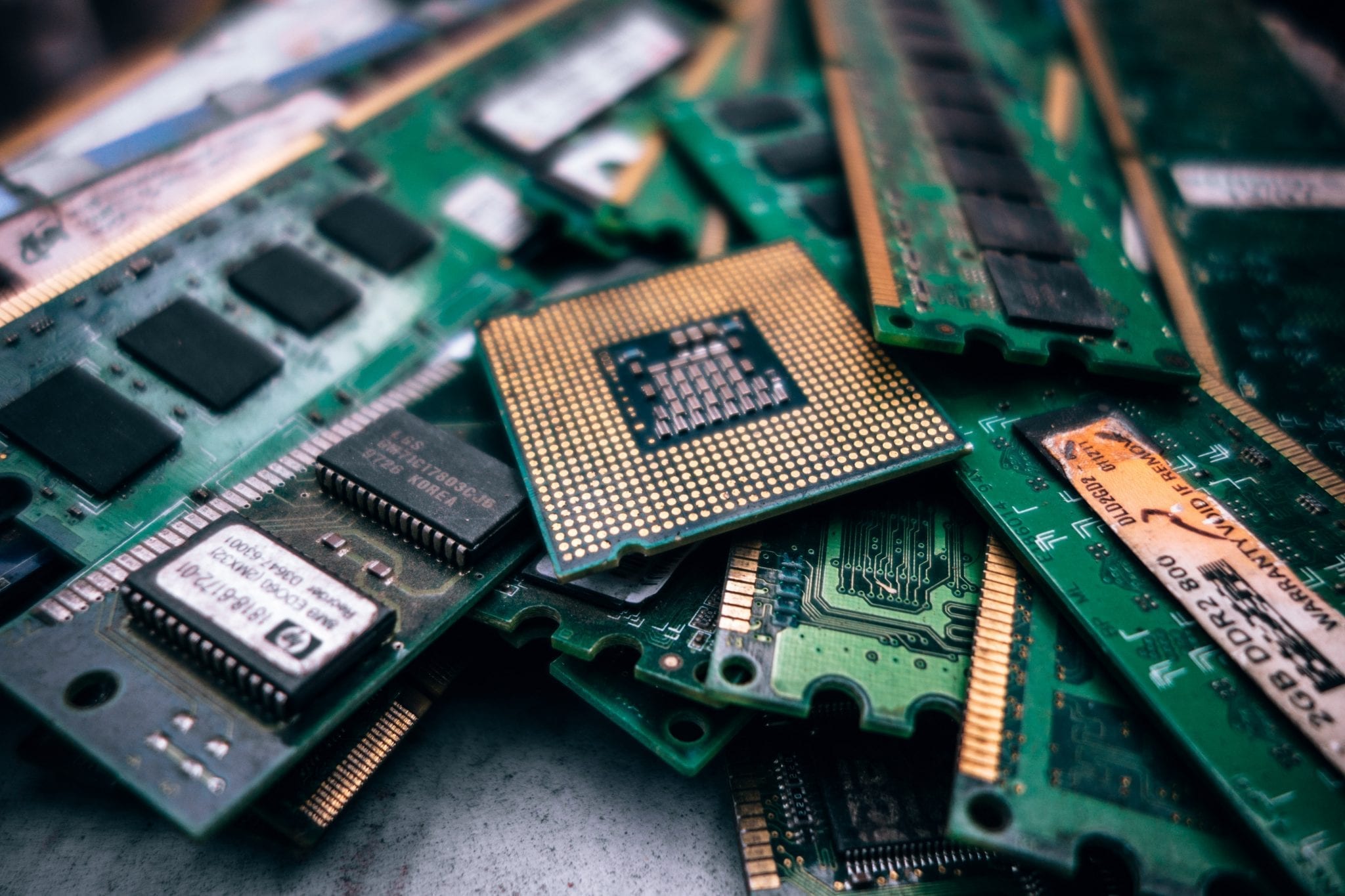
On Episode 71 of The Edge of Innovation, we’re talking with entrepreneur Simon Wainwright, president of Freebird Semiconductor, about how he started a company to manufacture semiconductors using GaN technology!
Freebird Semiconductor’s Website
Contact Freebird Semiconductor
Find Simon Wainwright on LinkedIn
Space X – A private company that manufactures and launches advanced rockets and spacecraft
What’s So Special About Low Earth Orbit?
OneWeb: Bringing global, satellite-based internet services to Earth through a constellation of satellites
Project Loon: Balloon Powered Internet For Everyone
What is a Transistor?
What is GaN?
Link to SaviorLabs Assessment
Introduction
Starting a Semiconductor Manufacturing Company
About Simon Wainwright
A Team of Entrepreneurs
Starting a Company From Ground Zero
The Risks – Believing in Your Company From Day One
The Execution of a Business Idea
What on Earth is Going on In Space Right Now?
The Market for Satellites and Small Constellations
What Are Constellations Doing Right Now?
What is a Semiconductor?
The Market for Semiconductors
Wireless Charging With Gallium Nitride Technology
More Episodes
Paul: Hello. Today I’m here with Simon Wainwright. President of Freebird Semiconductor out of Haverhill, Massachusetts.
Simon: Hi. Good afternoon, Paul. How are you?
Paul: Welcome. Thank you for coming in.
Simon: No problem.
Paul: So we met probably two years ago now?
Simon: Yeah, I’d say so. Yeah.
Paul: And you were starting a new semiconductor company.
Simon: That’s correct. Yeah.
Paul: You know, our audience is quite diverse. You’ve got just normal people that have no idea what a semiconductor is to really technical people that can probably build semiconductors. Some of your competitors are people that we work in the same realm in manufacturing world. Why did you start a semiconductor manufacturing company? And how long has it been? Two years, three years now?
Simon: Yes, it’s been alive now for about two years, eight months. Something like that.
Paul: So what was the inflection point? What caused you to say, “Yeah, I’m going to start a semiconductor manufacturing company”?
Simon: It was the advantages of the technology. We work with gallium nitride, which is an emerging technology. It’s been around in the research realms for about ten, fifteen years. And then maybe in mainstream RF, or radio frequency type circuits for a little bit longer than it has been into the main power markets. But we had a relationship with the CEO and founder of another company called Efficient Power Conversion who is actually our foundry supplier of gallium nitride. And the technology just has advantages that make it… It really is an offer we couldn’t turn down. We can make things smaller, faster, more efficient and cheaper.
Paul: Okay. Well let’s get into that a little bit. So first of all, before we do that, what’s your background? I can tell you’re not from Boston.
Simon: I’m from Old England.
Paul: Old England. That’s right. Not New England. Okay. That’s a good point.
Simon: That’s right. So I’m from the UK. I studied electrical engineering, electronic engineering, at the University of Liverpool. I followed that through with a PhD in silicon uninsulated technology, believe it or not, which is now mainstream. Then I moved to Spain, my personal life took me to Spain for 20 years where I was a partner in one of the semiconductor companies in Spain as well.
Paul: So this is right in your wheelhouse.
Simon: Absolutely. Yeah.
Paul: So it wasn’t like you were a baker and you say, I’m going to wake up and I’m going to make semiconductors today.
Simon: Oh, no, no, no. I’ve always been involved in semiconductors in one form or another.
Paul: Okay. And what brought you to New England?
Simon: Basically, in my Spanish company, I was trying to sell to an American company, and they said, “Hey, we don’t want to buy your chips, but we want to hire you.” So I got a job with this company, and they ultimately brought me over about six years ago now.
Paul: So you’re relatively new to the United States.
Simon: Yeah, I’m very new.
Paul: Alright. Have you always been in New England, or did you live somewhere else?
Simon: Always here. Strangely enough, the Spanish company had an office in Andover, which is just down the road from Haverhill where we are located now. So I’ve had an association with the area for 25 years.
Paul: Okay. Cool. So you didn’t just sort of sit up one day and say, “Hey I’m going to do this.” You didn’t do it alone. You have a key team, I would imagine.”
Simon: Yes, yes.
Paul: And who are some of the people on that and also what are their roles?
Simon: So basically, there are three founders. And we each cover distinct areas of the business. So myself, I cover a little bit of the technical stuff, with my background, obviously, but I’m also in charge of the actual general management of the business itself. So I have an MBA as well that helps towards that. So basically, just the general running of the company’s accounting stuff.
Paul: Day to day.
Simon: Yeah, the day-to-day stuff. Then we have a couple of other partners, the other founders. One is a technical guy who has been 25 years in the industry doing radiation-hardened MOSFETs, which is a similar product. It’s not the same but a similar product. So we call him the chief radiation officer.
Paul: CRO?
Simon: The CRO. The CRO, yeah. So we have our product portfolio, which we’ll get into a little bit later. It’s very much radiation hardened, so we wanted to make an emphasis on that. Therefore, he got that title. And then we had the other founder,Jim. He, basically, is an industry veteran. He’s been through many different larger companies. He’s had his own small company as well, a sales company. And he’s in charge of sales, marketing and sort of like the product strategies.
Paul: I see. So now is this your first startup from ground zero?
Simon: Yes, from ground zero, yes. I’ve had other businesses, but from ground zero, this was the biggest bite I’ve taken out of the apple.
Paul: Okay. How is it? The, the entrepreneurial side?
Simon: Oh, the entrepreneurial side? It’s good. It’s good.
Paul: You like it? So you get energy from that?
Simon: Oh, absolutely! Yeah, I would never go back and work for anybody.
Paul: Yeah. I like to say that people don’t understand entrepreneurs very well, but you wake up every Monday, and you’re not employed. You don’t have a job. If you don’t get up, nobody is going to do it.
Simon: Absolutely.
Paul: Do you find that to be the case?
Simon: Absolutely. I think sometimes, I don’t even go to bed. It seems like that.
Paul: That’s a good way to put it.
Alright. So you’re in New England working for a company that sort of brought you over to help them. What came across your desk, or was it you had an epiphany or that said, “I’m going to go in and start a semiconductor company in this particular technology”?
Simon: We’d seen this in the industry. It had been around in the industry, but it was very marginal on the outskirts of technology. And then there was a reorganization we did in the company that we worked for. All three of us worked at the same company.
Paul: Oh, okay. That’s good.
Simon: So there, there was a reorganization, and it just felt like the right time. So it was we didn’t want to go in the direction that that company went into, and we wanted to follow this path.
Paul: Right. But, I mean, there’s a lot of technologies that come out that don’t prove out. Was there a huge risk, or were you at the point was it past the tipping point of it proving out?
Simon: It had gone through its initial preliminary stages where you knew it was going to work. I’m not sure the tipping point. There was still a lot of work that we’ve done in the last two years that’s maybe taken it to the tipping point now.
Paul: Okay. But you took a big risk.
Simon: Oh, yeah. Absolutely.
Paul: So, because it could have been, “Oh, we can’t solve these problems.”
Simon: Yes, absolutely. It could have been. It was a major risk. Ask my wife about that. She’ll confirm that.
Paul: You did what? You did what?
Simon: Spent the college fund on what?
Paul: Well, that’s key to….Or just everybody’s entrepreneurial experience, there’s a point at which it looks like it’s never going to work. And you persevere through that, and hopefully it will work, and then hopefully it’s scalable.
Simon: I don’t think that that’s fully the case in my case at least. I believed in it from day one. If you don’t believe in it, you don’t take that risk.
Paul: Sure. But you, but that risk is there.
Simon: Oh, absolutely.
Paul: You may have an irrational belief, but you proved out now that it was rational.
Simon: Absolutely.
Paul: Okay. So you’re past that failure point. Imminent failure point. So now it’s the execution of developing it. So where are you in that? We’ll get into what the products actually do, but you took an idea that was a concept or a set of processes probably, and refined those so that they would produce what you had hoped they would produce.
Simon: Correct. It was essentially that the guy that we worked with, with Efficient Power Conversation, he has a product. So we thought we can make that product better and specifically direct it towards the space and high reliability market. And that’s a market that the EPC was not interested in getting into fully because they didn’t want the hassle of supporting, a Boeing, a Northrop Grumman, any of these large prime subcontractors that ask for reams and reams of data.
Paul: To what end? Alright, well first of all, there’s a bunch to peel back here for the general listener I think. So, you say you supply stuff to the space industry. You didn’t even say aerospace.
Simon: No. It’s space.
Paul: Space. Now I am pretty technically savvy and interested in it, and I follow SpaceX and all this stuff. But that doesn’t seem to be that many things going into space. Or maybe I’m just ignorant.
Simon: Oh, there are, there are tons of things going on in space at the moment. Now is space’s watershed moment, so it’s the space revolution, I would say, at the moment.
Paul: And but, this is for near-earth objects or is that the words?
Simon: It’s LEO, low Earth orbit. So they’re the ones that are closer. And then there’s medium Earth orbit, and then…
Paul: So is this like tens of things are going on in space or hundreds or thousands or tens of thousands?
Simon: You’d be surprised how many launches. There are launches every week I would say. Yeah, yeah. I would say that satellites buzzing around up there at the moment, it’s impossible to put an exact number on them. And this is in the public domain. There’s a number of constellations that are coming out now. So take, for instance, a commercial constellation called OneWeb. You may have heard that they just broke ground down in Florida. They have a conglomeration between Airbus… Richard Branson’s involved in it. There’s a number of things. Softbank has funded this. And there’s a revolution at the moment in the space industry. And OneWeb is just one of the constellations.
Paul: And by constellation, you mean multiple satellites working together?
Simon: Absolutely. So it’s like a network in space essentially. So there are a number of projects for this type of constellation. So they would launch nearly 800 satellites at a very low altitude, so the low Earth orbit.
Paul: What is that? Just for listeners.
Simon: I wouldn’t be able to give you the actual height. I could look it up. I don’t have it on the top of my mind, but it’s basically the closest you can get to earth without actually falling through the atmosphere. So it’s not very high. That’s why they need more to cover more areas of the globe.
Paul: Because the distance isn’t as far.
Simon: Yeah, so that the longer ones, the higher altitude sate—, satellite such as the geostationary. They would stay over the same point, but they would cover more because the cone of coverage comes down and covers more area on the earth’s surface.
Paul: And I know we’re getting off track here. But why wouldn’t I put up a higher one?
Simon: It’s more expensive. Firstly, you have to get it higher.
Paul: Really that’s the expense?
Simon: For rockets and it’s exposed to more harsh atmospheres up there. So you get more radiation. It’s closer to the radiation sources. It’s closer to the sun and so on.
Paul: So there’s like a sweet spot.
Simon: I wouldn’t say there’s a sweet spot.
Paul: Or many sweet spots?
Simon: The higher you go, the more radiation hardened you need. The lower you go, the more tolerant you can be with radiation.
Paul: I would have never thought. Okay. So that’s a cool thing to sort of look up, is to go and look at all these different projects that are going on for all the lower Earth orbit stuff. So… Okay, so there’s a lot in the space world.
Simon: Yeah. So I mean, basically, there’s been a shift from the small constellations with geostationary satellites, with the high altitude, and they have to have lifetimes of 15-year mission expectancy.
Paul: Yeah. Because you can’t call a repair…
Simon: Exactly. You can’t send a guy over there with a wrench to fix it.
Paul: It’s very expensive. It’s just too expensive to do that, yeah.
Simon: So basically, the, the commercial level of satellites at the moment, which is all these LEO constellations, these very commercial constellations, is changing the market. It’s revolutionizing the markets at the moment. So it’s a little bit like Henry Ford did with cars, you know. You could make tons of these things. They’re almost, you can use them and throw them away. That sort of thing.
Paul: I see. So let’s take another detour. We’re getting further away. But what are they doing with these constellations? What application?
Simon: So, one of the typical applications is communication. So it’s basically internet via space. You may have heard of project Loon from Google. I’m not sure whether that’s still going on or not with balloons. They wanted high altitude balloons. So this essentially uses these new commercial constellations. They link together, and they form a network. It’s almost like the old cell phone towers, if you like, but it’s, you know, with no towers and no wires on the ground.
So it can give absolute coverage all over the globe for internet access. You get your internet access via satellite. So in the case of what’s just happened — the hurricanes down in Texas and Florida and the Caribbean — it doesn’t matter if your cell tower falls over.
Paul: Yeah, it’s a paradigm shift.
Simon: So it’s a major revolution in the way that we communicate as well.
Paul: Okay. Is this really the differentiator in your products, the radiation hardening of it?
Simon: I would say between our products, which is radiation-hardened gallium nitride, and normal gallium nitride, absolutely. It’s the radiation hardness. But between GaN, per se, and other technologies such as silicon, we have far more superior performance. We have faster switching times and lower losses.
Paul: So what are you making? I mean, are they transistors? Are they integrated circuits?
Simon: So we make transistors. Everybody is familiar with the transistor radio. Basically, it’s a switch where you turn things on, and you turn things off with a piece of semiconductor.
Paul: 2N222.
Simon: There you, there you go.
Paul: 22-22.
Simon: That’s an old silicon technology, which is still going. So there’s nothing wrong with it.
Paul: So, okay. So for, for our listeners that aren’t electronics people, it’s like you have a light switch. A transistor is a switch. Check me on this.
Simon: That’s correct. Yeah.
Paul: It’s a switch. But the toggle is another like electric field. So you connect something to the toggle, and it lets it flow or not flow?
Simon: Exactly.
Paul: And that’s why it’s called a semiconductor because it conducts under one circumstance and then another circumstance it doesn’t. Hold on. So, I had thought everything moved to ICs.
Simon: No.
Paul: You know, with millions of transistors on the ICs. So you’re saying that there’s still applications for just individual transistors.
Simon: Yep. Absolutely. We call them discrete components so that there’s absolutely a market for that at the moment. And the way that there is a market for that is it depends on the application. So the ICs that you’re talking about will basically be digital functions, like processors or things like that.
Paul: Yes, no.
Simon: Absolutely. So what we do with our discrete devices, the individual transistors, is that we manage the flow of power. So we are dedicated, really, towards providing solutions for the power management of the satellite. So to give you an idea, you’ve seen the wings of a satellite with the solar panels. So they gather energy from the sun, feed that through to a converter on the actual body of the satellite itself, and then basically, that raw energy has to be converted into — I don’t know — five volts or 3.3 volts or a test that amplifies something.
Paul: Voltage regulators.
Simon: So basically, you can use our discrete transistors in all of these power-supply-based circuits.
Paul: Okay. So I could use silicon to do that.
Simon: You can use silicon.
Paul: So if we were sitting here on Earth, which we are, and we were going to build a power supply that converted the sun energy to 5-volt, 12-volt, whatever it might be, and regulate that so it doesn’t change and we could build it with a lot of different things. I could go out and get an IC to do that. But when I fly that into space, certain problems start to happen.
Simon: Yes. So when you go into space, you have to take into account that the parameters of these transistors can change with… If you receive doses of radiation. There’s no atmosphere there, so radiation can easily attack your electronics. So that’s the first advantage of using our products, which we’ve modified sufficiently so that they are radiation hardened.
Paul: And is that just the case of it, or is it actually the actual innards of…?
Simon: It’s the innards. The innards of the semiconductor itself.
Paul: So they’re not affected as much by radiation.
Simon: Correct. That is absolutely correct.
Paul: And, is it like a 2% difference, or is it like a 50% difference?
Simon: It’s like night and day.
Paul: So it’s a game changer.
Simon: Yeah, oh absolutely a game changer.
Paul: So what did we do before this technology?
Simon: So before this technology, we had silicon. Silicon, basically, which has its limitations, so you have to do a lot of derating. You have to use them way below their stated voltages so that the radiation doesn’t really affect it. So you have to over-design these things.
Paul: And make them bigger, I imagine.
Simon: Make them bigger. Size gets huge.
Paul: Probably more shielding and things like that.
Simon: Yep. You can put shielding around the actual circuitry itself and not just the component but the circuitry itself. And there’s another element to using gallium nitride as well. Not only have we managed to achieve radiation hardness with it, but intrinsically, the material itself, the gallium nitride material, is far better than silicon anyway. So just going back to your previous example on the ground, if we wanted to build a power supply or a converter or something like that on the ground where we don’t even worry about radiation hardened effects, we could still make those circuits way more efficient.
Paul: So actual efficiency. I’m building a power supply that’s 50% efficient, yours would be 60%? I know there’s a lot of parameters, but I’m just saying…
Simon: There’s a lot of parameters, but we can easily outstrip the state-of-the-art silicon.
Paul: Well, that’s going to be a huge issue in computers. The biggest problem in computers is getting the power to them.
Simon: Yeah. Absolutely.
Paul: And so there’s a market there as well.
Simon: You will see that some of the commercial applications that EPC is, is pursuing are smaller bricks essentially, power supply bricks. The smaller ones of those. Even the remote charging. You can do remote charging because gallium nitride switches way faster than any silicon technology. So you can get the wireless charging. It’s also advantageous for things like LIDAR. So it will revolutionize the autonomous vehicles because it can scan, and it has vision systems that are way more detailed than the standard silicon-based technology.
So it really it’s a GaN revolution at the moment. It’s a GaN revolution.
You’ve been listening to Part 1 of our interview with Simon Wainwright. You can listen to part 2 of our conversation, here! We’ll be talking about the future of the space industry!
Also published on Medium.
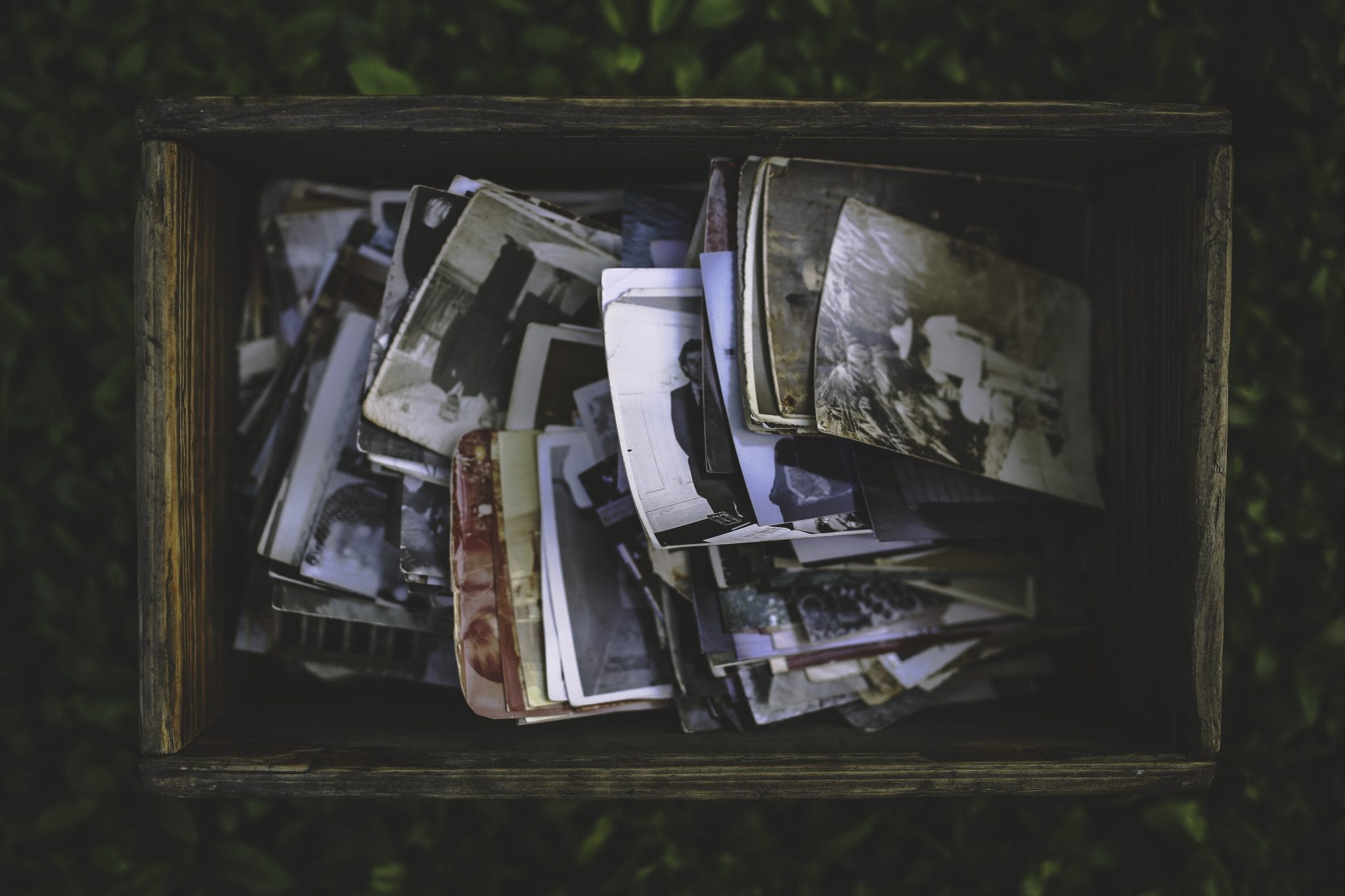
On Episode 70 of The Edge of Innovation, we’re talking with photographer Al Pereira about what it takes to be a great photographer and the permanence of pictures in today’s digital world.
Advanced Photo’s Website
Contact Al Pereira
Find Al Pereira on Facebook
Find Al Pereira on LinkedIn
UPI – United Press International
The Eagle Tribune
How To Get Your Drone License
FAA – Becoming a Drone Pilot
The Amazing New World of Drones Podcast
Link to SaviorLabs Assessment
Photographing With Drones
Photographers Should Be Great Leaders
Websites and Photography
Photographers As Communicators
Memories Matter – Why You Should Print Your Pictures
There Is No Excuse! – Finding Time To Print Photos
Paul: Well so now, I know it’s been a couple of years now, but you’ve been in drones.
Al: Oh, yes. I actually got certified by FAA to fly them.
Paul: Okay. So you’re a certified drone pilot. But you didn’t want to fly drones so you could just fly around and look at neighbors’ pools and stuff. You know, look at power lines or something. You did it because you thought you could make a business out of it of taking cool photographs of businesses and offices and sites. So how has that been going?
Al: I’ll tell you. The drone industry has taken off. The business side of Advanced Photo, the drones has taken off. I do a lot of real estate pictures and videos. And it seems that every week, I get more and more jobs with not just taking photos of the inside of the house but also we need the video, and we need drone photos of the outside of the house. So in the last month and a half, I’ve actually ended up getting like six more real estate agents. And I don’t want to overdo it, but it’s in a comfortable kind of stage where I can handle the work.
But that’s not where it stops too, what I do. I actually do virtual tours of houses. So that’s a new technology that hasn’t been out that long where, if you are familiar with the way Google works when you find a street and you can walk down the street, it’s similar to that. You can do a complete 360. But the quality, it’s like you’re in that house. The grain of the woods is so sharp that you could almost touch it. That’s how much reality it is. And you capture the photographs from that, and it’s magazine ready.
Paul: Wow. That’s cool.
Al: That type of quality. So from drones, the virtual tours… I mean, there isn’t much that I don’t do and I don’t love doing. Everything. One of my realtors that says, “Al, I love working with you. You’re always excited every time I call you, and that makes me feel good. It makes me want to work with you.” And that makes me feel good.
Paul: Well, it should. One of the things that I think differentiates you from a lot of photographers, and just from a lot of people, is you have a great personality. One of the things I think that’s important is, I’ve worked with a lot of photographers, and I know a lot of them. And a lot of people have been in a lot of weddings where you’re watching the photographer, and they’re sort of like saying, “Uh, move.” And doing this. And they’re talking with this diminutive voice, and they’re not saying things. “Look this way.” You know, there’s no energy. And I’ve seen you take control of a room. And, “Okay. Come on. Move over here. Look this way. Okay, I want you to tilt your head just a little bit this way.” And you’re directing them to make them look good. And I think that’s one of the keys for a good photographer is to be able to communicate effectively with the people you’re working with. And that is just so rare. I’ve seen it so much that it’s just all lacking.
Al: You know, I always had this philosophy. You get hired to do a wedding, and you have a job to do. Are you going to be a follower, or are you going to be a leader? In other words, when I get hired, I walk into the house. I gradually guide the bride from step A to B to C, and I get her to be on time from the house to the church, going down the aisle. A photographer, today’s photographers are not leaders, they’re followers. And they stand back and let the bride do the work technically on their wedding day. I just did a recent wedding, and it was amazing that the photographer would say, “Okay, what other picture do you want? What other picture do you want?”
Paul: And that’s not what they’re thinking about.
Al: And I was doing video at this particular wedding. I was like, “Oh, my god. I mean, how can this be? What’s going on?” And I call them “weekend warriors” because they really don’t know the poses. They don’t know the key shots. They’ll take 2,000 photos, but you’re lucky to get 100 decent ones. So it’s important that when you look for a photographer that you get a photographer that’s going to do the job and going to do the job without you having to think for them. They should know what needs to be done.
Paul: Right, yeah. And I think you’re right. Photography is leadership, and it’s coming in and saying, “You want this to look good. Let’s do it.”
So I’d like to touch on this. We actually just had Al take some photos for us for our website which you can see on the website. And we do a lot of websites for people, companies, whatever it might be. And I think the biggest problem with websites is bad photography or, even worse, is stock photography. It is just not what people are looking for. When they come to your website, they want to see pictures of you. They want to be able to identify you. So if you’re out there in business, and your website has stock photos on it, I would run as fast as you can to get a real photographer and get some taken. And don’t get, you know, the, the sister of the daughter of the president or something like that. “Oh, they’re, they’re good with a camera.” It’s not all that expensive to hire a photographer for a couple of hours, and you will get more photos than you could use. I will tell you, the conversion rate on real photos for people on websites, makes a huge difference.
Now what you can do is go and find some stock photos that you like the design of, and say, “This is the kind of photos I want you to make.” That will help. It will decrease the amount of time, but it’s an important investment. You could spend $1,000, $10,0000 on a website and spend that little extra money to get a photographer.
Al: With that being said, Paul, one of the things that I’ve found with previous jobs that I’ve had is the lack of communication. They’ll hire you, and they’ll say, “Okay, we need to have you go to a location.” Okay, fine. And you try to find out what it is that I’m there for, and there’s no communication whatsoever. And you get there, and you’re trying to figure out what it is exactly they want. So you ask questions. And sometimes, they get annoyed that you’re asking the questions. “Well, I hired you. Just do the job.”
“What am I doing?” I’m taking pictures, but what is the purpose of the photos?
So you hire someone, you really need to communicate to the point that, “Okay, this is for a website.”
“What’s the website about? What do you do? What kind of a business is it? Okay, your folks, do they have personality? I mean, are they willing to be in front of the camera?” There’s so much nowadays especially. The communication factor is so important.
Paul: Right. Absolutely. And I think that’s a good point, even for your website. What does it say, you know? You need to look at it. One of the most difficult things when you have your own business website is assessing what is it actually saying, because you read so much into it. So you need to almost sit down with somebody you don’t know and say, “Tell me what you think of this website. What does this company do? What do they want you to do?” I’ve done that with different people, and I will tell you, the difference of reaction between real photos and stock photos or real video. And also video is huge. Don’t underestimate that. A good video is worth so much. They say a picture is worth a thousand words. Then maybe a video is worth 10,000.
Al: You know, one of the things that I always try to imagine is, “Okay, this is my business. What would I want?” I love eye contact with the camera. I love animation in a video or even in a photo, like for example, your staff. They love what they’re doing, and I want people to be able to see that. So the smile. It’s not always about being serious. It’s let’s capture that employee’s personality because you put that up, and people are going to say, “It looks like a fun, you know, place to work at.” And that’s more important than just having a snapshot, you know.
Paul: Well, I think what you’re talking about is relationships. What photos do is remind you of a relationship, whether it’s to a place or to people, or people in a place. And an effective communicator, that is called a good photographer, a good videographer. We want to tell stories, and that’s what photos do.
Paul: Now we’ve also talked about this, just as sort of an aside, is it used to be that you’d have a closet full of slides or photos or the people that were a little more organized would put them in books. And they’d pull them out once in a while and look at them. That can’t happen anymore.
Al: Not unless you have a projector.
Paul: Or you put it on your phone, and you flip through them there. But it’s a very different experience. You know, it’s like looking at a two by three print.
Al: That’s correct. You know it’s funny. There are a lot of people out there that have old negatives in a shoe box or the slides. And I’ve always said, out of sight, out of mind. And what good are they in a shoe box? You should do something with them. And people say, “Well, what am I’m going to do with them?”
I say, “There’s a few things you can do. You can have them scanned in, digitize them. Now that CD or DVD that you have become negatives, your negatives.” Remember the old days when you would have a roll of film? You would get negatives back. Well, there’s no such thing now. But you need to back up your digital files. You can’t trust a computer. You can’t trust external drives.
Paul: That’s true, yeah.
Al: Even DVDs you need to really have a couple of them just in case.
Paul: Yeah. They’re not archival, as we call it.
Al: But, you need to do something with them. And then once you get them in front of you, then you say, okay, what do I want to print? Do I print them at least four by six and get that album. There’s nothing like having an album to sit down on the couch with a cup of coffee or at a table and look at photos. It’s not the same on the phone. It’s not. You’re lucky if you can find them, first of all.
Paul: Well that’s the biggest thing is you can’t find them. But I also have seen people now doing like a photo wall in their house where they’ll have just bunches and bunches of prints that they’ll put up and change them once in a while or move them around. But I just think that’s a great idea because we’re in this rush, rush world. But we have to stop and smell the roses and really enjoy the memories.
Al: Well, that’s important. If you read the paper or if you sometimes watch the news, in the Midwest, there’s a tornado; there’s a flooding. And it, it doesn’t surprise me, but I always hear, “I’ve got to get my photos. Those are my memories. You can’t replace memories. You can’t replace photos.” And they will almost kill themselves just to try to get those out of there. It’s different in this part of the world because everybody is so busy. They don’t think about the memories that they have captured—
Paul: Until it’s too late.
Al: —on their phone. Right. Until it’s too late. You know, I do slideshows for memorial services, and it’s rather sad that in the last seven, eight, almost 10 years now, I’ve seen less and less recent photos of the folks that have passed than ever before. So they’re scrambling to find anything they can. And it’s 20, 30 year old photos. They don’t look like that anymore. And one of the reasons too is, “Oh, I know we have photos, but we can’t find them. They’re on a computer, or they’re on a phone.”
Paul: Who knows where? On an old phone somewhere.
Al: Right. And it’s sad because those are your memories going forward. And I have also folks that have parents that have Alzheimer’s and so forth, and they come to me and said, “You know, the other day, I showed my mother this photo from my phone, and she had a beam in her face, and it’s like she remembered. So can you print these photos?” And you know what? It makes a difference in those people’s lives.
Paul: Yeah, it sure does.
Al: Because they look at it and, for some reason—
Paul: They remember.
Al: It kind of stimulates their mind as to when it was taken, how they were in the photo and so forth. So, people need to understand photos, that Kodak moment, still exists.
Paul: Yeah, it sure does.
Al: You just have to take the step, and there is no excuse — I don’t have the time — because there’s emailing the photos to your local lab, there’s uploading by going to their website. There’s so many different ways. Put them on a thumb drive. Go to the store. Put them in the slot, in the mail slot, with a note saying print all of them. You know what I mean? So, it’s a few seconds it takes.
Paul: Yeah, it is. It’s something very tangible. It’s very interesting when you hold the photo and if you haven’t experienced that — because you might not have any printed photos — give it a try. It’s really incredible. it’s something that’s just a neat experience.
Al: Just holding a photo. I mean, you can turn around and show it to a friend, and you can laugh. Okay, you could put it down and say, “You know what? Wait a minute. Let me go back and look,” where you don’t have to use your finger to scroll back and try to find it from a thousand pictures.
Paul: Yeah, there’s a lot more permanence to it and it just sits there and it’s a very different experience. I think it’s important for people to start.
Al: But you know what I have noticed in the last six months to a year that I’m getting a lot younger people coming in, especially when they go to college, they come in and they print a bunch of four by sixes so they can have it on their wall. And that really excites me because they look forward to seeing those photos once they’re printed, and they get excited, and they say thank you, you know.
Paul: Absolutely.
Well, we’ve been talking with Al Pereira of Advanced Photo in North Reading, Massachusetts. You can see his work by looking in our show notes and how to get in touch with Al and get to his websites. But it’s been a privilege to talk with you. Thank you for your time and we appreciate it.
Al: It’s been a lot of fun, Paul, and I really appreciate you having me.
Paul: Alright.
Al: Thank you.
Paul: Thank you.
You’ve been listening to Part 3 of our interview with Al Pereira! If you missed Part 1, you can listen to it here and if you missed part 2, you can find it here!
Also published on Medium.