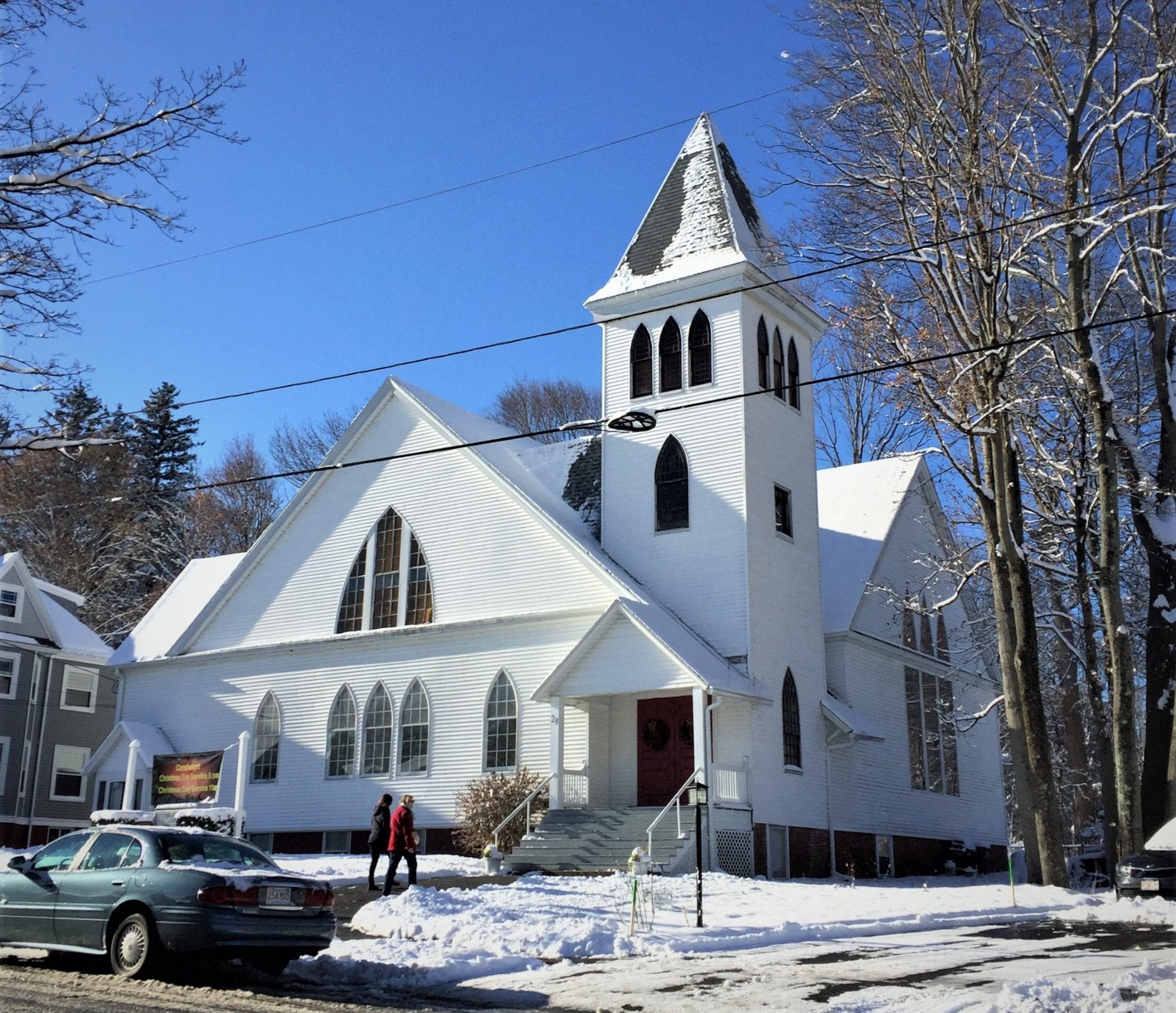
On episode 56 of The Edge of Innovation, we are talking with Pastor Paul Buckley of King of Grace Church in Haverhill, Massachusetts.
Hacking the Future of Business!
On episode 56 of The Edge of Innovation, we are talking with Pastor Paul Buckley of King of Grace Church in Haverhill, Massachusetts.
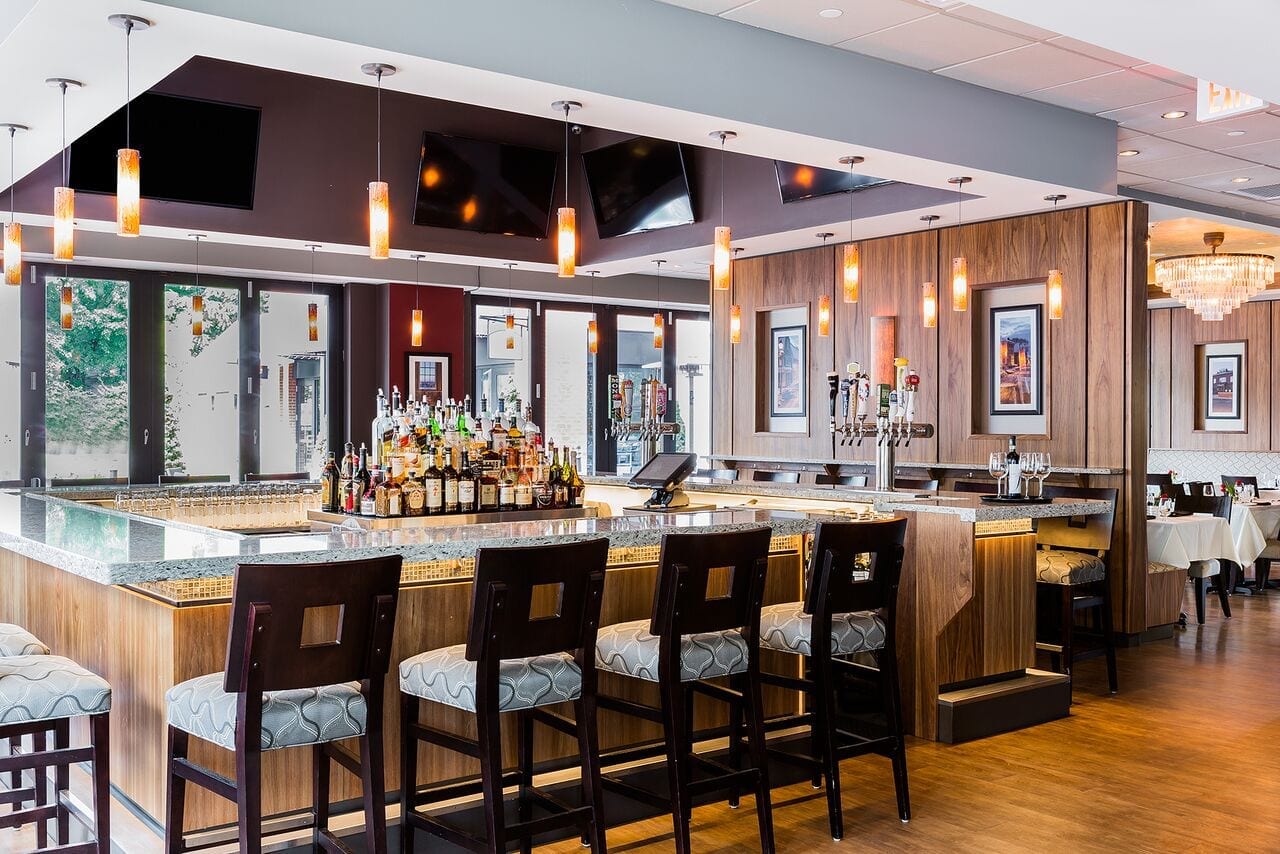
On this episode of The Edge of Innovation, we are talking with interior designer, Amanda Greaves of Amanda Greaves and Company, about what it takes to be an interior designer.
Amanda Greaves’ Website: www.agcinteriors.com
Find Amanda Greaves and Company on Facebook
Link to SaviorLabs’ Free Assessment
The Difference Between Hospitality, Residential and Commercial Projects
Sound Quality in Restaurants
More than Meets the Eye – Attention to Detail
The Daily Gratification of a Designer
What Does the Future Hold for Amanda Greaves and Company?
Advice for Future Designers
Paul: So now you focus on three areas. It’s hospitality, residential, and commercial. What’s the difference? I guess hospitality is like a hotel.
Amanda: Well, hospitality is a combination of a few different things. Hospitality, for me, started out primarily as restaurants, restaurant design. And this hotel, it’s a great undertaking for us. But yes, that is very clearly hospitality.
Then commercial, that has a very wide breadth to it as well. Office buildings, I’ve done a couple dentist offices.
Paul: What was the goal in a dentist coming in and saying, “I want you to design the office”?
Amanda: That was a small one. And to be quite honest, I don’t do dentist offices anymore because there are designers out there that are specializing in that.
Paul: Well what does that mean?
Amanda: There are certain needs that certain businesses require. For example, dentist offices, there’s a whole cabinetry language that has certain, shall we say, Ikea-type modules that fit together the way they need to for the chairs and for the lights and for the equipment that you use for dentists.
Paul: Modular. Yeah.
Amanda: And I had a choice a long time ago. Do I really want to get into this modular stuff that, you know, yes, it’s a matter of picking the right plastic laminate or Corian countertop or beyond that, and I chose not to. So whenever I had the next dentist, I politely referred them to another designer friend of mine.
We just finished some conference rooms at a biotech lab, and we’ve done three of them so far. And that’s a matter of making sure that they have the right equipment for their conference room, tables, getting all the furniture in, but also making it look good, have it be very interesting. When it comes to a lot of the technological aspects, such as the type of screen and how it works, that’s somebody else’s job. What we want to know is how big is the screen and how much space do you need for the equipment because then we will design around that.
Paul: I see. So you sort of mentioned some restaurants. So one of my pet peeves in restaurants for fine dining, is I want quiet. Why are there so few restaurants that are quiet? Or maybe I’m just not looking in the right spot.
Amanda: Maybe you’re not looking in the right spot. We just had a meeting with a sounds engineer on Tuesday, in fact, and, with respect to New England specifically, there’s a lot of mom and pop restaurants around here. A lot. And a lot of the larger chain restaurants have the financial ability and the whereabouts to be able to get sound-deadening materials integrated within the design from the beginning. We did TWK, which is called the Waterford Kitchen in Winchester. And because there were so many different surfaces, the sound issue in that restaurant was negated, as opposed to what I’m working on in Groton right now. It’s one big open space. So the larger the space, the harder the materials. For example, if you have a sheer wall with just all glass windows and a concrete floor and plaster walls and just a hard ceiling, it’s going to loud in there. You have to soften it up. They have acoustical materials that you can spray on a ceiling. You can also get foam core boards that you can apply in various locations out of fabric or printed on them.
Paul: But is that a primary goal of building a restaurant?
Amanda: For some. When you’re building it new, yes, it should be because there’s two different ways you can go. You can build a movie theater and all of the sound gets absorbed, and you can hear people breathing if that’s what you really want. But you don’t want that much quiet in a restaurant because it’s awkward. Whereas, the complete opposite, if you go to a lot of the breweries these days, concrete floor because it’s less expensive. They may have brick walls. They’ve got steel on the ceilings and big windows. It’s all very hard, so it reverberates. It’s a very fine line, and there is a technical value to it. I don’t know specifically what that is. And that’s where I rely on the team member of the sound engineer.
Paul: Well sure. But I guess what I’m getting at is there is the sort of zeitgeist of being in a restaurant and the experience of being there. Well the food was great, and the service was great, but the atmosphere was… All of these things add up to a good experience or a poor experience. And I don’t know. I mean, like, from a psychological question, do you have a better experience in a noisy restaurant or in a quiet restaurant?
Amanda: Personal opinion.
Paul: I guess it is.
Amanda: Depends on the people, depends on the day, depends on the season.
Paul: Have you ever had somebody that says, “I want a loud restaurant”?
Amanda: Never.
Paul: Okay. So we’re narrowing in here a little bit.
Amanda: Well, and that’s it. I think for some of the more affluent restaurants that we have the ability the design with, they have resources to have a sound engineer come in and give us the proper advice as to, “You have this many square feet. You have these types of surfaces. This is the type of solution we are suggesting in order to get your sound down.”
Paul: Interesting. Yeah, we went to a restaurant that opened a couple of years ago, not fine dining at all, but I was just shocked at how loud it was. I mean, we literally had say, “Is there anywhere else we can go?” We couldn’t even hear each other. And it was just, like, how did you think this was a good idea?
Amanda: Sometimes they don’t think of it at all. And that’s unfortunate, and then you can go into a lot of places where you see they thought on it after the fact, and you’ll see the colorful squares on the ceiling, or you’ll see some sort of what looks like a wrapped piece of foam core or something and fabric up on the wall.
Paul: I see. It was added on.
Amanda: Adds on later. Yes.
Paul: I see. But isn’t those subtleties, I guess, those sort of intangibles, are what a designer brings to it.
Amanda: Ideally.
Paul: Is you don’t know… Well, you shouldn’t see it. It should just feel right, I guess.
Amanda: Correct. I still don’t necessarily have a mission statement, if you will. But for me, as a designer, everybody always says, “Oh that must be so much fun. You get to play with fabrics. You can pick your paint colors.” And yes, it is a lot of fun but—
Paul: There’s a lot of details.
Amanda: There’s a lot of details and the pretty pictures that have on my website are, quite literally, just a day with a photographer running around stylizing saying, “Take a picture of this. Take a picture of that.” What those pictures don’t tell you is the year, year and a half of time, effort, and daily energy that went into creating that. And so when we started the conversation, we were talking about relationship building, and, as far as being an interior designer, my feeling is it goes way beyond just the interior of buildings and spaces. It goes within the interior of a relationship. I get close with my clients and I find a lot of value in that. And lots of times, when their projects are done, I don’t hear from them, or they don’t hear from me. And it’s fine. It’s a project-oriented industry to be in.
So it’s the journey. It’s the daily gratification that you get. And for me, a successful project, as beautiful as we want it to be at the end of the day, it may not be the most amazing kitchen design you’ve ever seen, but, good god, did that team get along well. And, you know, if we had a problem, we’d fix it. Or thankfully, we didn’t have many problems. The client was great. We communicated. We were on time. We were on budget, give or take. You know, maybe there was a few things compromised, but to me, that’s a successful project, beyond what it looks like at the end.
Paul: Yeah. Absolutely. I’ve also said that it seems, when you’re working in a professional services or service-type business, it’s not necessarily how you handle it when it goes well. That’s important. But when things go badly, it’s how you handle it and get it back on track. And that’s critical. So I imagine you have a lot of experience when, oh my gosh, they put this in the wrong spot. They did something, and a builder put something in the wrong spot. We have to deal with that. And then shepherding or counseling all of the participants through that sort of, “Oh, my gosh, we messed up.” How do we deal with that?
Amanda: Yeah. I have been hired onto projects whether they’re just starting or they’re halfway through to actually be the liaison. A few years back, I was working on a restaurant project, and I dubbed myself the translating mediator because the concepts and the thoughts that were coming from the architect that had to be translated into what the contractors could see on site and the difference between what was on paper and the actual physical abilities, it was like we were working in two different states, let alone the same room itself. And as a translating mediator, yes, I was definitely involved in the design. By the time I was involved in that project, it was more just let’s manage these personalities. Let’s make sure that the architect and the contractor don’t go at it in the parking lot and kill each other. So I had to be the liaison. And for me, I found great value and I learned a lot. When I work with my contractors, instead of me coming in saying, “This is supposed to be over here.”
And they tell me, “Well, it can’t.”
And I say, “Well, please tell. Educate me. Please tell me what I don’t know. I want to learn.” And for me as a designer, it makes me a stronger, smarter designer to work with my team, as opposed to just distributing an idea and saying, “Here, go ahead and do this.”
Paul: Right. So, yeah, I mean, you’re guiding people. You’re really counseling them and guiding them, and so now, you’ve been doing this a while. What’s the future hold, do you think?
Amanda: You’re the second person to ask me that question today. That’s a very good question. This inn has been, or this hotel project that I’ve been working on, has been… I used to dream about it when I was a little girl, how I wanted to design restaurants and hotels and just how glamorous and fun and exciting it would be to have people roam the halls of this building that Amanda Greaves designed and how wonderful. Now I roam the halls of this unbuilt hotel at night when I’m sleeping, and I know every inch of that place because of the plans. And so it’s a very different reality from what the fantasy/dream-type concept was. Somebody asked me the other day, “Would you do another hotel?”
And I said, “I need to get through this one first.” I would love to. I think my design firm, I have some great people working with me, and they are excited about the residential aspect the same way I was years ago. But now I want to get a little bit more of the hospitality ring. You asked about my ability to say no the clients if I don’t have the breadth. I don’t have the intention of growing my business from a staffing perspective because what we have right now, we are managing, and we are managing very, very well. And we enjoy what we’re doing, and, yes, there’s a lot of stress involved with big projects and difficult clients and even wonderful clients, but I’m not building an empire. That wasn’t the intention. There are times where I look at my name on the door, and I’m like, “Hmmm” Like it just… I relate to it, of course, because it’s my name, but I don’t think that it’s all me.
Paul: Right. I understand.
Amanda: So moving forward, I’m going to be here for many, many years, but I think the type of projects and the scope of projects that we do may make us a bit of an adjustment. There may be more development opportunities. So getting away from the personal residential and doing a little more development residential may be on the horizon.
Paul: What would you give as advice to a young person saying “I want to be her in 10 years;” “I want to be her in 20 years”?
Amanda: A, get your education for the interior design because that is a lot that needs to be learned. But before any graduate of any interior design company comes out and decides that they want to start their own company, as with probably any and every industry, experience is the most valuable lesson that can ever be learned. I know what I want with my company and how I deal with my clients because I have years and years and years of practice. There will be times where, as a young person breaking into the industry, you’re not going to like what you’re told to do. You’re going to want to do it. You’re not going to do it right. Somebody is going to tell you that you made a mistake. You’re going to be unhappy about it. But getting through those difficulties or those challenges make you stronger as an individual. It also teaches you the reasons why. And you may not know it right up front, but three years later, you might say, “Oh, right. This is why they wanted me to format it this way, because it makes it easier moving forward.”
So question things as necessary, or rather question, I’d say, just be very curious about everything that’s around you. And don’t be so quick to think that you know everything already because even if there’s opportunities to have owned a home or designed your own home, or, yes, you’ve done three kitchens and you’re 50 years of being on the earth and whatnot, it’s not the same as running your own business because there’s a lot of details that need to be captured.
Paul: Very cool. So is there anything that we haven’t touched on that you’d like to talk about?
Amanda: Oh, I’m sure. But, today, today, no. I feel as if we’ve covered a lot, and we’ve gone over who I am, what we do, where we’re going, how we got here.
Paul: And your staff is wonderful.
Amanda: Thank you.
Paul: So you have great people and great puppies, and you have a great website — visit that. In the show notes, we’ll have contact information for your company. And if there’s anything that you would really like our listeners to see, we can include that as well. So, for example, one of the things Ben Nutter was talking about, was he did a 3D model of a house he built, and so we have a picture of that with the podcast so that you can sort of see this 3D printing that’s been done. So just things like that.
Amanda: Yes. We certainly have some of those, for sure.
Paul: Yeah. It would be fun to do that. So we’ve been talking with Amanda Greaves of Amanda Greaves and Company, and she is an interior designer, headquartered in Beverly, Massachusetts. How far do you go?
Amanda: From home?
Paul: No, how far would you go. Groton’s not close.
Amanda: Groton, no, Groton’s a good hour. We just actually finished decorating some houses up in Thornton, New Hampshire, which is a good two hours from here.
Paul: Wow. So you’re willing to travel.
Amanda: We are willing to travel. Depending on the client, depending on the project. There are some that are just cost prohibitive for us to be involved. But then there is a lot of projects that we can do remotely and a few visits here and there. And we get it.
Paul: Very cool. Well thank you for coming.
Amanda: Thank you very much for having me.
Paul: Excellent. Alright.
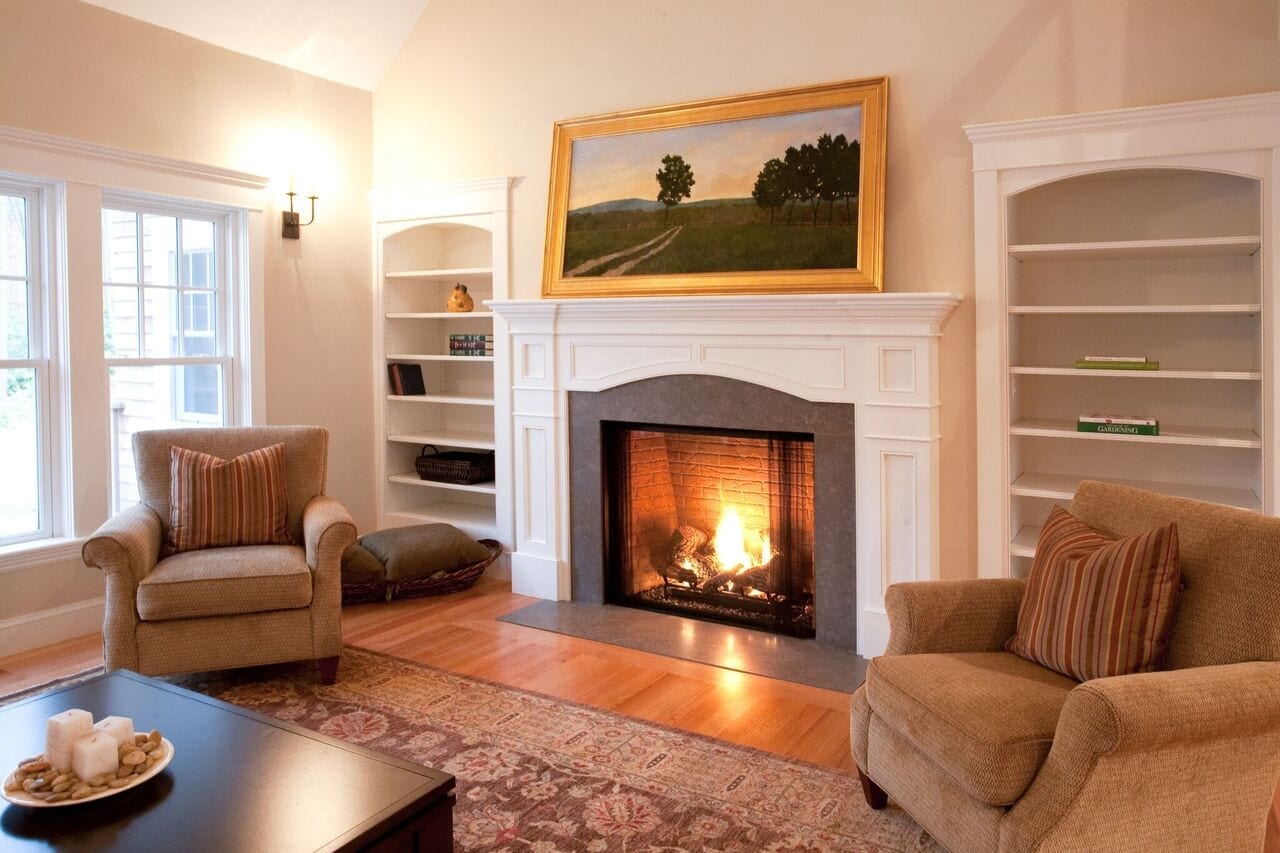
On this episode of The Edge of Innovation, we are talking with interior designer, Amanda Greaves of Amanda Greaves and Company, about the competitive world of interior design.
Amanda Greaves’ Website: www.agcinteriors.com
Find Amanda Greaves and Company on Facebook
Link to SaviorLabs’ Free Assessment
The Changing Economy Effects the Design Business
Designing a Boutique Inn in Groton
Technology Designers Use
How Designers Use Blueprints
Reading a Blueprint with Clients
Keeping Clients Informed
Paul: So now, how competitive is the interior design world? I know I tried to get an interior designer to call me back, and that seemed almost impossible. So, why is that? Are you that busy, or they, you know, as a collective?
Amanda: It depends. It depends on the field that you’re actually designing in. So for myself right now, I’m working on a hotel, which is located in Groton, Mass. And this is where there’s a lot of investors that come in, and the scope and the breadth of this hotel has taken on a life of its own. And so I have had people call me, and it’s what? It’s August. I’ve had people call me recently, and they ask, “Hey, we’re starting a new home. When do you think you can meet with us? We’re hoping to break at such-and-so.” And I’m not taking on new clients for another four months, because I understand that I just do not have the ability to give anybody that kind of attention if I add more projects.
Paul: So as a businesswoman, though, how do you deal with the angst of giving up that work?
Amanda: I feel that over the last seven years, starting my own business, running my own business, I’ve created a network of builders, architects, previous clients, friends, associates—
Paul: Relationships, really.
Amanda: A lot of relationships where, fortunately for me, advertising isn’t something that I think about because, in the very beginning, all I ever did was network and I did a couple of magazine ads. But for me, it’s the value of the relationship that you develop with your clients. And then it becomes word of mouth and the value of the relationships that you develop with the contractors, the builders, and the architects. They enjoy working with us. We enjoy working with them, and we do the best we can to pass the word, the work, back and forth.
Paul: Right. But how do you personally deal with the fact that you have to not do an exciting job or a lucrative job, and you have to say no?
Amanda: Personally? That’s a very good question. A lot of it will be…
Paul: Because it’s painful, as a business owner.
Amanda: Sometimes, to say no to the possibility of X-and-so more revenue or profit or what have you, I look at the sanity of myself and my staff and, and I try to assess and say, “Hey, do you think that this is something that we can take on?” And we have a project board in our office that has all of our projects listed up there — what’s active, what’s active priority, what’s on hold, what’s pending — and if we look at that, and I can’t see the actual board itself, it’s a very quick and easy answer, because I know, through experience, how the schedules work. I’ll know, through the lifetime of the existing projects that we have, who’s going to be an easy breezy client moving forward or what some of the deadlines are and the importance is for my attention to another client aside from somebody that’s new.
If I tell a client that I’m not able start with them right away, I typically don’t ever say no. I will just say, I’m not able to start this until this time frame or that time frame. And I’d say nine times out of 10, they say, “Thank you very much,” and they go and find somebody else. And it’s because they want something right away.
It’s a blessing and a curse right now in the industry. Everybody — designers, architects, builders alike — we’re busy. It’s very, very different than it was when I started my business seven years ago.
Paul: Why? Why do you think that?
Amanda: It’s just the economy is changing. I think people are more confident in what they have in their back pocket. And I think that the real estate market’s a little crazy right now, as far as the residential side. But I also think that people are comfortable with where they are, and they are willing to spend some money on the things that they really want. Investments are up for some, so it’s just the design business is driven by and drives along with building and architecture and the real estate market and the general economy itself.
Paul: So now, you mentioned this project in Groton. It’s a hotel?
Amanda: It is.
Paul: How many rooms, approximately? Is it tiny or…?
Amanda: When, when we started the project, we were talking about a boutique inn, and it’s now a 60-room boutique inn. I’m not just quite sure how we can define the boutique-ness aside from—
Paul: So are you there quite often?
Amanda: I go every Tuesday.
Paul: So every Tuesday. What happens? Just to give somebody a flavor of what you’re deciding or shepherding or what you’re doing.
Amanda: I’ll give you just a little bit of history of the project. The Groton Inn was the longest continuously running hotel in America.
Paul: Really.
Amanda: Yeah. There’s stipulation as to when it was actually built and when it started, but it’s sometime between the late 1640s and, like, 1710 or something. So there’s like a 50 year, geez, we don’t know when it started — continuously running. Presidents have stayed there, important people — until 2011 when it burnt down. And at that point the town of Groton, as I am very quickly learning, is deep, deep, deep into their history, their heritage, their farming, the Indians, all of it. And there’s been a lot of really phenomenal people that have lived there, that stayed there — artists, writers, politicians, etc.
So the value and the desire to bring this hotel “back to life” has been huge for the community. And so there’s a big group of investors, and it started as a 40-room inn a few years ago. The scope ended up changing. It got put on hold, and now we’re at 60 rooms with a full-functioning banquet facility and small restaurant inside the inn, and then a 2500-square foot restaurant in a different building behind the inn that’s going to be running simultaneously but with a different design.
My responsibilities when I go to site on Tuesdays at this point is, What’s the door schedule? Do we have the right door sizes? What are all the door numbers? Are they swinging in the right direction?
“Hey, Amanda, have we made sure that the vanity sinks line up with the wall sconces that are above it? And can you walk through with us and go room to room to make sure that there’s not a beam above that’s going to prevent us from running a toilet line?” or something like that.
Paul: So you’re walking into these rooms and doing some close engineering.
Amanda: I can’t say that I do any engineering.
Paul: No, but I mean you’re going to say… I guess you’re going to point out things to engineers that need to be changed.
Amanda: Possibly. At this point, the point that we’re at right now, that would be too late. The engineers have been involved long before I got on board, and it’s interesting coming from an engineering perspective, they start with nothing, and then they move forward. For me, I try to start at the very end and work backwards. So I’m, in my mind, seeing the finished product and knowing that everything has to line up properly, or it’s going to feel weird.
Paul: That’s a good way to put it.
Amanda: Yeah. And for me to come in and say, “I really want a wall scone here.”
And they say, “No, you can’t do that because there’s a post in the way.” Well, then, I either need to figure out how the post can be adjusted before it gets installed or adjust my design on the outside or on the finish.
Paul: Now do you use any technology for this? Do you use 3D rendering?
Amanda: We do. We use two different programs — Revit and AutoCAD. And the Revit program is phenomenal for 3-dimensional renderings.
Paul: Yeah. I heard that.
Amanda: Our ability to create an image that shows the client what the room or rooms or building is going to look like when it’s done, before they even break ground is so super valuable. It’s gotten me projects because I’ve been able to put some time in pre-project-wise and say, “Alright, if I’m jockeying for position,” to go back to your question, Is it competitive? In larger jobs like this one, yes it is. So we actually developed a couple of rooms in this Revit program and presented it and said, “This is what we think your inn is going to look like.”
Paul: I see. That’s hard to argue with.
Amanda: It is. You know, I just have to make sure that I’ve asked my clients the right questions. Are we going to traditional, or are we going contemporary? What kind of style are we looking at? So it’s the drafting programs are amazing. Then we use some basic ones like InDesign and PowerPoint and such. So there’s a lot of different programs that we use to get our point across.
Paul: So now, when you do that, though, does that help you say, “Oh my gosh, that beam is going to be a problem”?
Amanda: Yes.
Paul: So do you take the architectural drawings and enhance those, or are you just starting from scratch as well?
Amanda: Both.
Paul: Both. Oh, cool.
Amanda: So lots of times, for example, at this inn, we were given the architectural plans and we were coming at it from the finish end of fabrics. Where the bed’s going to go, the headboards, window treatments, what’s the vanity—
Paul: How long ago was that?
Amanda: I got hired to do this project in November, and that was six months too late for me to get started. So I’ve been working on it since November.
Paul: So you should have been hired in…
Amanda: I should have been hired a year and a bit ago and it’s only been about eight or nine months. I say “should have” in the essence of—
Paul: Optimally.
Amanda: Yes. Optimally time frame wise, it would have been better.
Paul: Right. But at some point after that, the hiring decision has been made, you’re starting to think about what the room is going to be painted and what fabrics are going to be in it. So it seems like you said, you’re thinking of the end. They’re thinking of the blank sheet of paper, and you’re sort of racing towards each other, and hopefully you’re going to meet.
Amanda: Yeah. And when we crash, it’s very interesting. Fortunately for me, the architect I’m working with, we’ve done probably a half a dozen projects together, and he’s great. And so our communication is second to none, which is very, very important, no matter how you look at this. It’s very critical. So they’ll come to us with, “This is how the rooms are laying out. Here’s the structural design.”
And I’ll come back and say, “The furniture doesn’t fit this way. Maybe we can move these types of things around before we start building it.” So once we get into it, there are times where we will all walk through and say, “It looked good on paper, but it does not feel good at all in the space.”
Paul: So what do you do at that point?
Amanda: We assess how much value there is to changing it. And lots of times, the value that we speak of is, are we thinking of the end user as far as whether it’s a home owner or a guest of a hotel. How much more money are we actually going to be able to generate if we move it three inches to the left? How much is it going to cost us to move it three inches to the left? And so we have to have those discussions.
Paul: So do you have an example of that with a homeowner that you had to make some substantial changes because they came to terms with it and said, “I want to make that change.”
Amanda: Most homeowners have some sort of situation like that because the way that I do a lot of my design is design build. We get the basics. We get the design going. We understand the style and the type of cabinets. We get through a lot of the plumbing fixtures. Light fixtures can happen a little bit later.
Amanda: But a lot of my residential clients — and even some of my commercial ones, not as many — they need to physically be in the space in order to understand what’s going on. Looking at a piece of paper, that’s one of my checklist questions. Without trying to be condescending or belittle anybody, I try to be as politically correct as possible, ask if they know how to read floor plans, because I have come up with a few clients that do not.
Paul: Well, what does that mean? I mean, I think I know. But how do you judge that?
Amanda: I ask them. If I bring a floor plan of a room or of a building or whatnot, and we’re looking at it, and I read the face of my client, and they are not paying any attention, or I ask them a question and I point, and their eyes kind of get a little funny, I will blatantly ask them, “How do you understand? How do you interpret what’s going on? Do you see it in your mind? Can you actually understand what we’re looking at on this paper? Do you need me to turn it around so you’re sitting in the same direction that the house will be built in?”
And, there’s only been a couple of people that have said, “Yes, I know exactly what’s going on,” and they’ve had no idea. But it’s important. And unless we have clients that say, “Nah, just do whatever you want. We’ll be back in six months, check on progress…”
Paul: That sounds dangerous though.
Amanda: It’s very dangerous, but I don’t really have many clients that are like that.
Paul: Okay. Alright.
Amanda: It’s very interesting. I just have to be honest. I have to be open, and I have to be genuine with my questioning and not insult or upset anybody.
Paul: So how do you keep people informed of the project? Do you call them? Do you email them? Do all of the above?
Amanda: We call them. We email them. We meet on site. We meet in my office. We go to showrooms. I’ve had people go to various different plumbing showroom, climb into tubs, and sit on toilet seats, because these are the important questions of the day.
Paul: Yeah. Okay.
Amanda: And there’s different lighting showrooms. When it comes to things like crown molding and baseboard, I can go online and find images online, show them — “Hey, this is what we’re thinking we’re going to do.” Some people do not care at all. They just know that they want something that looks good. And some people get really involved. I had one client that loved decorative hardware. Loved it. And you can spend a lot of money on the right types of decorative hardware. And then there’s some people that really just don’t care. So everybody is different.
Paul: Yeah. Absolutely.
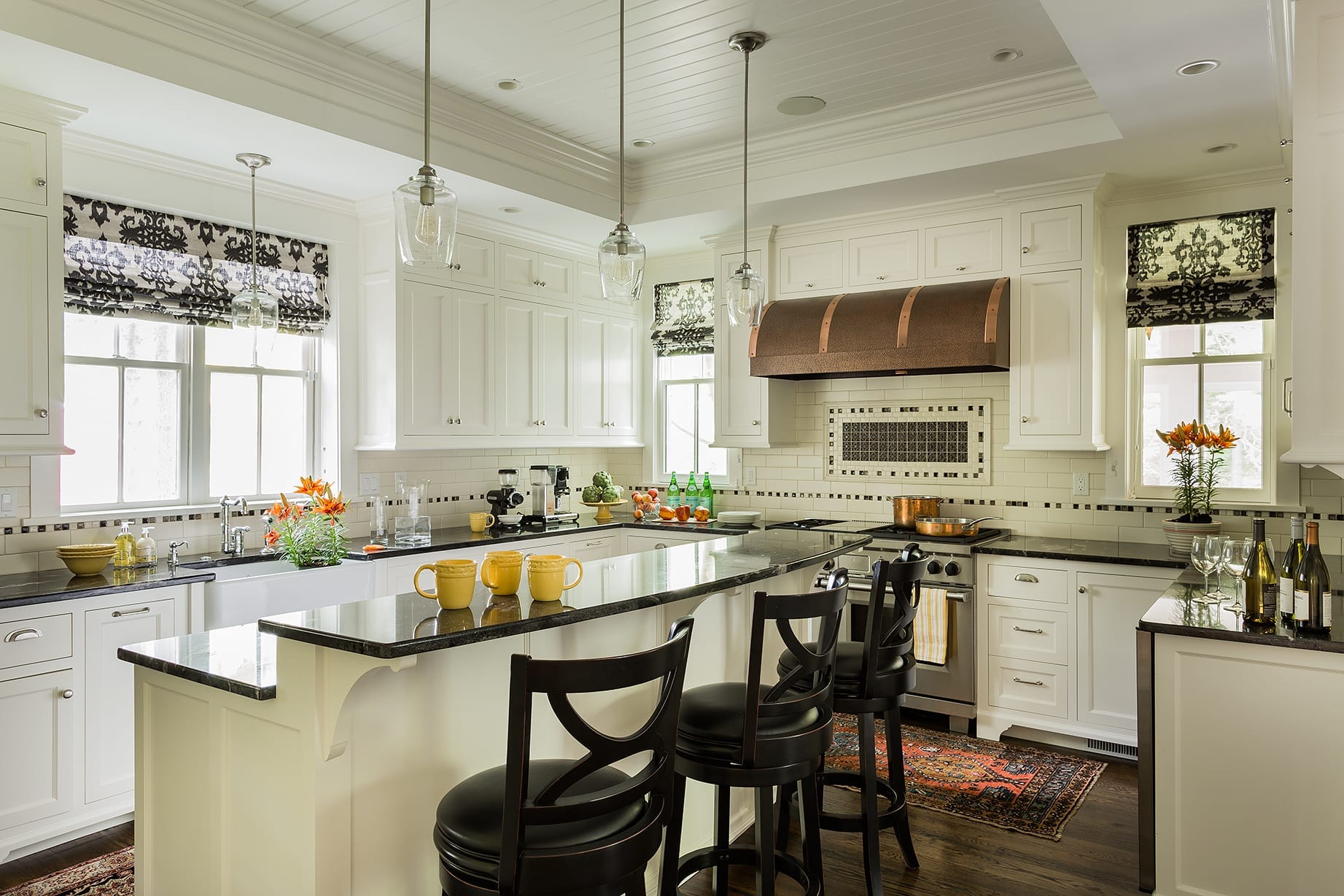
Today on the Edge of Innovation, we are talking with Amanda Greaves of Amanda Greaves and Company, an interior design firm on the North Shore of Boston.

Today on the Edge of Innovation, we are talking with Benjamin Nutter from Benjamin Nutter Architects, an architectural firm based in Topsfield, Massachusetts, about technology and how it’s changing the architectural field.