Category: The Edge of Innovation

What’s Coola than a Doula?

Today on the Edge of Innovation, we are talking with Enza Lilley, a doula from “A Mommy’s Friend Doula Service” about her experiences as a Doula and small business owner on the North Shore of Boston.


Show Notes

Enza Lilley’s Website: www.amommysfriend.com

Find Enza Lilley on Facebook

Enza Lilley in the Boston Voyage Online Magazine

Link to SaviorLabs’ Free Assessment

Sections

Relationships, Business or both?
Committed to Clients – Being on Call 24/7
First Time Moms and Second Time Moms
A Happy Story and a Sad Story
Writing a Book of Doula Stories
The Business of Doula-ing
Dissolving Barriers – Being a Christian Doula


What’s Coola than a Doula?

Paul: Well hi! I’m here today with Enza Lilley.

Enza: Hello!

Paul: She’s headquartered, or really works geographically out of the North Shore of Massachucettes into Boston and she helps moms bring new people into the world.

Relationships, Business or both?

If you’re an accountant, a plumber, a repair guy, you know, you do dressmaking or whatever it might be, people form relationships, and that’s the key thing. And it sounds like, from what you’re saying, is you had an affinity for both the birth process and children but also for relationships. So, and that’s why, I guess, you were saying it’s really a good fit, the idea of doula because you’re building a relationship and a bond.

So how many of these moms do you keep in touch with?

Enza: Wow. Probably about 180 of them. Facebook is great for that.

Paul: Wow. So you’ve shared a very important part of their life in bringing these people up. And you seem to, I just saw an article. What was the recent article? What magazine was it in?

Enza: Boston Voyager?

Paul: Boston Voyager, and it was sort of an interview with you. And one of the things that was interesting is it had a picture of you and your babies, as you call them. So what, what’s the deal with that? You seem to really like these babies.

Enza: I do love my babies. I’m invited to baby dedications, baby baptisms, first birthdays. I try and have a thank-you party for my clients at the end of the year. Moms and I get together for coffee afterwards. We chat about, you know, nursing, or breastfeeding or pediatrician visits. And we do really form a great relationship.

Paul: So, that just seems… I mean, maybe all doulas do that. Do they?

Enza: I don’t think so.

Paul: So do you have… I mean, you don’t think so, but you must have anecdotal information or people saying that. Is it just a job to some?

Enza: I have been told that I get too personal with my clients from other doulas.

Paul: Oh, from other doulas. But not from the moms.

Enza: Not from the moms.

Paul: So the moms aren’t saying, “Whoa. Stop.” I mean, how can you be, really, any more personal? You know, so it’s like other doulas are saying… What’s the motivation there? Are they talking about a disconnectedness?

Enza: This is a business. They say this is a business. It should be separated from your personal life. You are there to be with them during birth, and it shouldn’t carry on afterwards.

Paul: And what’s their reason for that?

Enza: It’s a business. Why would you mix business with pleasure?

Paul: Why wouldn’t you, if you could?

Enza: That’s my question exactly.

Paul: Okay. Alright. Well, I mean, if you can find a business you love, I was just reading a quote, you know, “Work is…” Oh, I’m never going to remember it. But basically the idea that if you can find something you love, it’s not work anymore. So, I’m trying to think of if we were to redefine your view of the world, how you would deal with that because even if you were just doing it from a customer service point of view to call them up and say, “Hey, how you doing?” I mean, we had our washer fixed two weeks ago and Sears called and says, “How’s it going? Are you happy with our service?” Well, is that too personal? You know, they’re not. But they’re talking about our washer. I mean, it’s not a personal issue. But it sounds like the person, the critical nature of the comment they made was not about the personal level of information but just the involvement, the engagement level.

And so that’s very interesting. So that seems to be an assumed position. Has this been a lot of doulas? I mean, what’s the downside? I don’t see. Unless you don’t like people. I mean, like me. I could go to a party and bring a magazine. So, not that I don’t like people. It’s just not natural for me.

Enza: I guess if another doula doesn’t want her personal life to be on display. Because you’re going to have… If you go to a coffee together, you’re going to have to… There’s going to be back and forth discussion. You’re going to have to bring up your family. You’re going to have to talk about the things you’re doing this summer. Does that make sense?

Paul: Well, it’s not for a private person who says, “Oh, you can’t know anything about me.”

Enza: Right.

Paul: So it’s like, your doctor. You probably have… Whoever your doctor is, you probably don’t know what they’re doing for vacation this year.
Enza: I do.

Paul: That’s one of your gifts, extracting that. You’re a military intelligence person.

Enza: That’s right.

Paul: Yes.

Enza: My husband calls me sergeant major.

Paul: Yes, ma’am. So, that’s very interesting. So do you think of the doulas you know, what percentage are the, “I’m in this for the relationship, for the long haul, for treating them as a person and as a family,” or, “I’m in this for the business”?

Enza: Wow. That’s hard. I’d probably say 80% of them are in for the business.

Paul: Really. Now, I mean, that’s not altogether bad. But it doesn’t sound like the Cadillac of it.

Enza: If you’re in it to make money, and there’s money to be made, especially if you work in the Boston area, doulas can make as much as 1200 to $1500 per birth, which is pretty good. My training was in Iowa. Doulas in Nebraska/Iowa area make 350 to 400. So, you know, 1200 to 1500 is great. So if you really are focused on making money, and that is your focus, then it is your business. For me, it’s not my business. I don’t do this to get rich. It’s my ministry. I feel like women who want a doula deserve a doula. If I joke that if I was living in the 1800s and I was a doula, I would be paid in chickens and canned beans, beef jerky that was dried from the venison, you know. But that’s how I work. The money is great. When I get paid, it’s great. But if you can’t afford me, then I’m still willing to be able to sit with you and talk to you and help you out.

Committed to Clients – Being on Call 24/7

Paul: Oh, interesting. Wow. So it does sound like it’s more of an experience almost for what you’re doing. Because I know that just having talked with you, you get interrupted to… You said here, before we started recording, “I’m waiting for a birth.”

Enza: I am.

Paul: So, you know that phone goes off, and you’re gone. And you don’t know if it’s going to be an hour or 72 hours. And no matter what you were doing, you know, you had concert tickets, well, it’s too bad.

Enza: I’ve missed a lot over the last 10 years.

Paul: That’s a big cost. What do you think of that? Does seeing the babies counter that?

Enza: Yeah. There’s a loyalty there. There’s a commitment. I’m committed to be there, no matter what. And, I mean, I do have backups. But I like to see it from the start to finish. That does give me joy, you know, to be able to say, “I was there. Here’s this beautiful baby. We worked together as a team.”

Paul: Yeah. It does sound very rewarding. I mean, to shepherd these people through this experience.

First Time Moms and Second Time Moms

Paul: Is there a contrast between first-time moms and second, third, fourth, fifth, seventh-time moms?

Enza: I love my first-time moms because they know nothing. And — this sounds terrible, but — they do what I tell them. And they’re happy. Second-time moms, they know what’s going to happen. They know what it’s going to feel like, and they can be really cranky.

Paul: I see. So is that second-time moms that are second-time for you?

Enza: Yes.

Paul: Okay. So it’s just a second time, no matter where you’re form.

Enza: Yes. Yes.

Paul: Okay. Interesting. I can’t imagine it. You know, I get a paper cut and I’m all messed up.

A Happy Story and a Sad Story

I asked you the question earlier about anecdotal stories or interesting things that have happened. Has anything come to mind?

Enza: You want happy stories or do you want sad stories?

Paul: Well, I, I don’t know. I mean, maybe one of each.

Enza: So, one of my stories, was a mom who was delivering at the birth center, and everything was going really well. But, after a very long labor, she decided she really wanted an epidural. So we transferred her over to the hospital, and she got her epidural and everything was going wonderfully. At some point, we saw that there was meconium in the amniotic fluid, which just means that the baby pooped. Which also means we need to careful when the baby is born. Sometimes the baby can inhale the meconium, and we don’t want that to happen.

But in the midst of pushing, my client didn’t hear that, although there was meconium, the baby was fine. So when the baby was born, they had to take the baby directly over to the warmer instead of putting baby on mom’s chest.

Paul: Was this her first child?

Enza: This was her first child. And the baby was doing great, but she didn’t hear any of that. And I happened to look over at her, and her mouth is drooping, and she’s got tears coming down, but she couldn’t talk. And I thought she was having a stroke. And I looked at the midwife who looked at the OB, and the OB said, “Oh, she’s in shock.” And I just kept looking at her and saying, “What can I do? What’s wrong?” You know, “Talk to me.” And she wouldln’t talk to me.

And, it was devastating. I didn’t know what was going on.

Paul: I can imagine. Yeah.

Enza: And then this was just a matter of, like, three or four minutes. They were suctioning the baby. The baby was great. They took the baby back over to mom. They laid baby on mom’s chest, and all of a sudden, she just let out this heart-wrenching wail. And she’s sobbing, and she looks down at her baby, and she says, “My baby, my baby, my baby.” And I found out later that she thought the baby had died. She, you know, she was so intense in that moment that she didn’t hear that he was okay. And so that was pretty intense.

So I’m going to use the same client, because then she hired me for baby number two. And the second story is wonderful. I got to her house, and she was contracting every five minutes, and, at every five minutes, she would, you know, grunt a little bit and groan. And then in between that, she would go, “Oh-hoo-hoo-hoo.”

Paul: This is too much information. This is a PG show.

Enza: And I would say, “What is that? Is that a contraction?”

And she would say, “No, the baby’s moving.”

So we continue for a while, and then I realize that when her groans and moans got a little bit more intense, that those were indeed contractions that she was feeling. So instead of being every five minutes, they were every two minutes. So we were in Danvers. We headed to hospital in Beverly. Her husband takes the wrong exit. At this point, I’m in the back seat with her, and I’m screaming, “Don’t push!”

And she’s screaming, “I have to!”

So we make it to the birth center. The midwives had to literally help us carry her out of the car. We threw her in the tub, and within a few seconds, she had pushed out this beautiful baby girl. So those are some of my great stories.

Writing a Book of Doula Stories

Paul: That’s fun. Now I don’t know if this is preempting it, but you’re writing a book.

Enza: I am.

Paul: And is it a telephone book? Or what’s it about?

Enza: I guess you could call it my memoirs.

Paul: Your memoirs. Okay. Usually you have a ghostwriter write those for you, but yes.

Enza: I am writing doula stories.

Paul: Who wants to read that book?

Enza: I hope that everyone will want to read these books.

Paul: Okay. So you’re making it for everybody.

Enza: Moms, dads, other doulas, midwives. Yes.

Paul: And now most people would love to write a book. And if you listen to writes, you have to write one page at a time. And now you’ve sort of announced this — what? — A couple of months ago, wasn’t it?

Enza: Oh, a month ago.

Paul: A month ago.

Enza: Four weeks now.

Paul: So have you gotten any pages written?

Enza: 41.

Paul: 41. Well, see that’s really good. That’s really encouraging.

Enza: I have no idea what I’m doing.

Paul: Are the letters in the right order?

Enza: They are.

Paul: Okay. So that’s really the main thing here, that matters. So what is your hope to do with that? You wanted to… is it mostly cathartic, or is it that you really think that people will benefit from it, or both? Or you want to get to sell the movie rights, you know?

Enza: I would love Julia Roberts to play me. I’s cathartic. I would hope that parents that read it are encouraged. I hope that other doulas that read it can learn from the ways I encourage or just to learn from my mistakes and how not to repeat those mistakes. That’s just a little bit of everything.

Paul: Interesting. Well, we’ll look forward to that. Maybe we can have a discussion about it when it’s out and see how that goes.

The Business of Doula-ing

Paul: Now you had talked a little bit about the business of doula-ing. Is that a word?

Enza: I think we’ve made it a word.

Paul: We’ve made it a word? Doula-ing.

Enza: Doula-ing.

Paul: Dueling. Dueling doulas. Uh, no. Never mind. I could go there. So how busy does this keep you? Because I know you’re at the beck and call of when the baby’s coming. So that’s interruptive. But what about all the other time? How is that?

Enza: So I try and have between three to four clients per month. There are doulas that have a little bit more. There are some that have a little bit less. I don’t go very crazy with three to four. So it’s scheduling the prenatal meetings. So that means I have— what? — four, eight, twelve, twelve meetings.

Paul: So it sounds like if you have… Are you saying three births a month?

Enza: Three to four births per month.

Paul: Wow. Because if they were ideal, they’d be every Wednesday, let’s say. That’s keeping you pretty busy because you’re not going in… I mean, at best case, it’s probably six hours.

Enza: Average is 12.

Paul: Average is 12. Okay. That’s a lot of time. So every Wednesday you are gone, basically. And you gotta recover from that. And then you also have to do the stuff around that with your clients.

Enza: Correct. Plus your post-partum meetings. I stay pretty busy.

Paul: Yeah. It sounds like it.

Enza: And in the fall, I usually have about five births per month.

Paul: So you’re really hopping. I mean, you’re really moving along. Have you ever thought about sort of getting other doulas to work with you? Or how does that work? Is that possible?

Enza: Yes. There’s a lot of doulas that work together. I’ve thought about it. I’m probably in a position now where I could afford to hire another doula. But it just goes back, again, to wanting to be there from the beginning to the end and just seeing it through.

Paul: I would imagine a lot of the value… Small businesses take on the personality of their owner in a lot of ways. I mean, that might be defined as successful ones, if they have a good personality. So that would be an important aspect, I think, for you to do, is to multiply yourself, is trying to figure out how do I find somebody that has the same values and philosophy. And that’s a difficult order, you know. I think you have a great philosophy. But if you’re a curmudgeon, you’ve gotta go out and hire a curmudgeon, you know. Or they’re going to be at loggerheads with you.

Dissolving Barriers – Being a Christian Doula

Enza: And I’m a Christian. So if I have clients who desire Christians to be in the birth room, it’s even harder to find another doula who is a Christian and not into the New Age or things like that. So that makes it even more difficult.

Paul: Has that presented problems for you, being in Christian in these circumstances?

Enza: Never.

Paul: Wow. Okay.

Enza: I was interviewed by a Wiccan several years ago who told me to absolutely not pray or mention the word “God” in the delivery room, and I said, “I will be very professional. I am here to support you.” And halfway through, she grabbed my hands and asked me to pray for her.

Paul: So she hired you.

Enza: So she did hire me.

Paul: So she hired you. That’s a big deal.

Enza: I’ve been hired by quite a few.

Paul: So that’s sort of like somebody in Israel hiring somebody from, you know, next door to, you know. It’s just that it doesn’t seem like it’d be natural.

Enza: Right.

Paul: I guess that says a lot about the quality of your work and your personality and the effectiveness there. So that something that might be a barrier really dissolves away. That’s cool.

So we’ve been talking with Enza Lilley of A Mommy’s Friend doula…What’s the actual title? A Mommy’s Friend?

Enza: Mommy’s Friend Doula Service.

Paul: Doula service. Okay. And, she’s headquartered, or really, works geographically out of the North Shore, Massachusetts into Boston. And she helps moms bring new people into the world.

Enza: Thank you for having me.

Paul: Absolutely. It’s been a pleasure!

The Business of Logistics with Taylor Robinson of PLG

Today on the Edge of Innovation, we are talking with Taylor Robinson of PLG Consulting about the business of logistics.

Introduction

The Business of Logistics with Taylor Robinson of PLG

Paul: Hello. My name is Paul Parisi, and I’m here with Taylor Robinson, the president of PLG Consulting. Hi, Taylor.

Taylor: Good afternoon, Paul.

Paul: So, PLG Consulting. What’s PLG mean?

Taylor: Well, it’s had several meanings for its history. It was originally founded 17 years ago called Plastics Logistics Group, and the founder Graham Brisben was really catering to the chemical and plastics world and how to help logistic solutions, broad-based logistics solutions.

Paul: Okay. Well, I understand the words. I understood plastics and group, what’s logistics?

Taylor: Logistics is most efficiently moving stuff around, whether it’s products, materials. So it’s all about making more efficiency, lowering costs, improving cycle time, helping the customers make money in the areas that they operate.

Paul: Okay, What type of companies? It doesn’t sound like a bakery, a small bakery would use your services. So it’s got to be some level of company. I’m trying to understand sort of where the market segment is and what kind of companies you work with. So you’re providing logistic services. So let’s dig into that. What does that mean? So just one example.

Taylor: Yeah. We provide logistics consulting. So we don’t help someone operate better, we don’t do it for them. We show them improvements in their efficiency. We help them get there so that they can then operate better on their own. So we’re coming in, working normally for a limited amount of time to provide them knowledge, capabilities, a path forward that’s going to help them get better.

Paul: Okay. So let’s pick an example, not an exact company, but what’s a company that you’ve done this kind of work for? Is it a… I don’t know.

Taylor: Yeah. The best way to describe it is any type of company that’s going to move bulk product.

Paul: Okay. What’s bulk product?

Taylor: Bulk is heavy, stinky, nasty material around. This isn’t moving Amazon’s boxes around. This is…

Paul: That is logistics, though.

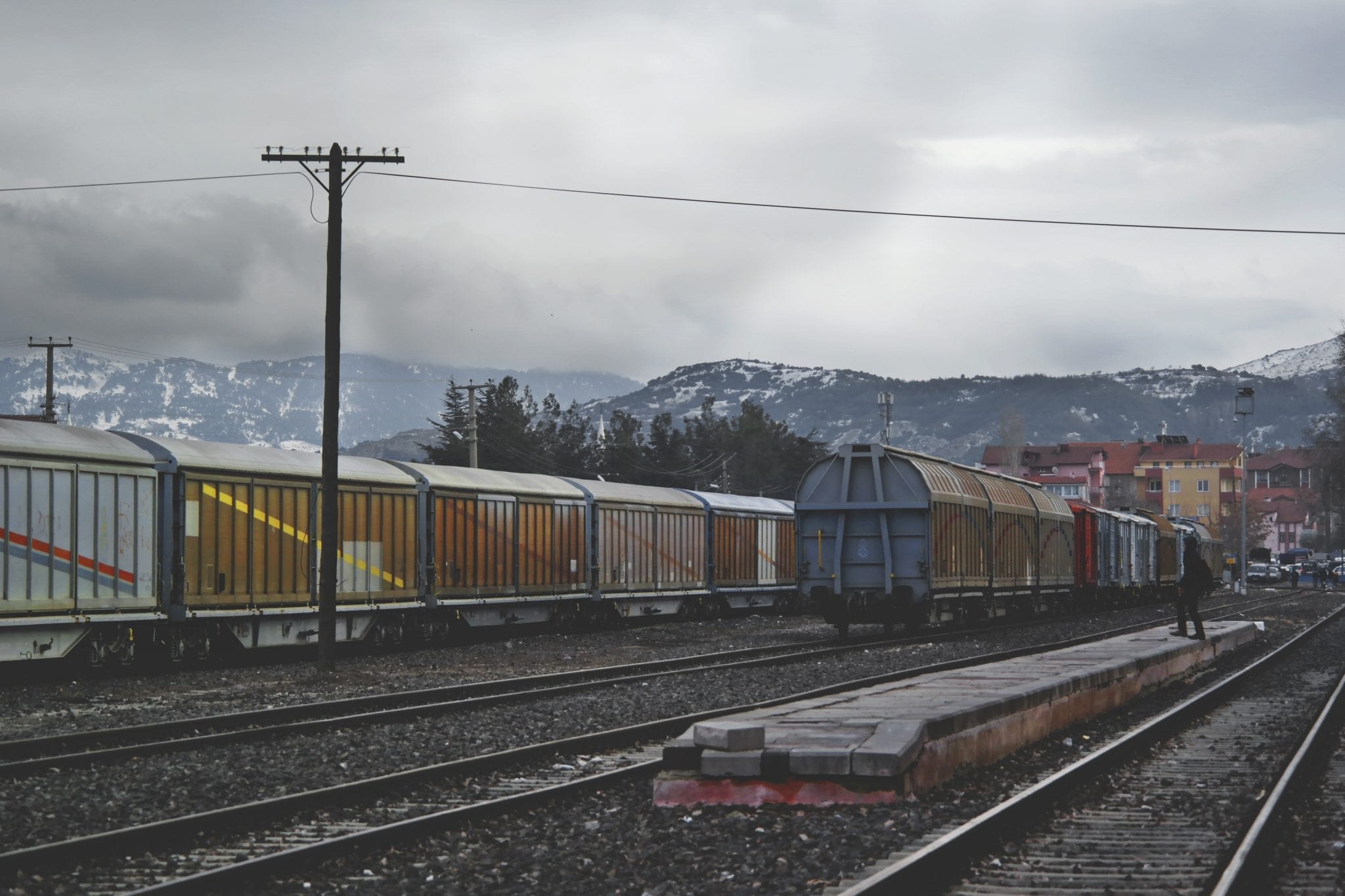
Taylor: That is logistics, and I’m sure we can help most companies, consumer goods companies or something like that. But our specialty is industrial companies that move big products in big things. Think a big ship on the ocean full of bulk product or containerized product.

Paul: So wait a minute. You said containerized. What does that mean?

Taylor: Put in a box as opposed to…

Paul: Like a shipping container?

Taylor: Yeah.

Paul: Like the back of a truck?

Taylor: Certainly. Yeah, so our bulk logistics means we can help people move things. Usually it’s not as expensive of a product. The logistics is extremely important because moving heavy material around is very expensive compared to the product. So think of sand or cement. The cost of that material is extremely low, but you still have to pay someone to move it around. So you have to be extremely competitive on your logistics in these type of commodities. So in some cases, the cost of moving the product is worth way more than the product.

Paul: Oh. Interesting. So let’s talk about that with sand. Let’s say you need it. You had a business that was building something. They use sand in building, I guess? Is that true? So how much does a…? Is it a container of sand? How do you… It’s the unit of measure for moving sand?

Taylor: Yeah. So, you know, back to kind of bulk. It’s usually moved by a ship, some sort of marine vessel, a truck, or rail, or a pipeline. So usually, you have four options for many of these products. Others you have one or two. So our job is to bring those experts that have moved that product. They understand the characteristics of it. Or they know how to move a like product, and they know how to give the customer more options.

Paul: Insight, wisdom.

Taylor: More options, more competitive ways to do it, taking the price down, taking the cost down. So, you know, people have moved their product for dozens of years but they may have done it the same way, and they haven’t thought of outside ideas. So many times, we bring outside ideas or expertise that the client may not have yet.

Paul: Because it’s not their business, really. I mean, they’re building. They’re building stuff.

Taylor: Yeah. But they need to be logistics experts.

Paul: I see.

Taylor: So we help them kind of get jumpstarted with good ideas and then here’s how you can do it so that they can build their own capability to be more successful.

Paul: Okay. Well let me go down a road here of a scenario. I have no idea. So just pick in your mind — I don’t care about a company — but a job that uses a lot of sand. So what’s a train car of sand cost? Just a wild guess. I mean, you’re going to be more informed than I am, certainly.

Taylor: Yeah. So just say roughly it’s going to hold about 50 tons of sand. In high volume they’ll pay $35, $40 a ton.

Paul: Okay. So 50 times 35 is five times four is 2,000, about $200,000—

Taylor: Yeah.

Paul: —for a train car of sand. And the typical user of sand doesn’t order one train car. How much do they order? Do they order a hundred or is it million or ten?

Taylor: Yeah. In the world of frac sand, which is by far the biggest sand world now, around hydraulic fracturing, they use large amounts of sand. On average, a well now is about 55 railcars per well.

Paul: Okay. So 55 times $200,000. That’s five time $10 million?

Taylor: A million dollars. Yeah, a million dollars’ worth of sand.

Paul: Just sand. But you’re saying that the movement of the sand is actually more expensive than the sand.

Taylor: Yeah. The movement of the sand will be about 75% of the cost of the total delivered cost.

Paul: Wow. So if it’s a million dollars, it’s going to cost them a million and a half to move it.

Taylor: Exactly. Yeah.

Paul: Okay. So how often does this happen, that they use a million dollars’ worth of sand? Is this happening every day? Is this something that’s an outlier? Because I mean, as a normal person — you know, walking the street, getting up, going to work, driving my car, playing with the kids, etc. — I don’t think in those numbers. I just don’t experience the world in those numbers. You know, I buy a loaf of bread. I don’t buy a train car of flour. So is this…? Is that saying that this company A is using a million dollars’ worth of sand, does that happen once a month? Once a year? Once a day? What’s the magnitude?

Taylor: This year, probably for fracking, they will use 60 to 70 million tons.

Paul: 60 to 70 million tons. And how much do they use on one?

Taylor: About 55 railcars. So you’re talking about a major amount. You’re talking several….how many wells are they going to frac? I don’t know. 10,000 wells a year or…

Paul: And each one of them is using a trainload of sand.

Taylor: Well, a half trainload. Yeah.

Paul: Half trainload.

Taylor: Yeah. But they have some that have used two and a half trainloads of sand in one well. So there’s a range, and this is one of the key enablers to get lower and lower cost oil and natural gas. So it’s become an amazing growth story because it’s cheap. It is easily available. It’s really cheap.

Paul: The sand is.

Taylor: Yes. But to get it there is not.

Paul: Okay. So, well, I guess that’s some of the things. We don’t really, as consumers, understand what goes into getting our products to our table or in our pockets with our phones, or whatever it might be. And so we’re sort of peeling the onion back here, and we’re seeing that you’re telling me, particular frac sand or that particular thing, they’re using all of this sand. And I could say, “Well, I could shovel it.” No, you can’t shovel that much sand, you know. So it’s a magnitude of logistics that’s huge in comparison to our daily lives. So I’m starting to get a sense here of… Well you said it’s a million dollars’ worth of sand costs one and a half million dollars to move. So it’s wise for me to pay attention to that one and a half million dollars. It’s hard for me to comprehend it, but the companies are doing that.

Now that’s not the only thing they move. They move lots of other things, so it’s not just sand. Now PLG you said, was in plastics.

Taylor: Originally.

Paul: Originally. So what were you moving then? Was it chemicals?

Taylor: Plastic pellets.

Paul: Oh, pellets. Interesting.

Taylor: So, before you have a pressed plastic product, it usually comes from a pellet that gets melted down and made into that packaging material or the product. So that’s how PLG got started was moving these pellets around and, again, helping people be more efficient in distributing pellets to their customers throughout the country and exporting and importing.

Paul: So it’s not like you decide you’re going to make a new widget and you say I’m going to order the plastic via UPS because it’s just sheer volume. So I think that’s an important thing to pull out here, is there is a whole segment of the economy that we don’t really have good touch with. We’re not in touch with that big world, where they order a trainload of stuff. I just can’t comprehend that. I have a hard time going into Costco and buying the big amount there because I’m not going to use that much. You’re saying we’re really several magnitudes, maybe even a hundred magnitudes larger than what a normal person consumes.

And so you’ve got a company that’s good at making plastic widgets, whatever it might be. And they’re realizing that — oh, my gosh — it cost me a million dollars to buy the plastic, but it cost a million and a half to move it, so I need somebody to help figure that out, who knows all the shortcuts. Is that where you guys come in?

Taylor: Yeah. We probably get in one step earlier in the chain. Whoever is either manufacturing or distributing that plastic, they’re responsible to have it competitively to the person that’s going to use it. So it’s their job to get it there as efficiently, to keep their costs down, to be competitive in the market. So we’ll help those people that distribute it or produce it. And to help you get back to the magnitude of the volume, you’re talking 20, 30, 35 million tons a year of one grade of plastic is used in the polyethylene alone. Just one grade of plastic, polyethylene.

Paul: Wow. I’m just a little over—. You said 35 million?

Taylor: Million tons.

Paul: Tons. And how big is a ton? Is it like a train car or is it…? How much physical space would that take up?

Taylor: So a train car full, a big hopper car full it’s going to weigh, I think, in the neighborhood of 50 to 60 tons.

Paul: So a million of those. Well, maybe 700,000 of those train cars.

Taylor: Yes.

Paul: And that’s just one type of plastic.

Taylor: Yeah. That’s one type.

Paul: And how many types of plastic are there in that magnitude?

Taylor: Dozens. It’s by far the largest in the world — polyethylene, used in packaging and bags.

Paul: But it could be — just a back of the napkin — it could be several hundred million tons of plastic all in, all of the plastic in the world that’s used.

Taylor: Yeah. So again, that’s where we got started with moving bulk material. Again, you see the theme of bulk. It’s much more efficient to move it in a railcar versus in bags. Now there is a plastics company — small, niche plastics company — that buys it in 24 kilogram bags of 60 pounds. Their competitor, though, might buy 10 railcars at a time.

Paul: Okay. So they’re going to get a cheaper price. What’s the magnitude of price change there. So let’s say if a bag… How much does a bag cost, the 60 pounds? Is a $100 or $10 or a dollar?

Taylor: Yeah. A hundred dollars.

Paul: Okay. So how much would that cost if I bought it in the rain car quantity?

Taylor: That same volume? Yeah, it might be 80.

Paul: Okay. So 20 dollars, 20% discount?

Taylor: Yeah. It could be. Yeah.

Paul: So now, if I’m that business, I’ve got a 20% benefit.

Taylor: It’s the delivered cost. Including everything it’s going to be, 10, 20% cheaper. And it’s mostly the pushing a whole railcar in versus lots of bags shipped around, handled. So again, it’s all about scale. It’s about efficient moving. It’s making sure you’ve got the right supply chain set up so you’re most efficient.

Paul: So it sounds like we use lots of stuff. I mean, our consumer world and just we consume lots of stuff. It’s just hard to get your head around using that many trainloads of plastic, you know. What are they making? We’re sitting here. We have phones, and there’s plastic in there, and there’s plastic in our computers and plastic in our packaging and all that. So, it adds up quickly.

Taylor: You think about plastic packaging alone. Go to the grocery store. Nearly everything you see in there is some sort of plastic now. You know, it used to be paper. It used to be metal cans. It used to be… It’s nearly all plastic now. It’s probably a graded polyethylene or some other more specialized grade. But you look at a store. Just think about how, if you could just pile up all that plastic.

Paul: Right. Yeah, that would be fascinating.

Taylor: Yeah. It’s all around you, but you don’t realize it. So as you can imagine, plastics… part of globalization is making it plastic because as people urbanize, they used to have their pot sitting there, and the food was there. Now they have to get it on the go. They’re working in the city. They’ve moved to the city. It’s got to be held by plastic. So that urbanization and globalization is making plastic continue to grow. In North America, we use about the same as we did last year. It might go up two percent. But in the developing world, it might go up. In India it might be eight, ten percent growth a year.

Paul: Wow. Okay. So now, do you guys… I mean, this plastic that they’re buying, they have options, I imagine, for recycled and not recycled.

Taylor: Yeah.

Paul: So you’re just trying to figure out how to most efficiently get it there.

Taylor: Yeah. The version material. Get the high-grade material wherever. This polyethylene story, it’s quite interesting because our low-cost natural gas enables the United States to be globally competitive.

Paul: In, in natural gas? Or in what?

Taylor: In natural gas, which then becomes these plastic materials. They’ve refined it and made it into polyethylene. We have world-class prices now because of our low-cost gas. Right now, we export about two million tons a year — just polyethylene — all over the world. That could grow to seven, eight, nine million tons over the next 10 years.

Paul: Where are those countries, those people in other countries get it if we weren’t here?

Taylor: They have some made there. The Middle East is a huge producer because of their low-cost feedstock. And it’s a vast network throughout the world. But we’re going to win because we have low-cost, and we’re going to go from, like I said, two and a half to, say, seven and a half. We’re going to triple that over the next 10 years. And it’s mainly needed in Asia because Asia doesn’t have low-cost feedstock like we do, and they’re urbanizing which drives volume.

Paul: Right. So I need a cup to hold the coffee as I’m walking from my house to…or getting off the train going to my office, I need a plastic cup to hold the coffee. Is that sort of the urbanization?

Taylor: Yeah. Or you know, your breakfast on the go. It’s in a plastic package.
Paul: Interesting, as opposed to having eaten at home or having drank out of a ceramic cup at home and stuff like that.

Paul: So let’s think about this. There seems like there’s this other world going on that I didn’t really know about of all of this moving millions of tons of stuff. I don’t even see it, but I don’t even…I can’t even perceive it, and it’s directly related to my supermarket where I go in and everything is packaged in plastic. So are there other areas besides plastic that… I mean, we talked about sand and plastic. What other bulk things are there?

Taylor: The lots of energy-related products. Coal. Coal is heavily logistics. Very cheap. More, expensive to move it. Forest products to make paper, which is, of course, all around us. That paper product has to have been a wood product, processed and moved. Again, how? Low cost. Low-cost material.

Paul: Is this a thought in the industry: Let’s make the paper where the trees are?

Taylor: Of course, yeah. There’s more mills in the southeast US than anywhere.

Paul: I see. Okay. And the same thing with plastic is I’m going to make the plastic where the oil is, I guess?

Taylor: Yeah. Gas. The gas has come. And the Gulf Coast, especially Texas and Louisiana probably has 75 to 80 percent of the petrochemicals in the country are made there and therefore distributed across North America via rail because it’s the most efficient way to move these somewhat low-value products a long distance.

Paul: Okay. Well, we’ve been talking with Taylor Robinson, President of PLG Consulting, experts in bulk logistics. And it’s fascinating that there’s this whole sub culture, if you will, of the way things are moving, and it’s part of the breath of the country. It’s fascinating!


© 2026 Paul Parisi

Theme by Anders NorénUp ↑