Category: Photography

The Best Camera Systems & Equipment from a Professional Photographer

On Episode 103 of The Edge of Innovation, we’re talking with professional photographer, Arthur Morris, about the best camera systems & equipment that he uses!
Sections

Introduction
The Photo Editing Process
What Computer Does Arthur Morris Use?
What Arthur Uses For Hard Drive Backup
Checking off the Bucket List: Shooting Emperor Penguins
Arthur’s Future Trips
What is Arthur Up To Right Now?
A Photographer’s Week
Canon, Sony & Nikon: Three Major Bird Photography Systems
Go On A Trip With Arthur
Conclusion
More Episodes
Show Notes

The Best Camera Systems & Equipment from a Professional Photographer

Introduction

Paul: Welcome to The Edge of Innovation. Today I’m speaking with well-known, globally-known, famous… anyway, in my book, he’s one of the best photographers that’s ever lived.

His name is Arthur Morris, and he is known for his bird photography as well as other things, but just has been a tremendous inspiration to me, personally, to be able to go out and take pictures. And we’ve interviewed him before, and we asked him to come back to talk about some new things that are going on in his life and with photography.

Welcome, Arthur.

Arthur: Howdy, Paul.

The Photo Editing Process

Paul: Okay, so, you use Capture One. How big are these files? Each image, just in megabytes.

Arthur: O Lord, the Nikon one is 40 megapixels, so like 130 megabytes.

Paul: My gosh.

Arthur: So, the converted image must be about 200 megabytes.

Paul: Uh huh. And how much are they raw? How, how big are they raw?

Arthur: Well, I always get confused by file size and pixel dimension. So, I’m not the one you wanna ask.

Paul: Okay.

Arthur: I know they’re big-ass files. But don’t quote me.

Paul: Alright. So, you, you go through. You, you bring ’em with Capture, and what do you do next?

Arthur: I just converted one image. I grabbed it. I put it in a subfolder called “To do.” And then, I converted the raw file with Capture One, which is the only program that you can see the enlarged Sony images conveniently with.

Paul: I see.

Arthur: And then I processed one… I have a bunch of folders that I need to go back and edit, ’cause if you lose track in a few days, especially with the huge files of the α7R III, you can wind up with your computer full. I’m not near there.

What Computer Does Arthur Morris Use?

Arthur: Another interesting story about gear and technology, I switched from PC to Mac about five or six years ago. Went through two months of pulling my hair out, and then came to love Mac. So, for me, it’s just a thousand times better. I used to do Photoshop on the PC for 15 years, and every session, Photoshop would freeze. It would crash, and I needed to, you know, hold down the start button for ten seconds and reboot. Three or four, three or four times in a couple of hours, and it was really not fun.

Paul: Wow.

Arthur: And with with Mac, in six years, I’ve had to press the… do a hard reboot, I think, maybe once or twice… Where the machine froze, so a huge improvement there.

Paul: And what Mac do you use?

Arthur: One of the astounding parts of what I do is that everything is done on a 15-inch MacBook Pro with Retina display.

Paul: Right. And you find that good enough?

Arthur: Everyone tells me I’m crazy and that I should be using an external monitor and a mouse, but I’m happy.

Anyway, back to the computer story. I had my 16-inch or 17-inch MacBook Pro for about five years, and about six months ago it was giving indications that it was gonna die.

I had everything backed up but for a day or two, and then it finally broke. It wouldn’t start. So, I drove over to Brandon, and I brought it into the Apple Store. They took it apart, and they came out, and they said, “Well, this machine will never work again, but, but do you have any idea why the motherboard is encrusted in salt and sand?”

Paul: Really?

Arthur: And I said, “Well, I have done a few slideshows at the beach, in the rain.” So, suffice to say, I’m taking much better care of my new MacBook Pro. And I was able to get almost everything off the old hard drive.

Paul: Wow.

Arthur: I do recommend solid-slate hard drives.

Paul: Right.

Arthur: The hard part there was getting the correct bay to put the old hard drive in.

Paul: I see, yes.

Arthur: So, Apple, AppleCare is generally pretty good, but they misled me.

So, of all things, I finally took it into town, to Lake Wales, to the local computer store, and the guy went online, and he found the right bay with the right number of things, and we were able to get all the stuff off. So, that was a happy day.

What Arthur Uses For Hard Drive Backup

Paul: Excellent. So, you bring up a good point with backup. What do you do for backup with all of these big files?

Arthur: My friend Patrick Sparkman is my technical adviser. When I can’t figure something out, I call him. He recommended a program to back up the Macs automatically. You just plug in. So, I have two solid-slate, two 2-terabyte solid-slate hard drives, and I, every couple of days, I just plug one in, and it automatically starts to back up. And I’m walking over to my laptop —

Paul: Is that Time Machine?

Arthur: No. Actually, it’s amazing how the brain works. All I did was walk to my laptop, with a dark screen, but just being in front of my laptop, my brain came up with Carbon Copy Cloner.

Arthur: Oh, okay. Good, yeah. That’s an excellent. We, we use that a lot with our clients.

Arthur: So, how the brain works is a mystery, because I couldn’t think of Carbon Copy Cloner here. So, when I got there, and I was pressing the button to wake it up, I could see in the top the “C,” the “C” icon, and there it was, Carbon Copy Cloner.

So, I have two of those. I actually have a third one I need to get going so I can give one to my daughter every two weeks.

Paul: Right. Now, have you ever had to use the backup yet?

Arthur: No, thank God. And, and one of the beauties of Carbon Copy Cloner, God forbid, is that if your laptop just won’t boot up, that you can plug in Carbon Copy Cloner and boot from that. Let’s say you were down in Snow Hill Island doing the Emperor Penguins, which I was, which I had the pleasure of doing last November. You could always just theoretically, plug it in. But I hope to never get to that point.

Paul: Well, yeah. It’s, it’s good if you never have to use it, but if you have to, you know it’s there, and that’s great.

Checking off the Bucket List: Shooting Emperor Penguins

Paul: So, now, you’ve shot pretty much… Would you say you’ve shot everything you wanna shoot, or are there some things out there that you’re saying, “I really wanna go shoot this”?

Arthur: In my life?

Paul: Yeah. What’s on your bucket list for photos to take?

Arthur: Oh, about a thousand things.

Paul: Really? Is it all in the bird world, or do you have other things that are outside of that world?

Arthur: Mostly birds. I mean, getting to the Emperor Penguins was a huge check-off on my bucket list because I never thought I would get there. Logistically, it’s really, really difficult, and it was an amazing trip. I can’t believe that I got there. It was ridiculously expensive but worth every penny for me.

You know, just not financially, not business-wise, but it’s just because it’s something I wanted to see. I wanted to get down there. It was a Quark trip, running in conjunction with Cheesemans. We got on the icebreaker Khlebnikov after flying down to Ushuaia, Argentina.

Paul: Wow.

Arthur: And we sailed four days to get down into the ice. One day, we spent drifting to the northwest. Because of a big storm, we couldn’t southeast, where we needed to go. Then we finally got down in the ice, and they weren’t sure if they could get close enough to the colony to fly us there.

And then we made some good progress, and then, I don’t know, by the fifth evening, they said, “We’re in great shape,” and we were six miles from the colony at Snow Hill. And then we had done all the helicopter drills, and they put you in groups, and they fly you by Russian helicopter
to the base camp, and then once you get there, it was a four-mile round trip to the colony. And we did three days, and boy, it was, it was thrilling, and by noon on the third day, I was not good.

A lady I met down there, who’s been down there a zillion times, convinced me to borrow a pair of sunglasses. And I said, “Snow blindness? I’ll never get snow-blind.” And by the third morning, I could not — once the sun got out — I could not even look at the colony, at the snow.

Paul: Wow.

Arthur: My eyes were just burning out of my head. Then I put the sunglasses on, and I was able to photograph through the sunglasses for the whole morning. And then I trudged through the snow and ice back to the helicopter, took a, a nap in the rest tent, wound up back on the trip, and that was our day. So, three days for the cost of about 60,000 bucks.

Paul: Oh my gosh. Really? Wow.

Arthur’s Future Trips

Arthur: But I was happy. But what do I wanna do? I wouldn’t mind getting to Australia, and that’s actually now a remote possibility because I just agreed to judge a photo contest and speak in the Philippines in November of 2020. So, I’m thinking, once I’m there, heck, it’s 12 time zones different. Australia can’t be very far away.

Paul: Right. That’s true. That’s very true. It’s probably farther than you’d wanna swim, but it’s probably pretty close.

Arthur: Sure. And then, I would have to do lots of work in advance, mostly with friends from BirdPhotographers.net, my educational website, as far as planning the trip logistically, you know, if I do a side trip to Australia.

Paul: Right. Wow. That would be really cool.

What is Arthur Up To Right Now?

Paul: So, what else is new? You’re experimenting with Sony, probably going to make that leap.

Arthur: Experimenting with Sony, doing something I should’ve done 15 to 20 years ago, and that’s have a comprehensive online gallery. We’re, we’re almost finished work on that. I’m working with a guy named John Ross with a company called PhotoFolio.

Paul: Oh, neat.

Arthur: So, it should be nice and beautiful and elegant, and we’ll announce that on the blog.

Paul: Cool. That’s fun. When do you think that’ll be ready?

Arthur: Oh, surely within a week or two.

Paul: Oh, really? Oh, okay. Well, that’s fun. Something to look forward to.

Arthur: Yeah, I started by going through about 8,000 images, picking about 1,200 of my favorites to distribute into the various galleries and sub-galleries.

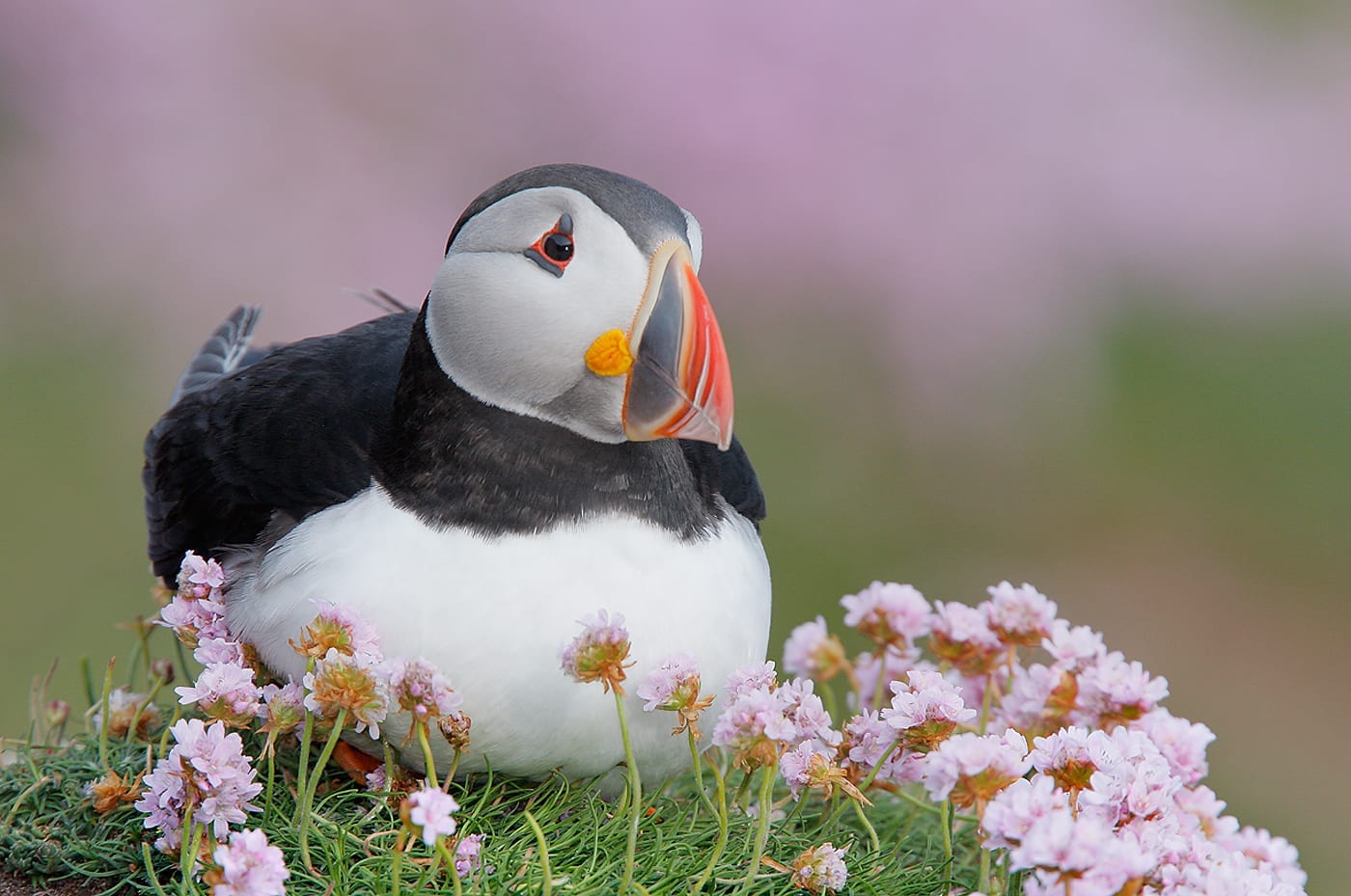
And what else is new with me? My 73rd birthday on June 14th. In celebration, I shaved my head. So, I have this Scott Van Pelt for everyone is familiar with, SVP on Sports Center at midnight. And I got home. I did three trips in a row. I went to the UK to do Puffins again in June, end of June. Came home. Went to, to Galápagos at the end of July, beginning of August, and then I went up to visit a friend in Northern Ontario to photograph Eagles on her lake, Basket Lake.

Paul: Wow.

Arthur: Then I got home, and I was feeling run down, and I was doing a lot of couch potato-ing, and I said to myself, “You know, it feels nice to sit on this couch, but if I do that, I’m gonna be dead in one or two years.”

So, instead, I decided to go back to walking every morning between two and three miles, swimming every afternoon a little more than half a mile, doing all kinds of stretching for my shoulders, getting my knee back in shape. So, the next few days I’ve been feeling great, as good as I’ve felt in years.

A Photographer’s Week

Paul: Excellent. So, what’s on the agenda for the rest of the week? It’s Tuesday. What’re you gonna do the rest of the week?

Arthur: Well, today is Tuesday. Thursday, I drive over to Fort De Soto to teach a small workshop with four or five folks at Fort De Soto County Park in Pinellas County. I’ll be using my new Sony 600 and the Sony 100-400, and playing around with different cameras.

One of the things I didn’t mention about the A7R IV, compared to the previous version, the A7R III, it’s only marginally bigger. The dimensions are fractions of an inch bigger, and yet, the A7R III in my hand felt like a tiny toy. And the A7R IV feels like a real camera.

Paul: Oh, really? Interesting. Just that little bit made a big difference.

Arthur: Yeah. It’s a tiny bit, you know, one small step for man, one giant step for bird photography.

Paul: There you go.

Arthur: And then, their other body is the A9, which has, pretty much science-fiction-like autofocus.

Paul: Really?

Arthur: Yeah. With, with, at the cost of smaller image files. So, the great news is there’s supposed a Sony A9 II with 35 megapixels and a, and a slightly larger body. So, you can put me on the list for one of those.

Paul: Interesting, interesting.

Arthur: I guess it’s sounding more and more for another fire sale, this time with my Nikon gear.

Paul: Yeah. Well, so far, we’ll see. I mean, if Sony doesn’t shoot itself in the foot with something, and it meets your expectations, it sounds like it’s an incredible advantage.

Canon, Sony & Nikon: Three Major Bird Photography Systems

Arthur: One, one of the nice things for teaching is that I have good working knowledge now of the three major bird photography systems.

Paul: Yeah, that’s true.

Arthur: Canon, Sony, and, and Nikon.

Paul: Again, I go back to our comment earlier. It would’ve been unthinkable to think that Sony would be a camera company, even ten years ago, and it’s just amazing that they’ve come to the top of the game, if you will.

Arthur: Well, there’s a lot of, sort of, Sony backlash from folks who just — pretty confident folks — who just say it’s junk.

Paul: Really?

Arthur: Or garbage. But I’ve made lots of nice pictures.

Paul: Interesting.

Arthur: And I’m happy. So, time will tell.

Paul: Absolutely. Well, is there anything else you’d like to cover today in our talk?

Good Photographers Make Good Pictures With Whatever Gear They Have

Arthur: You know, with all this talk about gear, and the latest gear, and 61 megapixels, it’s important to remember that good photographers are gonna make good pictures with whatever gear they have in their hands.

Paul: Right. Amen.

Arthur: And I know lots of folks that are shooting cameras that are four, five years old, three or four generations, supposedly improved, and using the older Canon lenses, the version one of the Canon Super Telephotos. And guess what. The good photographers are making great pictures. And then you run into folks who have two of the best of everything, the most modern lens, camera body, and they have no clue as to how to make a good picture.

Paul: Right. Well, it’s definitely a craft. You know, you have your tools, but you have to know how to use the tools. And, if you’re a woodworker or a painter, all of those things, it’s really the synergy of the tools and the artist.

Arthur: It’s funny, ’cause I often use woodworking to complete that analogy. I say, hey, if you put me in a state-of-the-art machine shop with the fanciest table saws and circular saws, and the greatest tools in the world, the most likely result would be that I would cut my hand off.

Go On A Trip With Arthur

Arthur: Then, last thing I’ll mention is that I’m hoping to get back to the Galapagos one more time, and I’m planning a trip for October of 2020, but I need at least eight or ten folks by this December.

Paul: Oh, wow, okay.

Arthur: If anyone’s interested, they can go to the blog at BirdsAsArt-blog.com, and click on the “Email Artie” button and get in touch. And the same thing, I’m gonna, hopefully, make one last trip, a land-based trip down to the Falkland Islands with, with just four photographers, but you’d better be a happy camper for that one.

Paul: Very cool.

Conclusion

Paul: Well, excellent. Well, we’ve had a good time here talking with Arthur Morris, renown, world-renown bird photographer. Birds from all over the world fly to Arthur for their picture to be taken. It’s not exactly that way, but it’s been such an inspiration for me to get to know you and your work and your books and your websites, and it’s been fantastic, and I appreciate you coming on now a second time and we’ll look forward to your, now, new journeys with Sony.

Arthur: It’s been a pleasure as always, Paul. I enjoy listening to your voice, and perhaps we’ll be able to include the link to the new galleries when we get this online.

Paul: We definitely will. So yeah, there’ll be a whole bunch of links to all of your sites, and as soon as that’s online, we’ll include that, as well.

Arthur: Thank you very much.

More Episodes:

This is Part 2 of 2 of our conversation with Arthur Morris! If you missed Part 1, you can listen to it here!

Show Notes:

The Business of Birding: How to Make Money as a Bird Photographer

On Episode 76 of The Edge of Innovation, we’re talking with world-renowned nature photographer Arthur Morris, about the business side of photography and how to make money as a bird photographer!
Show Notes

Arthur Morris’ Website: Birds As Art
Arthur Morris’ Blog
Find Arthur Morris on Facebook
Find Arthur Morris on Twitter
Information for the Birds As Art Instructional Photo Tours
About Arthur Morris & Birds As Art
The Birds As Art Online Photography Store
Buy Arthur Morris’ book, The Art of Bird Photography, online here:
Arthur Morris’ Book, Shorebirds: Beautiful Beachcombers
Cannon 1D – The first professional digital camera body
How to Read and Use Histograms
Digital Basics from Arthur Morris
Available to Buy: Books, Videos and Training Instruction by Arthur Morris, as well as books by his friends and colleagues
Fort Desoto Site Guide
Birds: Hudsonian Godwit
Heckscher State Park
The Work of Byron Katie
100-400mm Camera Lens
Link to SaviorLabs Assessment

Sections

Photography’s Decline as a Lucrative Business
Switching From Film To Digital
Selling Photography Guides: Digital Basics
Birds as Art: E-Guides
Birding Guides For Specific Areas
Are you Having Fun?
Advice From Arthur Morris For Young Photographers
Do What You Love
Don’t Just Take Pictures, Write Too!
Blogs Generate Income
Conclusion
More Episodes

The Business of Birding: How to Make Money as a Bird Photographer

Photography’s Decline as a Lucrative Business

Paul: Now let’s move a little bit more towards photography. So, you’ve sort of outlined at a high level, that it’s really a huge decline from it being a lucrative business in 2001, very lucrative, to almost non-existent in 2016. I don’t think there’s anybody out there that could live on $2000 a year, and they’re not going to be all as good a photographer as you. So, what’s your prognosis for the world of photography?

Arthur: Like I say, there are folks making a living. Here’s a good example for nature. My friend Darrell Gulin, who is nowhere near as famous as me, he’s a great photographer. And he has concentrated on stock photography. And he was the one who taught me, hey stock photography is not about how many good pictures you have, it’s learning to photograph to a concept. So, you might photograph a mother and baby bird together. And there is this tenderness concept and caring and caregiving. And photographing to different concepts like power and strength and creativity. And he was great at doing that. And boy, if you go back to 2001 when he was making six, seven figures from a bunch of stock agencies… And the last time I talked to him, he was down about 60% to 70%, and he’s on my list of people to call when I had this latest revelation of down 99% for us. You know, I’m sure he’s still making money, but the trick for me was to realize that if I didn’t come up with some new ideas, I was going to be working in Walmart or working in Burger King.

So, one of the breakthrough things, you mentioned the original, The Art of Bird Photography, that sold 15,000 copies in hardcover and then another 30,000 copies, I believe, in softcover. And one year, when I called Amphoto, and I said I want to order another 20 cases, they said, “We’re sorry. We’re letting that book go out of print.”

Paul: Wow.

Arthur: I said, “You said what?”

They said, “Yeah.”

So, then I came up with this idea of self-publishing the book. To do that, amazingly, I needed to buy the rights to my own book. That cost me a little under $2,000. And I wound up going back to the original printer in Hong Kong, and I remastered the cover and changed one or two pages to update them a bit. And we republished the book, and I printed 10,000 books. And 10,000 books may not seem like a lot of books until a yellow freight truck backs just your driveway and unloads four pallets of books, each one bigger than a Volkswagen. And you have to figure out what to do with them. And now it’s six, seven, eight years later, and we’ve sold about seven of the 10,000. So, who knows? If I live long enough, maybe we’ll have to reprint the reprint.

Paul: Wow. I just, anybody listening, it is one of the best books. Again, I’ve said that. I don’t think I could overstate it. It is a phenomenal book.

Arthur: Well, we’re pretty much the only ones who sell them through the website and the blog.

Switching From Film To Digital

Arthur: But on to more important things… 2002′ or ’04, I come up. I’ve now switched from film to digital, and I love digital so much that I wish I had never heard the word “film.”

Paul: Really? Okay. So, when did you first? You said you first switched to digital when?

Arthur: 2001.

Paul: 2001. So, what was that first camera?

Arthur: Well I was not going to switch to digital. I was going to be shooting film in 2020. Funny, Darrell Gulin said the same thing.

Paul: A lot of people have said that.

Paul: And so in 2001, I bought a Cannon 1D, the first professional digital camera body — I don’t know — something like three or four megapixels. I wasn’t going to switch to digital. I was just going to learn to teach people about histograms. That’s the only reason I got it. I don’t know, but I think it was 2001 or 2002. I went to New Mexico for my usual three or four weeks, and I had seven film camera bodies with me and my one digital body. And I was trying digital just a little bit. And then as fate would have it, near the end of the trip, we had a spectacular morning. The light in the predawn was amazing. And the birds were blasting off, and the colors were purple and red. And then it got to be more red and orange, as it got closer to sunrise. And then, the light changed every 10 minutes for an hour. Spectacular opportunities. And I had decided that morning I was going to do all digital. And when I got the pictures, number one, I didn’t have to wait a month to get them back from the lab. The pictures were right there. Every picture had the shutter speed and the aperture and the ISO. And I remember looking that morning at the pictures and saying, “I never learned so much in such a short time.” And I’d be glad to sell you one of those seven film camera bodies. They each have a partially exposed roll of film in them, and they’ve been sitting on the shelf since that morning. I never took another frame of film.

Arthur: Wow.

Selling Photography Guides: Digital Basics

Paul: Now we go ahead, and I’m seeing digital pictures online. We’re seeing lots of digital photographs being posted to different websites and critiquing sites. And I’m seeing how beautiful the digital reproduces for electronic use. And I’m seeing that a lot of people are ruining their pictures in Photoshop by over-sharpening them and over-saturating them. So, I decide I’m going to do a second Art of Bird Photography book, which went on to be called The Art of Bird Photography II. I started writing it, and I worked on the digital chapter first — just basic instructions of cameras and lenses and how to convert your raw files and why to use raw files and what to do with them in Photoshop.

So, I wrote and wrote and wrote and wrote. And then after a while, I started writing different chapters. And after four years of writing, I had a 900-page book which no one would have been able to lift. And I didn’t have the money to print it or store the books. So once I got up to 900 pages and more than 900 photographs, I realized that it was not feasible to make this a printed book, and I decided to do it on CD. And that’s what I did. And, boy, the economics were amazing. When the original, The Art of Bird Photography came out in hardcover and Amphoto sold a copy, I made about $1.75. By the time it went to softcover and they were selling it to a bookseller, I’d make like $0.95. Near the end of the run, when they were selling it to Amazon, I’d make $0.45. So, with traditional publishing, the photographer was not doing very well…or the writer.

Paul: Right. Right.

Arthur: So, I decided to publish the CD, but before I got to the publication year — it took four years to write the whole thing — I said, “Wait a second. I have good solid information here in the form of this digital information. And I’m watching all these people ruin their pictures in Photoshop.” So, I grabbed the chapter of digital photography, and I made it into a PDF, and I sold it as Digital Basics. We sold that for years as a standalone offering, Digital Basics, and I updated it — oh! — too many times. And I found that people were willing to pay good money — I think we sold it for $15.00, and then we raised it to $20.00 or maybe $25.00 — that people were willing to pay good money for solid information about photography that would help them become better photographers. So, the end result of the original Digital Basics file was that about six or seven years ago, I built myself a beautiful swimming pool, a lap pool in my backyard for $68,000. When I did the math at the time, it turned out that Digital Basics had paid for it in its entirety.

Paul: Wow.

Birds as Art: E-Guides

Arthur: And then recently we just introduced the Birds as Art current workflow e-guide, which I lovingly call Digital Basics II. So, a few years ago, I switched to Mac from PC, and I went from BreezeBrowser to Photo Mechanic, and I convert all my raw files in Cannon Digital Photo Professional 4, which is DPP4. So of course, I have guides on all of those things, and the new guide is selling fabulously well, and I just introduced another guide, really high-level, high-end stuff on doing micro adjustments, learning to adjust the focus on your expensive cameras and lenses to make most of the pictures as sharp as possible.

Birding Guides For Specific Areas

And then in the same vein, once I got this idea that… Actually, the way it happened is a funny story. A guy in England wrote me, and he said, “Hey, Art. I’m coming over to visit Fort Desoto. I know you’ve been there a lot. Would you please tell me what birds I could expect to photograph there and what’s the best places to go in the park? And what’s the best wind to go to each place, and what’s the best season for each bird? And while you’re at it, tell me a few good places to eat and where to stay in a good motel.”

Paul: Basically gave you a new business idea.

Arthur: Gave me a new business. So, I wrote the guy, and I said, “Hey, it’s going to take me a couple of days to write that up. Would you pay $50?”

He said, “Sure.”

So, I sent him just 10 pages with some pictures. He sent me $50. And then the next day, right after I sent it to him, I get another email, and it says, “Hey, I’m going to Fort Desoto.” And then, that’s how site guides were born. So now you can go to the Birds as Art online store and click on publications by Artie or on site guides. I’m not sure of all the designations. So now we have guides to Bosque in San Diego and Fort Desoto in Southwestern Florida. Came up with a new business plan from that. Hey, I’m getting tired of writing, but I’m a good editor. So, had some friends write different guides. Some of them are site guides. Some of whom are how-to photograph, and they write the guide. Unfortunately, most of them are not very good writers, so I get to edit the work, and then we sell it and split the money because I have the big online presence through the blog, and they have ideas. And basically, it’s worked out to be a great system.

So, yeah, selling information in digital form as PDFs or on CD — we’re actually getting away from CDs and the people overseas love that because they can do it just as a simple download.

So today, I make money by selling information in digital form, selling books and e-guides in digital form, a lesser amount of teaching every year after the insanity of last year where I had my gallbladder taken out on October 6, got on a plane, traveled around South America photographing and teaching for 11 weeks.

Paul: Wow. Yeah, I saw the notes on that, and it was like, wow, that’s a lot of work.

Arthur: That was insanity. So, I’m slowing down a bit, doing less teaching, just taking time to count my blessings.

Are you Having Fun?

Paul: Are you still having fun?

Arthur: Oh, every minute, every day. When this interview is over, I’m going to throw on my lined pants because I’m up on Long Island. It’s cold. And I’ve been trying to find this Hudsonian Godwit that’s been visiting Heckscher State Park, and I’ve been five times and not even gotten to see him.

Paul: Oh boy.

Arthur: Maybe today will be the magic.

Advice From Arthur Morris For Young Photographers

Paul: Well, we’ve been talking with Arthur Morris, world-class bird photographer, just a great inspiration in photography and in birdwatching and just some incredible work. As part of this podcast, we’ll have shownotes, which will have links to all of Arthur’s websites and all of his information as well as the books we’ve mentioned and some of the names and people we’ve mentioned.

So, Arthur, is there anything you’d like to, as we sort of wind up, leave the audience with, sort of as a parting anecdote?

Do What You Love

Arthur: Yes, Paul. Thank you. And thanks for all of your kind words. And the two things are, you asked me before, young photographers today, what are they going to do? So, I know a lot of professionals who will tell a young photographer, “You should be a school teacher or a seamstress or go into some other business. Photography is dying.” And I would never do that. I say to folks, to young kids, “Listen. Do what you love. Learn about your subjects as best you can. Make the best pictures that you can. Learn to think creatively about developing markets for your work or your ideas or teaching. And if you really love it, you’ll find a way to manage.” So, I would never want to discourage anybody by telling them they can’t do it.

Don’t Just Take Pictures, Write Too!

And then the, the last thing I wanted to mention, and I think it’s a great way to end because it sort of ties everything together, the writing and the photography and the teaching and how to generate income. Right now, I have a streak of blog posts. I think today is 94 days in a row with the new education blog posts. And most of them take me between one and three hours to prepare, and I do one every day now for 93 days. At one point, I was up to 480 days in a row with a new blog post, thinking I was going to do one for the rest of my life. And I went to this school for the Work — I mentioned Byron Katie. It’s a self-help, self-realization program. And when I got there, Katie said, “We ask that you turn off your computers for nine days.” So, I did. My original plan was to get up early and do a blog post, but I turned the computer off. That was the end of that streak, and then I’ve started a new one now, and I’m hoping to keep it going. Good health and good internet connections, going it.

So, it’s an educational blog. You go there every day. You’re going to learn something about photographing nature. And if you don’t photograph about birds or photographing in nature or photographing your grandchildren or doing travel photography…the principles are all the same. So, I strive to teach folks about digital photography every day. And people are going like, “Listen. Take a break once in a while. Take a day off. You don’t have to do it. Why are you so obsessed with it.” Yes, women that I date have strong feelings in that area.

Paul: But you enjoy it.

Arthur: But I love it. And a lot of that goes back to stuff with my dad. He was a demanding man. He was a World War II veteran, severely wounded in Okinawa. And I jokingly say the nicest thing my dad ever said to me was, “Take out the damn garbage.” So, I spend a lot of time wanting to get people to say the nice things he never did. I know he loved me in his way.

Blogs Generate Income

But the fact is that the blog generates income in getting people for tours, and the two huge things that are recent changes over the last four or five years, and that is I have a used gear page. You want to buy a camera, you want to buy a used lens, you go to the Birds as Art used gear page through the blog, and there is dozens of folks who have come to trust me for my pricing advice and acumen and just a wonderful community where people are buying and selling lenses, as much as 8—, $10,000, almost on a daily basis, all on trust. You send me the check, and when it clears, I’ll ship you the lens. And we’ve had, out of probably a thousand sales in the last four or five years, we’ve had maybe one and a half unhappy customers. That’s quite remarkable.

Paul: That’s a pretty good percentage.

Arthur: Yeah. And then the second thing that’s been amazing for me is I get a new lens. I get my hands on a new lens like the 100-400 II, my beloved lens, focuses so close. It’s lightweight. We didn’t even get into the fact that all of these birders now want to become photographers with the camera. So now, I advertise this lens, and if I can get you, Paul Parisi, to believe me, that this 100-400 II Canon lens is the greatest thing since baked break, you click on my link, all these active links that take hours to integrate into the blog post, you click on my link, I get 3.5% back from B&H. And I’m upfront about that. We ask people to write for advice, and then we have the Birds as Art store that sells you the tripods and the tripod heads as well as all our books and educational materials. And the two things combined — the used gear sales and the B&H affiliate sales, they combine annually now, the last couple of years, for well more than what I ever made as a teacher.

Paul: Wow.

Arthur: So, you know, I love the blog. I love being the center of attention. I love sharing my work. So even though my pictures don’t have value today as stock, they have tremendous value in education.

Paul: Oh, excellent. I think the value too is in helping, when you’re talking about equipment especially, is helping somebody choose. It’s so hard to know what’s going to work well. And that experience of you and having been on one of your photo tours, I learned so much about what you should do and shouldn’t do and what you said buy and shouldn‘t buy. And it was really helpful for me. So, I’d encourage people to look at the links in the show notes and visit Arthur’s blog as well as his stores.

Conclusion

Arthur: Me too. So, I’ll just close by saying that having lost Elaine to death was, at the time, a brutal blow, and I did find peace through the Work and that lady Byron Katie. But looking back on the last 20, 30 years, it’ll be… I think it will be 34 years this August. I can say that I’ve been just truly blessed to make a living doing what I love to do — teaching others, sharing my stuff. I mean I’ve got plenty of students who have won BBC awards and honored images in the biggest contests. And that’s very gratifying. And I’ve just made so many wonderful friends. It is my life. It is my passion, and I’m very thankful and appreciative and, as I am appreciative to you for asking me on the show.

Paul: Well thank you. And again, we’ve been talking with Arthur Morris. I encourage you to get a hold of his book, The Art of Bird Photography. Phenomenal book. But, Arthur, thank you for your time, and we’ll be talking soon.

Arthur: Cheers, Paul. You have a great one.

More Episodes:

You’ve been listening to Part 3 of our interview with Arthur Morris. If you missed Part 1, you can listen to it here and if you missed part 2, you can find it here!

© 2026 Paul Parisi

Theme by Anders NorénUp ↑